Iranians Divided Over Potential Talks to End the War
Iranians fleeing the war worry a U.S.-Iran deal would leave the current government in power, even as Trump claims talks are happening and Tehran denies them.
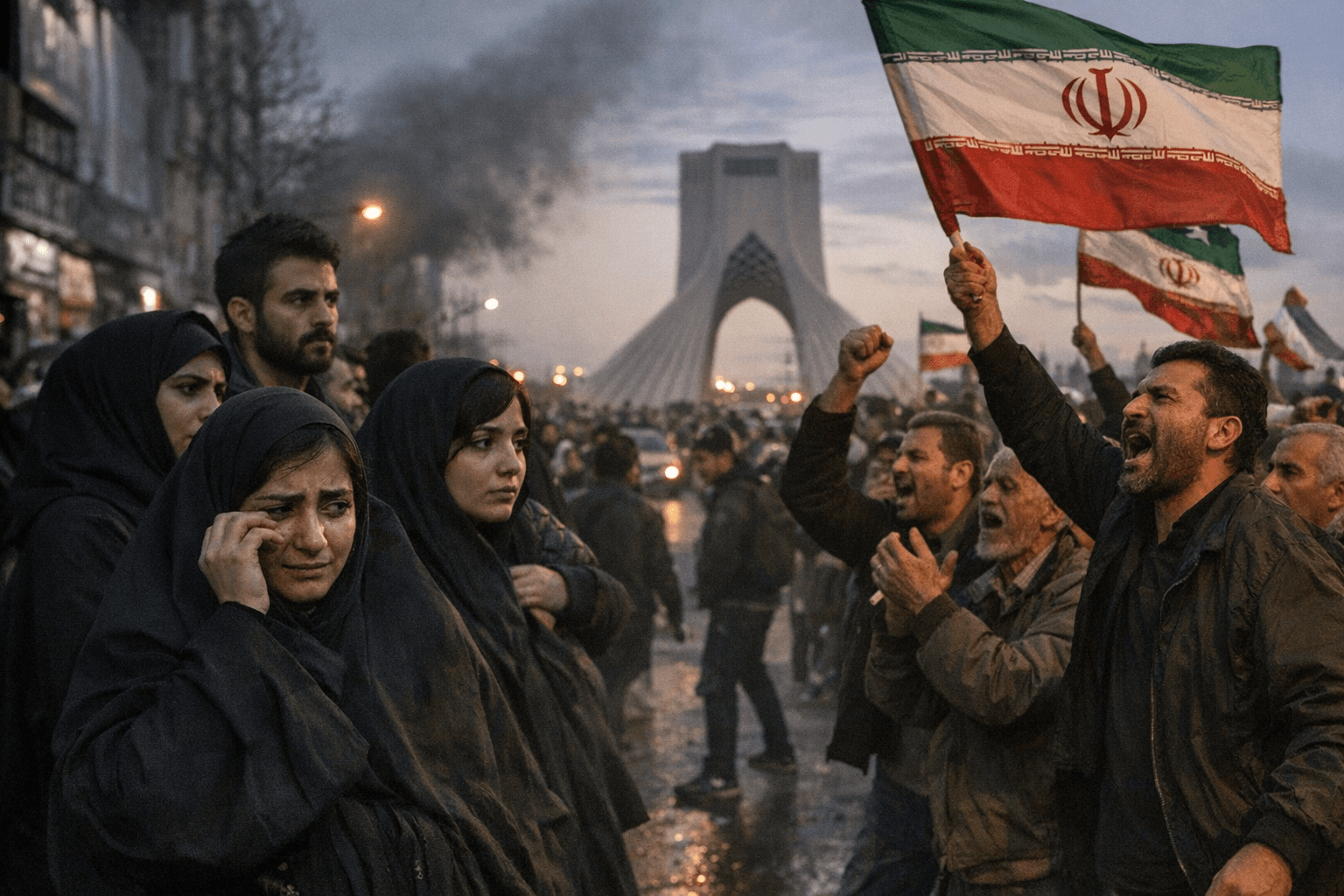
Iranians crossing into eastern Turkey this week said they were relieved Trump had postponed planned strikes on their country's power plants, but their relief came laced with a fear many found harder to articulate: that any deal to end the war would simply freeze the regime that has suppressed them for decades into place.
Many said they worried the U.S. would reach an agreement with Iran that would keep the current government in power. All asked not to be identified by name over fears of Iranian government reprisal. Most Iranians interviewed said they supported the strikes from the U.S. and Israel. "We needed a foreign military intervention to save us," one person said. One man, speaking out against the war, said he believed Israel's motive for bombing the country is to expand its borders into Iran.
That split in public sentiment reflects the contradictory signals now emanating from both Washington and Tehran. Trump claimed on Monday that Washington and Tehran were engaging in "very, very strong talks" to end the U.S.-Israeli war against Iran. Iranian Parliament Speaker Mohammad Bagher Ghalibaf said in a social media post that "no negotiations have been held with the US," adding that "fakenews is used to manipulate the financial and oil markets and escape the quagmire in which the US and Israel are trapped."
The dispute over whether talks are even occurring tracks a pattern now nearly three weeks old. Iranian intelligence sent word to the United States that it could be prepared to open talks on how to end the war, according to people familiar with the indirect messages, but the messages were conveyed through a third country to the CIA and did not appear to result in any serious discussions. A source from the Iranian intelligence ministry rejected that report as "absolute lies and psychological warfare in the midst of war."
On the U.S. side, the public posture has been one of escalation rather than diplomacy. American officials described entering a new, more intensive phase of the joint operation with Israel to degrade Iran's missile program, and Defense Secretary Pete Hegseth said during a briefing that the U.S. was "just getting started." American officials insisted they had not been in talks, either directly or through a third party, with the Iranians since nuclear negotiations fell apart days before the war began.
Steve Witkoff, the president's foreign envoy who led three rounds of pre-war negotiations with Iran, had not been in touch with Iranian Foreign Minister Abbas Araghchi or with Iran's top national security official, Ali Larijani. A senior administration official said, "We're not using anyone as an interlocutor. This is a military action, and it's got to run its course."
That calculus shifted dramatically by Monday. Trump said envoy Witkoff and his son-in-law Jared Kushner were "dealing with the man who I believe is the most respected and the leader" of Iran, though he did not specify who that person was and confirmed Washington had not spoken with Iranian Supreme Leader Mojtaba Khamenei. By Tuesday, Trump said Vice President JD Vance, Secretary of State Marco Rubio, and others were leading negotiations with Iran, saying "We're in negotiations right now. They're doing it, along with Marco, JD, with a number of people doing it."
Iran's shrinking pool of potential interlocutors complicates any path forward. Iranian Defense Minister Aziz Nasirzadeh and IRGC commander Mohammad Pakpour were killed by Israeli airstrikes, and Iran International reported that Defence Council secretary Ali Shamkhani had been killed, along with four top Ministry of Intelligence officials. Trump acknowledged bluntly that "the people we had in mind are dead," adding, "Now we have another group. They may be dead also, based on reports. So I guess you'll have a third wave coming in. Pretty soon, we're not going to know anybody."
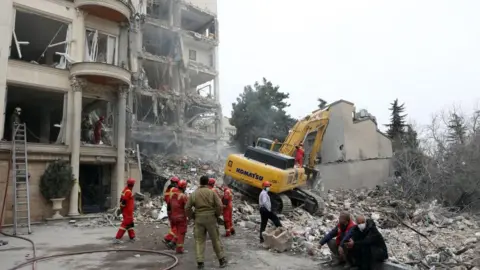
Strikes by the U.S. and Israel have left more than 82,000 civilian structures damaged or destroyed, according to the Iranian Red Crescent Society. Against that backdrop, Pakistan's prime minister said his country stands ready to host negotiations toward a settlement as the war nears the one-month mark. Having twice been bombed by the U.S. and Israel while talks were ongoing, Tehran will struggle to trust Washington, according to Sanam Vakil, director of the Middle East and North Africa program at Chatham House. "The Iranians have been 'Trumped' twice now," Vakil said.
For Iranians who risked their lives to flee, the prospect of a negotiated peace that preserves the government they fled is not salvation. It is a different kind of trap.
Know something we missed? Have a correction or additional information?
Submit a Tip