Iran’s Hormuz leverage could outlast nuclear restrictions after conflict
Iran may not need nuclear weapons to keep rivals wary. Its grip on Hormuz gives it leverage over oil, LNG and military planning without crossing that threshold.
Hormuz as Tehran’s strategic card
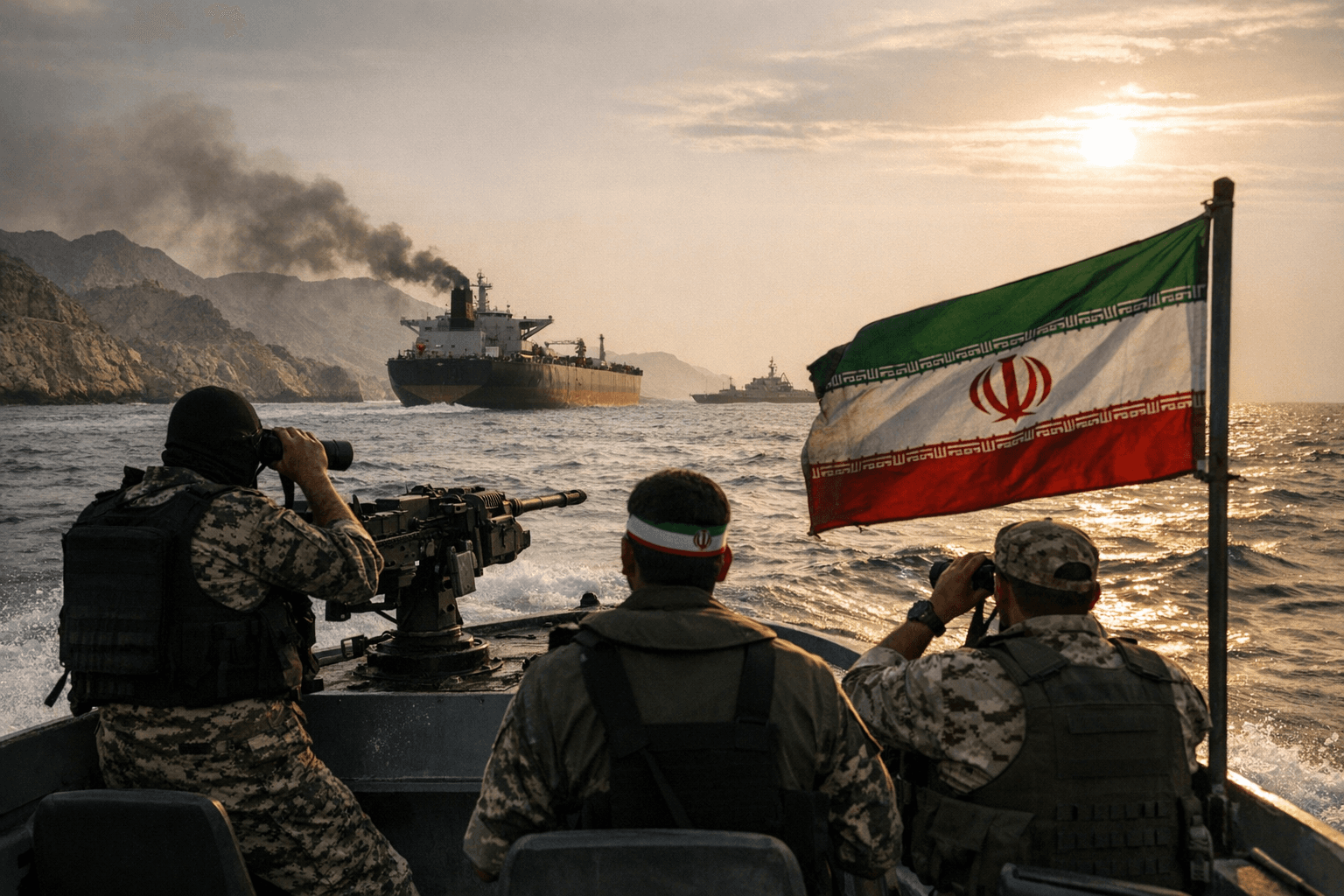
Iran may emerge from conflict with a quieter but more durable deterrent than a bomb: the ability to squeeze the Strait of Hormuz. The narrow passage between Iran and Oman links the Persian Gulf with the Gulf of Oman and the Arabian Sea, and it sits at the center of the global energy system.
That matters because control of the waterway lets Tehran threaten disruption without needing to cross the nuclear threshold. Even a temporary slowdown in traffic through Hormuz can unsettle shipping, raise insurance costs, force route changes and complicate military planning for the United States and its allies.
Why the strait matters to the world economy
The scale of that leverage is hard to overstate. The U.S. Energy Information Administration says about 20 million barrels a day of oil moved through Hormuz in 2024, equal to roughly one-fifth of global petroleum liquids consumption. It also says about one-fifth of global liquefied natural gas trade passed through the strait, mostly from Qatar.
The EIA describes Hormuz as the world’s most important oil chokepoint for good reason. Its flows in 2024 and the first quarter of 2025 accounted for more than one-quarter of total global seaborne oil trade and about one-fifth of global oil and petroleum product consumption. That makes the strait not just a regional vulnerability, but a pressure point for energy markets from Asia to Europe.
For Iran, that creates a form of coercive power that does not depend on enrichment levels, warhead design or breakout timelines. If Tehran can make buyers, shippers and naval planners fear interruption, it can influence behavior even while its nuclear program is constrained.
How Tehran has used Hormuz before
Iran has long treated the waterway as a lever, threatening and at times acting against commercial shipping in and around Hormuz. That history gives credibility to new warnings, because markets and governments remember that even short-lived disruptions can ripple quickly through oil prices and freight costs.
In recent conflict-related disruptions in 2026, Iran temporarily reopened the strait during a fragile ceasefire, then reimposed restrictions after the United States said its blockade on Iranian ships and ports would remain in place. The sequence showed how quickly Tehran can turn access to the route into a bargaining tool, and how fast the threat can reappear when diplomacy stalls.
Shipping companies responded cautiously. Maritime operators said they needed clearer safety assurances before sending vessels back through the corridor under normal conditions, a sign that even a partial reopening does not instantly restore confidence. Concerns about mines and general security conditions only deepen that hesitation, because one incident is enough to rattle insurers and freight markets.
The international response is about more than navigation
Washington and Muscat have spent years treating Hormuz as a shared security concern. The U.S. State Department says the United States and Oman work closely to ensure freedom of navigation in the strait, reflecting how much the world depends on uninterrupted passage through this chokepoint.
The International Maritime Organization has also pressed for restraint. It condemned threats and attacks against vessels in the Strait of Hormuz and called for a coordinated approach to security, underscoring that disruption there is not only a bilateral issue between Iran and the United States. It is a wider challenge to the rules that keep major shipping lanes open.
That multilateral concern matters because the effects of disruption do not stop at the Gulf. A credible threat to Hormuz can affect global crude benchmarks, liquefied natural gas supply chains and military posture across the region. In practical terms, it gives Iran a way to pressure adversaries and energy importers at the same time.
Why nuclear limits may not remove the risk
U.S. intelligence reports in early April warned that Iran was unlikely to give up that leverage quickly because control of Hormuz remains its strongest bargaining chip. That warning fits the broader strategic picture. Even if diplomacy caps Iran’s nuclear ambitions, it does not eliminate the value of the strait as a coercive instrument.
This is the key shift for the United States and its allies: a constrained nuclear program does not necessarily mean a constrained Iran. If Tehran can still threaten a route carrying roughly 20 million barrels a day of oil and a major share of global LNG, it retains a durable deterrent that can shape decisions in Washington, Riyadh, Doha, London and beyond.
The commercial consequences are just as important as the military ones. Energy markets react not only to actual disruptions, but to the risk of disruption. That means Hormuz can affect prices, shipping schedules and investment decisions even when no tankers are hit and no blockade is fully enforced.
What this means for the next phase of pressure
The practical lesson is that Hormuz gives Iran a standing source of leverage, not a one-time weapon. If shipping firms need repeated reassurances before resuming normal transits, Tehran already has a tool that works through uncertainty alone.
That is why the strait will remain central to any future standoff. Nuclear restrictions may shape what Iran can build; Hormuz shapes what it can threaten. And as long as that narrow passage can sway global commerce and military planning, it will remain one of Tehran’s most valuable sources of deterrence.
This article was produced by Prism’s automated news system from verified source data, official records, and press releases, then run through automated quality and moderation checks before publishing. The system is built and supervised by the people who set the standards it runs under. Read our full AI policy.
Did this article answer your question?