Iran's Nuclear Plan Diverges From Deal Trump Called Workable
Iran's ceasefire proposal asserts permanent Hormuz control and the right to enrich uranium, directly contradicting the U.S. red lines Trump's own press secretary reaffirmed hours after he praised the plan.
When Trump posted on Truth Social that Iran had offered a "workable basis on which to negotiate," he described a peace framework he was not actually holding in his hands. The 10-point plan Iran released through Pakistani mediators on April 8 reasserts Tehran's permanent control of the Strait of Hormuz, demands Washington accept Iran's right to enrich uranium, and calls for a full U.S. military withdrawal from the Middle East. Those are not concessions. They are the core positions the United States launched its military campaign to dismantle.
Trump described Iran's proposal as a "workable basis on which to negotiate," saying "almost all of the various points of past contention have been agreed to between the United States and Iran." Hours later, his own press secretary contradicted that framing. "The president's red lines, namely the end of uranium enrichment in Iran, have not changed," White House Press Secretary Karoline Leavitt told reporters. The White House also said the ceasefire plan published by Iranian state media was not the one approved by the United States.
The gap between the two positions is not marginal. Iran's 10-point plan calls on the United States to withdraw combat forces from the region, lift all sanctions against Iran, permit the country to enrich uranium, compensate it for war damages, and allow it to maintain control over the Strait of Hormuz. The U.S. launched its military campaign, Operation Epic Fury, with stated goals that run in the opposite direction: obliterating Iran's ballistic missile arsenal and production capability, annihilating its navy, severing its support for regional proxies, and ensuring Iran never acquires a nuclear weapon.
The enrichment demand carries a specific complication. While the uranium enrichment demand was not included in Tehran's English-language statement shared with the United Nations, it was part of the Farsi release circulated by Iranian state media. That discrepancy matters: the Farsi version appears aimed at a domestic audience that Iran's government has told it "achieved a great victory," while the English version offers enough ambiguity to keep Washington at the table. Iran's Supreme National Security Council declared that the plan "forced the United States to accept" Tehran's terms, a claim the White House immediately rejected.
The ceasefire itself required Iran to agree to reopen the Strait of Hormuz, through which roughly a fifth of the world's oil flows. That concession was Tehran's entry ticket to the pause in bombing, not a signal of broader flexibility. Iran's plan still demands that any future arrangement preserve its "continued control" over the waterway, meaning ships could be required to coordinate with Iranian armed forces and, in some versions of the proposal, pay fees to Iran for passage.
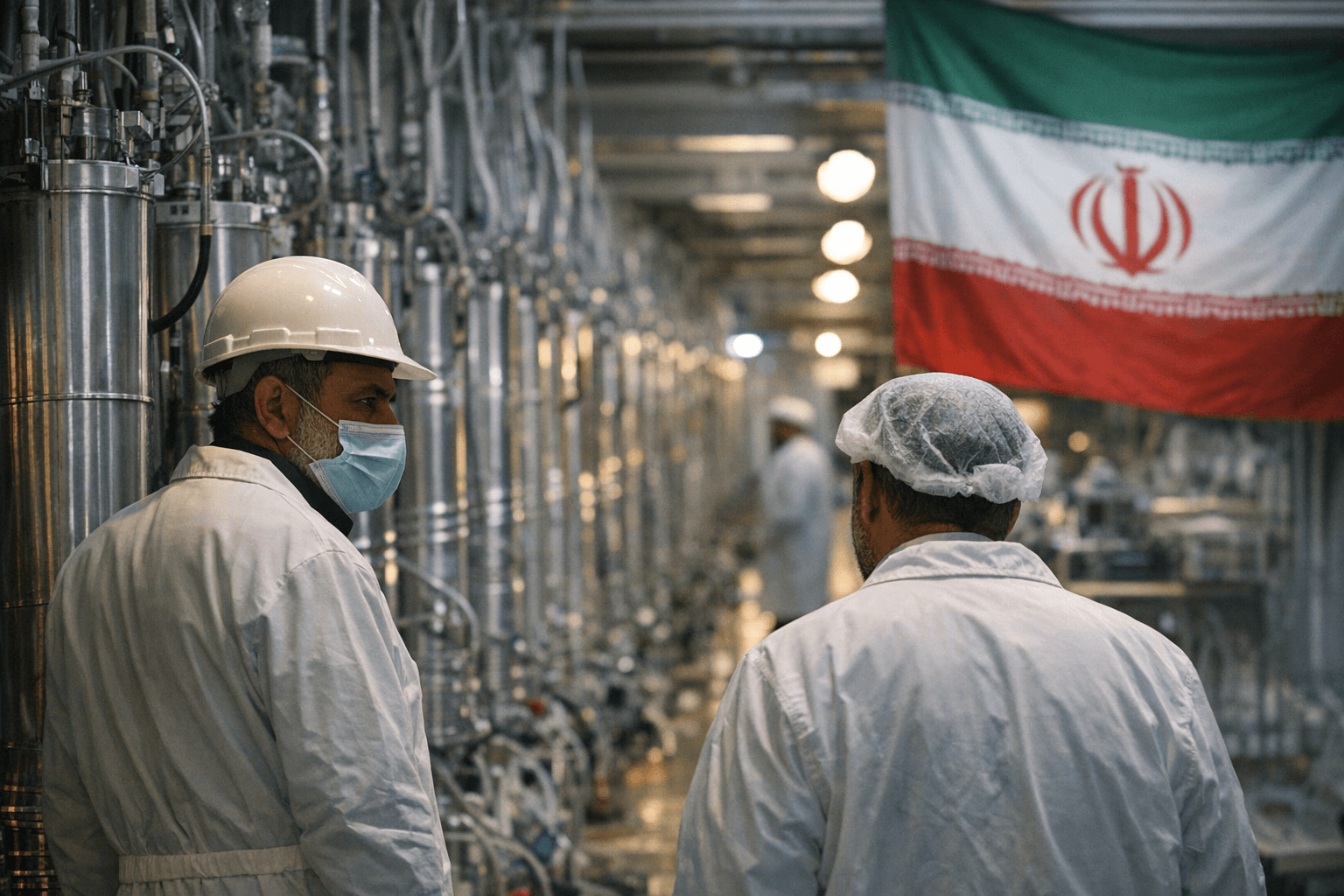
On sanctions, there is more room. Iran's demands include the removal of all primary and secondary sanctions, the release of frozen Iranian assets, the end of all United Nations Security Council resolutions targeting Iran, and the termination of all International Atomic Energy Agency resolutions on its nuclear program. Sanctions relief has historically been the most transactable element in U.S.-Iran diplomacy. But those past deals, including the 2015 JCPOA, offered only partial and reversible relief in exchange for strict limits on enrichment. Iran's current plan seeks complete sanctions removal while rejecting those limits.
The actual list of deal-breakers is short and sharp: Iran will not accept zero enrichment on Iranian soil; the United States will not accept an enrichment program it cannot verify and cap. Defense Secretary Pete Hegseth said the United States is "watching" Iran's enriched uranium and would take action if Tehran does not give it up, warning: "We know exactly what they have, and they know that, and they will either give it to us" or "we'll take it."
The possible trade-off space is narrower. Graduated sanctions relief tied to verified enrichment limits, a monitored Hormuz passage arrangement, and a UN-backed framework could theoretically bridge the gap. But Iran's domestic political framing of the ceasefire as a victory makes public retreat on enrichment nearly impossible for Tehran. And Trump's stated red lines make accepting enrichment rights politically untenable in Washington. The two-week clock has started; the distance between the plans has not shrunk.
This article was produced by Prism’s automated news system from verified source data, official records, and press releases, then run through automated quality and moderation checks before publishing. The system is built and supervised by the people who set the standards it runs under. Read our full AI policy.
Did this article answer your question?