Israel Kills Three Journalists in Southern Lebanon Airstrike, IDF Confirms Strike
Fatima Ftouni had just finished a live report from southern Lebanon when an Israeli airstrike killed her, her brother Mohammed, and a colleague in Jezzine on Saturday.
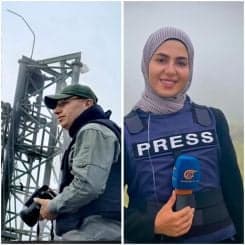
Fatima Ftouni had just wrapped a live broadcast from southern Lebanon when an Israeli airstrike struck the vehicle carrying her through the Jezzine district on Saturday, killing her, her video journalist brother Mohammed Ftouni, and Al Manar TV's longtime correspondent Ali Shuaib.
The three journalists, working for two different Beirut-based broadcasters, were traveling in a press-marked vehicle when the strike hit. Al Mayadeen TV confirmed the deaths of Fatima and Mohammed Ftouni. Hezbollah-owned Al Manar TV confirmed the death of Shuaib, describing him as an "icon of resistance media." Photographs taken at the scene in Jezzine showed a burned press helmet resting on the charred remains of their car.
The Israeli military acknowledged carrying out the strike and said it had conducted a targeted strike that eliminated Shuaib, accusing him of having "operated within the Hezbollah terrorist organisation under the guise of a journalist for the 'Al-Manar' network, while operating systematically to expose the locations of IDF soldiers operating in southern Lebanon and along the border." The IDF provided no evidence for those claims. Notably, the IDF statement made no mention of Fatima Ftouni or her brother Mohammed; ABC News reported it had asked the military for comment on their deaths.
The Committee to Protect Journalists said it was investigating the killings. "Journalists are not legitimate targets, regardless of the outlet they work for," the CPJ said. The organization went further: "We have seen a disturbing pattern in this war and in the decades prior of Israel accusing journalists of being active combatants and terrorists without providing credible evidence."
Lebanese officials offered swift and forceful condemnations. Prime Minister Nawaf Salam called the targeting of journalists "a flagrant violation of international humanitarian law." Information Minister Paul Morcos declared the actions "war crimes." The Lebanese presidency called the strike a "blatant crime," and a Lebanese government statement invoked Article 79 of Additional Protocol I of the 1949 Geneva Conventions and United Nations Security Council Resolution 1738, both of which prohibit targeting journalists who are not directly participating in hostilities.
The deaths carried particular weight given what Fatima Ftouni had already survived. She had been present at an October 2024 Israeli strike that, according to the CPJ, hit a compound housing 18 journalists in southern Lebanon, killing two journalists and a media worker. In footage she recorded and shared afterward, Ftouni stood in front of a destroyed car, holding her helmet, press vest and microphone. "This is what remains of my vest, my helmet," she told viewers, then raised the microphone: "and the weapon that we carry."
Saturday's killings were not an isolated event in this conflict. A strike on central Beirut earlier in March 2026 killed Mohammad Sherri, Al Manar's political programmes director. Lebanese authorities have reported at least 1,189 people killed since the current hostilities began. During the prior rounds of fighting between Israel and Hezbollah in 2023 and 2024, at least five journalists were killed in Israeli strikes in southern Lebanon alone, including an Al-Mayadeen correspondent and an Al-Manar cameraman.
The CPJ's warning about a "disturbing pattern" reflects a widening gap between the Israeli military's assertions about journalists and the verified evidence supporting them. No independent forensic or third-party verification of Saturday's strike had been reported by the time the deaths were confirmed.
Know something we missed? Have a correction or additional information?
Submit a Tip