Israeli soldier’s attack on Jesus statue sparks outrage, investigation in Lebanon
A viral image of an IDF soldier smashing a Jesus statue in Debel drew outrage as Israel’s military, Netanyahu and U.S. officials pressed for punishment.
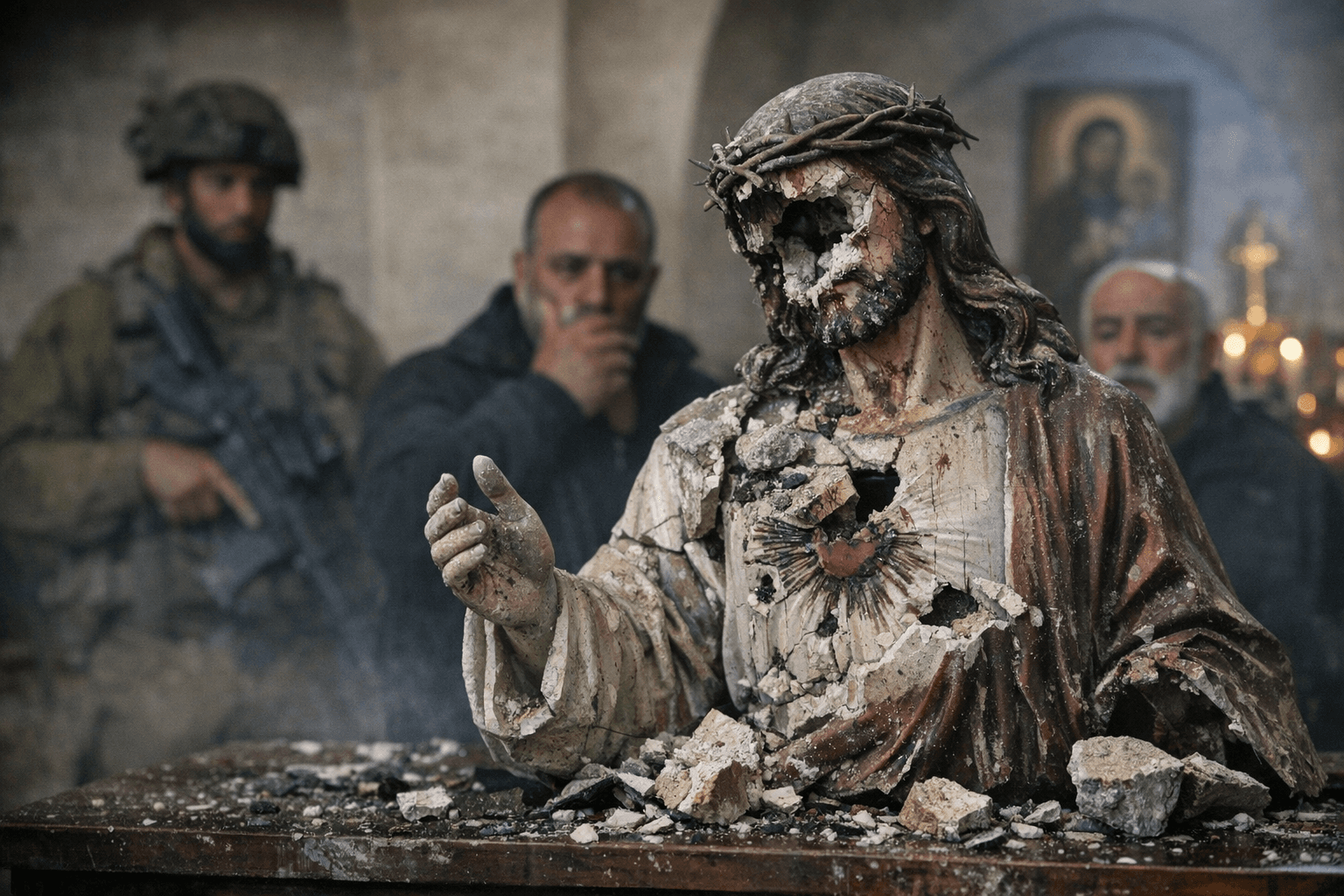
A photo of an IDF soldier striking a statue of Jesus Christ in the Christian village of Debel in southern Lebanon set off outrage after it spread across social media and drew more than 5 million views on X. The image, first posted by Palestinian journalist Younis Tirawi on April 19, showed the soldier wielding what appeared to be a sledgehammer or axe near the Lebanon-Israel border.
The Israeli military confirmed the image was authentic and said it viewed the incident with "great severity." It said the soldier’s conduct was inconsistent with its values, that the case was being handled through the chain of command, and that Northern Command would help the local Christian community restore the statue. The incident took place in Debel, a Christian village about 6 kilometres from the border, as Israel continued military operations in southern Lebanon during the ceasefire period in the war with Hezbollah.
Prime Minister Benjamin Netanyahu condemned the act, saying he was "stunned and saddened" and that the offender would face harsh disciplinary action. Foreign Minister Gideon Saar called the destruction "grave and disgraceful" and apologized to Christians whose feelings were hurt. U.S. Ambassador Mike Huckabee said "swift, severe, & public consequences are needed."
Local priest Fadi Falfel said the statue was part of a small shrine in the garden of a family home. That detail gave the image added force in a region where sacred spaces carry political as well as religious weight, especially for Christian communities living alongside a war that has already destroyed homes, churches and neighborhoods.
The reaction also reflected a broader grievance: critics in Lebanon, Israel and beyond said attacks on churches, mosques and other religious symbols have too often gone unpunished. Some commentators, lawmakers and activists linked the episode to concerns about impunity, religious intolerance and the treatment of Christian sites in the conflict zone. What began as a single viral image quickly became a test of discipline, accountability and whether symbolic acts in southern Lebanon can inflame tensions far beyond the village where the statue stood.
This article was produced by Prism’s automated news system from verified source data, official records, and press releases, then run through automated quality and moderation checks before publishing. The system is built and supervised by the people who set the standards it runs under. Read our full AI policy.
Did this article answer your question?


