Japan inflation stays below Bank of Japan target as subsidies blunt energy shock
Japan’s core inflation stayed at 1.8% in March, as fuel subsidies masked part of the energy shock and kept the BOJ’s target out of reach.
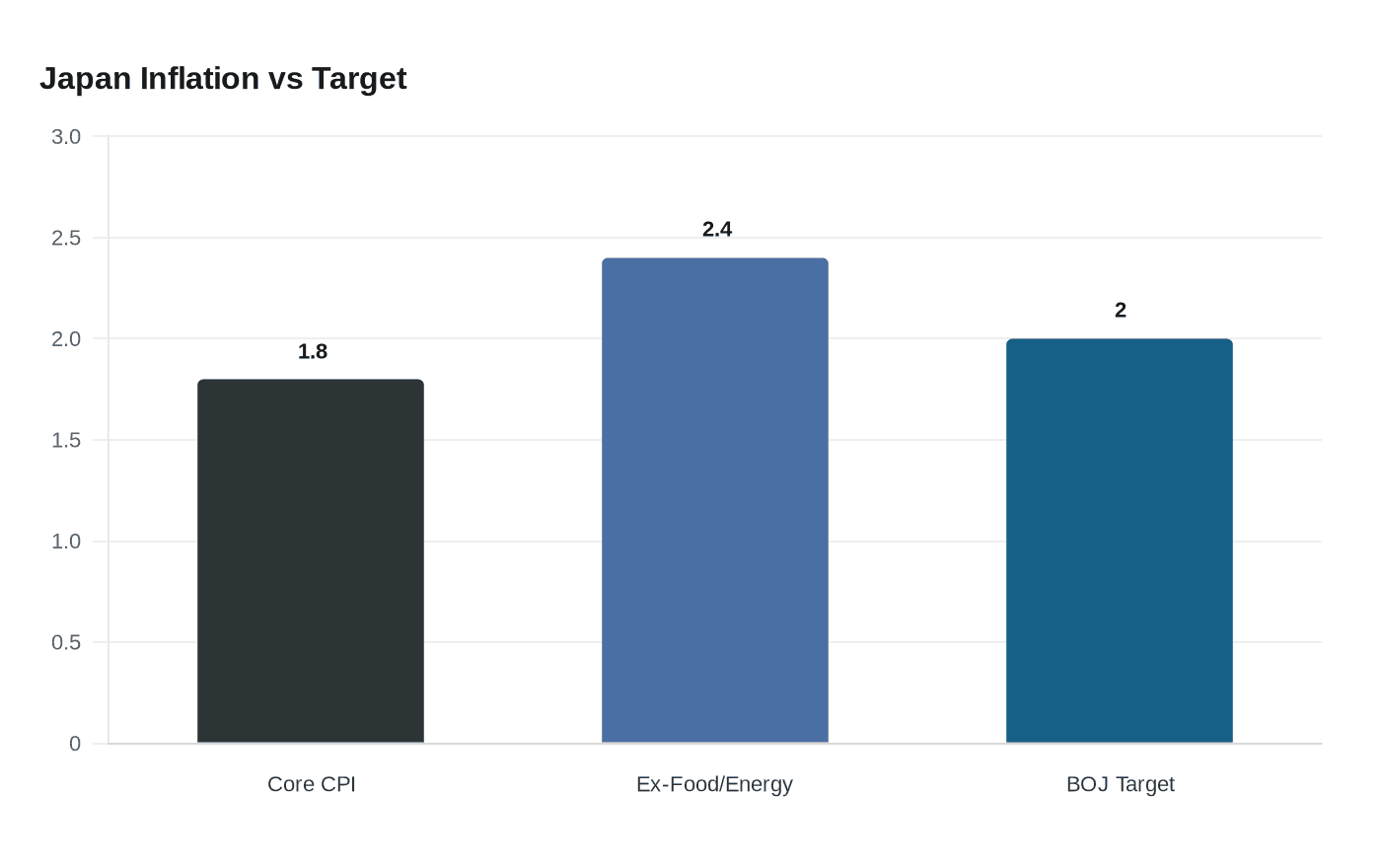
Japan’s fuel subsidies are cushioning households from a war-driven energy shock, but they are also making it harder for the Bank of Japan to judge whether inflation is truly softening or simply being muted by policy support.
Core consumer prices rose 1.8% in March from a year earlier, exactly matching economists’ median forecast and marking the first pickup in five months. Even so, the key inflation gauge stayed below the Bank of Japan’s 2% target for a second straight month, underscoring a central policy problem for Governor Kazuo Ueda and his colleagues.
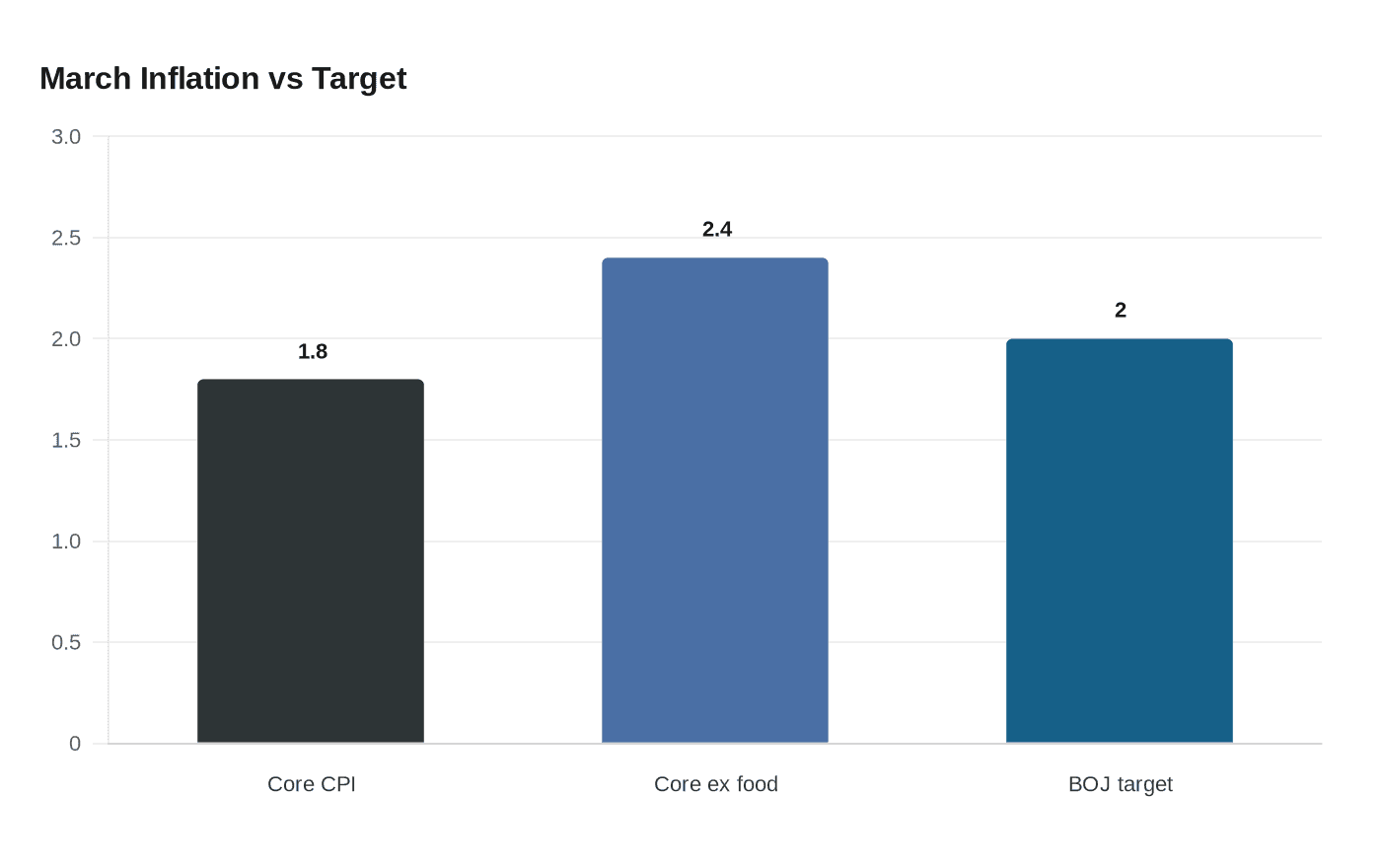
The more persistent measure of prices told a firmer story. Core CPI excluding fresh food and energy climbed 2.4% from a year earlier, showing that underlying inflation remained above target even as the headline core figure lagged. The gap points to an economy still feeling imported energy and commodity pressures, while government action is holding down the impact on households.
Fuel subsidies and moderating food inflation helped blunt the price shock linked to conflict in the Middle East, especially at the gasoline pump. That support may be buying time for consumers, but it also complicates the central bank’s reading of how much inflation is domestically generated and how much is being artificially suppressed.
The March figures arrived just before the Bank of Japan’s April 27 to 28 policy meeting, where traders and analysts expected the central bank to keep its benchmark rate at 0.75% and look for any hawkish hint about future tightening. The timing gives the March data extra weight, because the BOJ is still trying to determine whether inflation is durable enough to justify moving further away from years of ultra-easy policy.
Tokyo’s core CPI had already slowed to a near two-year low in March, making the capital’s reading a warning sign for the national print. The national data suggest that inflation is still present, but not yet broad or strong enough to settle the debate over how quickly the BOJ can normalize policy.
That uncertainty is reinforced by household expectations. A quarterly survey found that most Japanese households expect prices to keep rising in the coming years, leaving pressure on the central bank even as subsidies damp the immediate shock. The BOJ’s quarterly Outlook for Economic Activity and Prices, usually released in January, April, July and October, now lands in the middle of a policy debate that is still being shaped by energy costs, subsidy decisions and whether Japan’s inflation is finally becoming self-sustaining.
This article was produced by Prism’s automated news system from verified source data, official records, and press releases, then run through automated quality and moderation checks before publishing. The system is built and supervised by the people who set the standards it runs under. Read our full AI policy.
Did this article answer your question?


