JPMorgan plans more AI hires, fewer bankers as automation grows
Dimon said JPMorgan will hire more AI specialists and fewer bankers, signaling automation is already shaping staffing at a 318,512-person lender.

Jamie Dimon put one of Wall Street’s clearest labor signals on the record: JPMorgan Chase will likely hire more artificial-intelligence specialists and fewer traditional bankers as automation changes how the bank is run. Speaking with Bloomberg Television’s Haslinda Amin at JPMorgan’s Global China Summit in Shanghai, Dimon said AI would make workers more productive, but he also acknowledged that the shift could reduce some jobs over time.
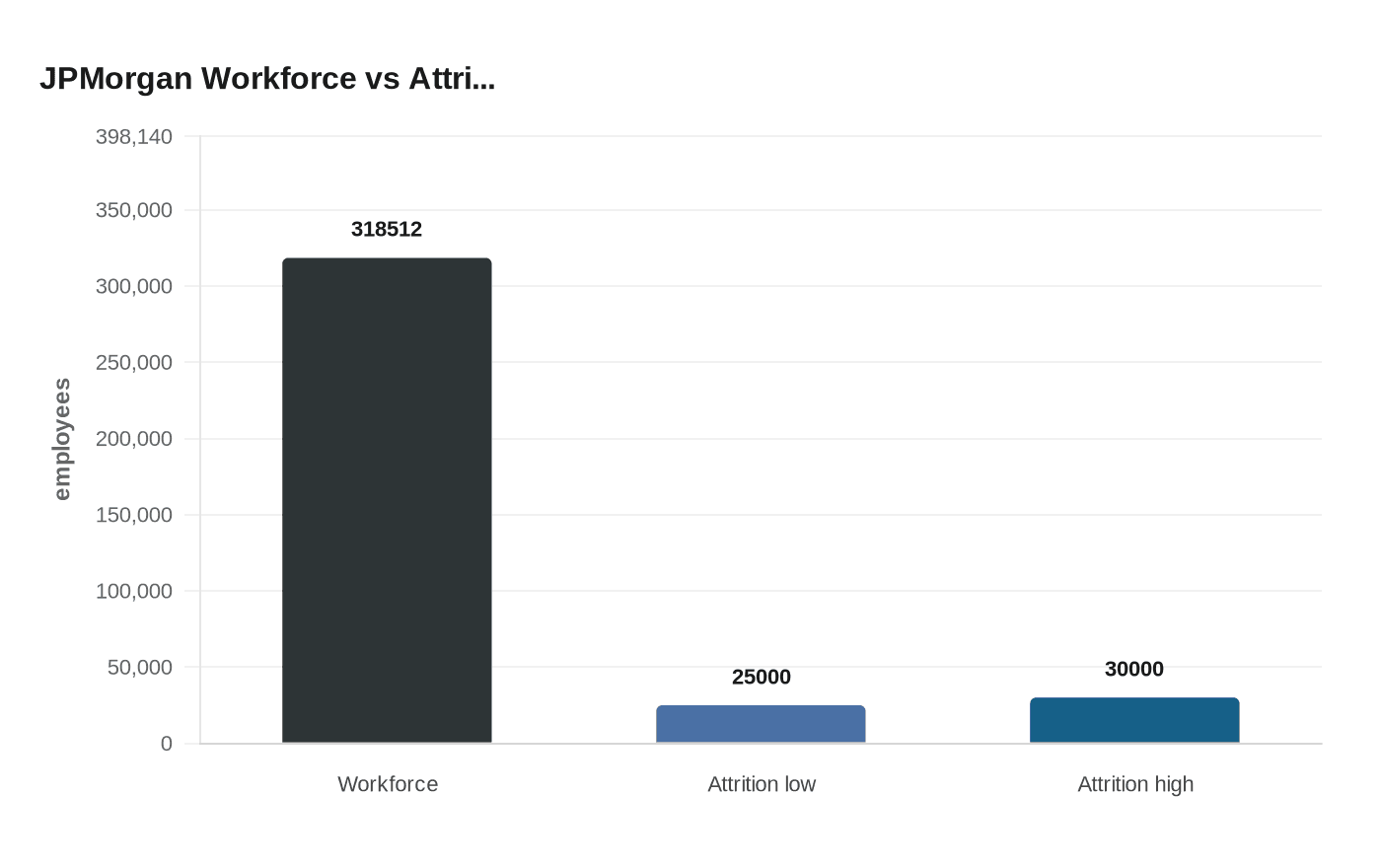
The scale matters. JPMorgan said its workforce stood at 318,512 employees as of Dec. 31, 2025, and Dimon said the bank’s annual attrition rate is about 10%, or roughly 25,000 to 30,000 employees. That gives JPMorgan room to adjust through retraining, redeployment and early retirement instead of a sudden round of mass layoffs. Still, his message was unmistakable: AI is no longer just a productivity story inside large banks, but a staffing strategy.

Dimon said AI will affect “every job,” a sweeping statement from the leader of America’s biggest bank. The hiring mix he described points to a gradual but real reshaping of white-collar work, with more demand for technologists and fewer openings in conventional banking roles where software can absorb routine tasks. For JPMorgan, that means the winners are likely to be data scientists, machine-learning engineers and other AI specialists, while the pressure lands on functions that rely on repetitive analysis, processing and support work.
The comments also fit a broader banking trend. Standard Chartered said it would eliminate more than 7,000 jobs over four years as it steps up AI and automation, with Reuters reporting that the cuts were tied to technology replacing lower-value work. Together, the two banks suggest the industry is moving from AI experimentation to organizational redesign, with staffing plans increasingly built around software rather than around head count alone.
That shift could reverberate well beyond banking. If large lenders begin systematically replacing some traditional roles with AI talent, compensation patterns, career pipelines and internal promotion ladders across finance could change. It also raises the pressure on rivals to prove that heavy technology spending will translate into lower costs and stronger margins. Dimon’s remarks left little doubt about the direction of travel: banks that build enough AI capability may become leaner and more competitive, while those that lag could wind up slower, costlier and less able to keep pace.
Know something we missed? Have a correction or additional information?
Submit a Tip