UK borrowing hits £24.3bn in April, second highest on record
April borrowing hit £24.3bn, £3.4bn above forecast, as debt interest reached a record April high and narrowed the government’s fiscal room.
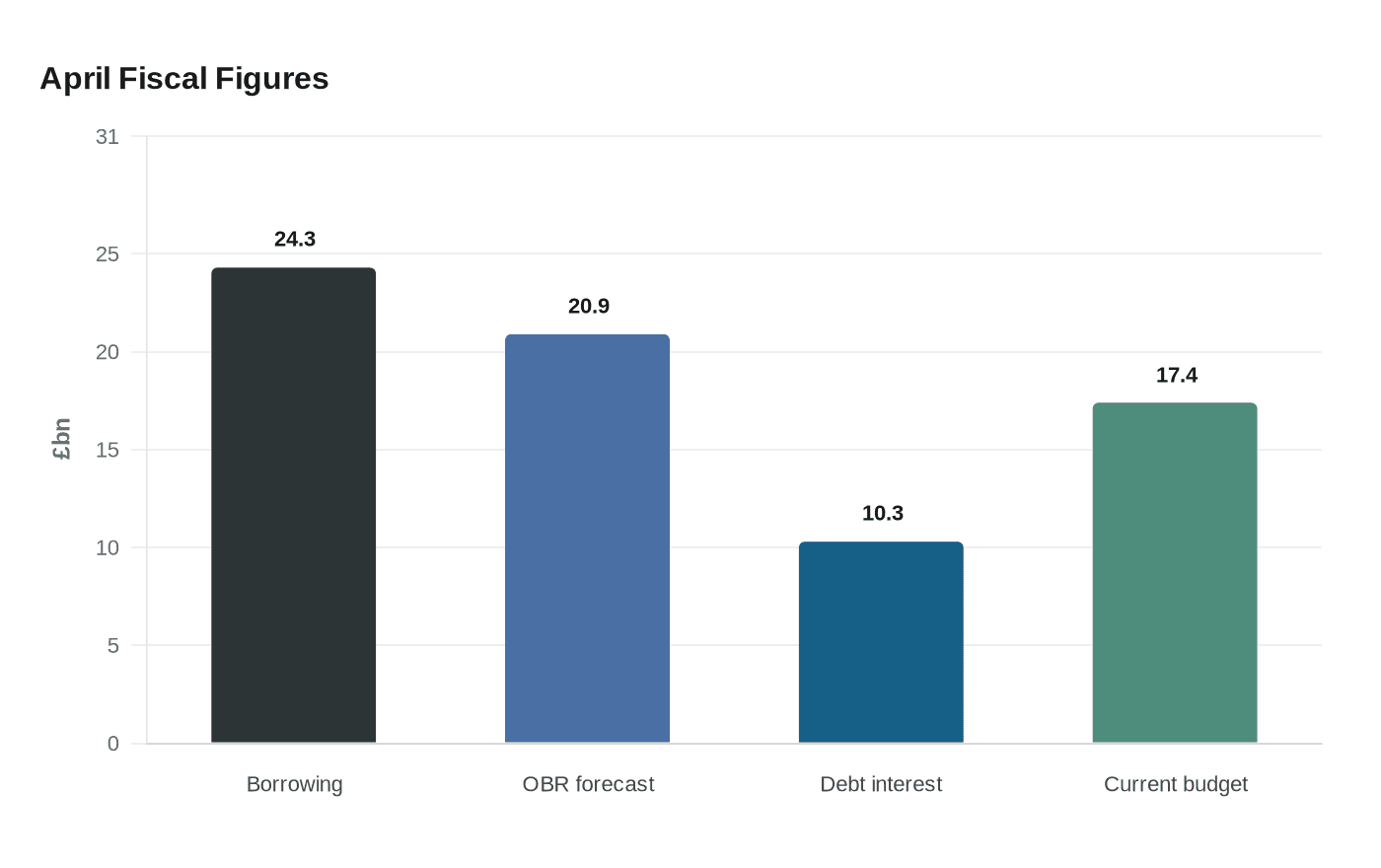
Britain borrowed £24.3 billion in April, the second-highest figure for any April on record, as rising debt interest and a deeper day-to-day deficit pushed the public finances well beyond the Office for Budget Responsibility’s expectation. The monthly shortfall was £4.9 billion, or 25.1%, larger than a year earlier and £3.4 billion above the OBR’s £20.9 billion forecast.
The biggest pressure point was debt service. Central government debt interest payable reached £10.3 billion in April, £0.9 billion more than in April 2025 and the highest in any April on record. That left borrowing to cover the current budget deficit, the measure of day-to-day spending funded by income, at £17.4 billion, up £3.4 billion, or 24.6%, from a year earlier and £2.6 billion above forecast. The figures underline how quickly interest costs can distort the fiscal arithmetic, especially when borrowing is already elevated.

For ministers, the April miss is an early stress test of the government’s fiscal story. The month did not just come in weak against forecasts; it showed that higher debt charges can chew through room that might otherwise have gone to services, tax cuts or pre-election promises. Even before the next budget choices are set out, a larger-than-expected cash gap makes it harder to claim there is spare capacity without either raising taxes, trimming spending or accepting more borrowing.
The broader annual picture was less severe but still heavy. Borrowing in the financial year ending March 2026 was provisionally estimated at £129.0 billion, down £22.8 billion from the previous year and equivalent to 4.2% of GDP, the lowest share since the financial year ending March 2020. Even so, that total remained £3.7 billion below the OBR’s forecast of £132.7 billion. The Office for National Statistics said its initial estimate for the year ending March 2026 had been reduced by £3.0 billion because of regular updates to central government data.
Debt remains the central constraint. Public sector net debt excluding public sector banks stood at 94.2% of GDP at the end of April, up 0.5 percentage points from a year earlier and at levels last seen in the early 1960s. Public sector net financial liabilities were estimated at 83.6% of GDP. With borrowing running above forecast and debt interest at record April levels, the fiscal headroom available to the United Kingdom remains tight.
Know something we missed? Have a correction or additional information?
Submit a Tip