Judge Delays Purdue Pharma Sentencing After Protesters Demand to Speak
Protesters forced a one-week delay in Purdue Pharma’s sentencing, turning a final legal step into a public fight over whether victims were heard.
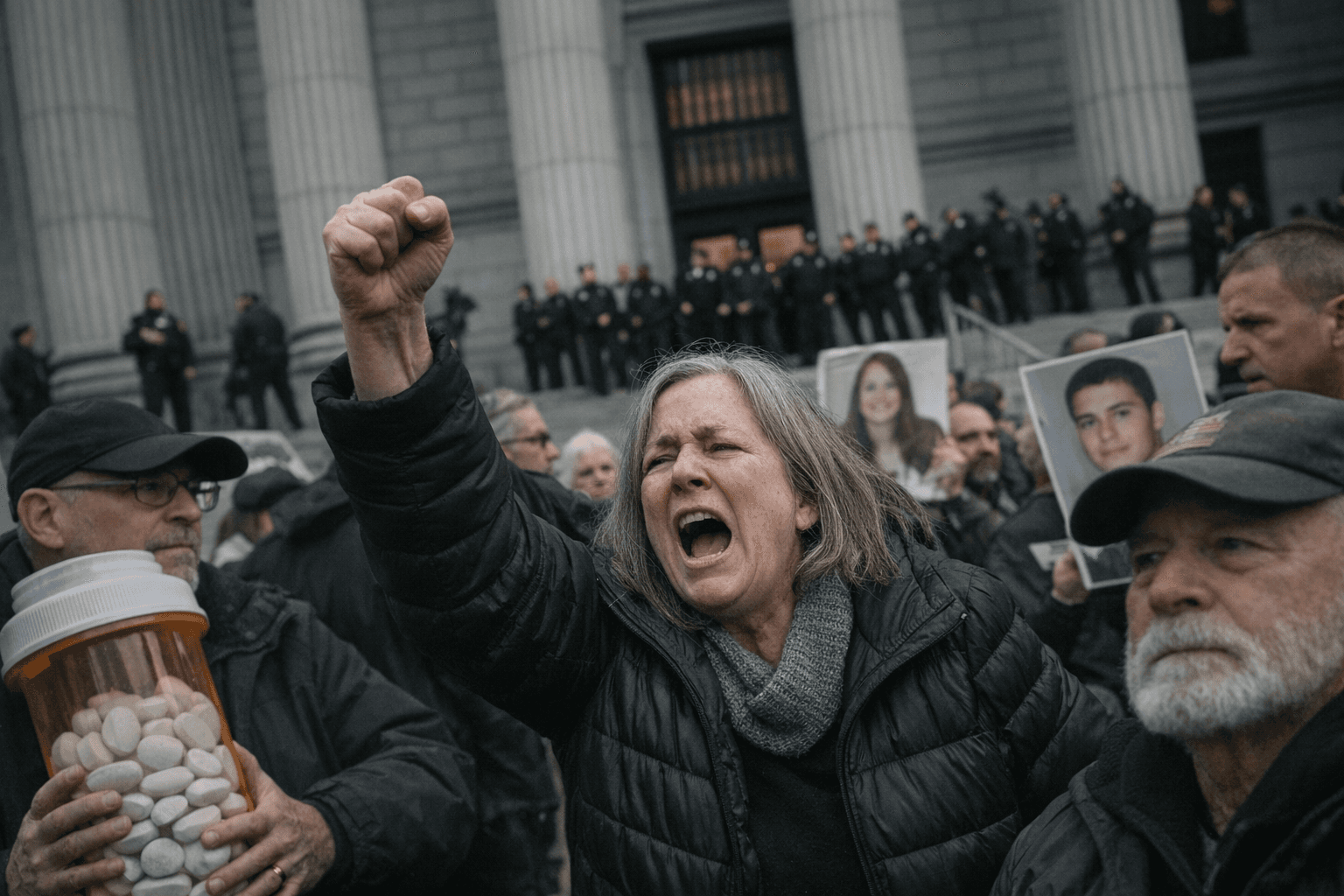
A federal judge in Newark put Purdue Pharma’s criminal sentencing on hold for a week after protesters and members of the public demanded a chance to speak before the case was closed. U.S. District Judge Madeline Cox Arleo had been expected to accept Purdue’s 2020 guilty plea on Tuesday, a step tied to a $3.5 billion criminal fine and $2 billion in criminal forfeiture over the company’s marketing of addictive opioid drugs.
Instead, Arleo delayed the hearing to April 28 and said she wanted more public participation before ending one of the final chapters in the Purdue case. One woman joining remotely interrupted the proceeding with the words, “This is not justice!” while Arleo was speaking. The judge replied that the most important people in the plea were the victims. Eight victims had been scheduled to address the court, with filings describing deaths, addiction and family losses that grew out of Purdue’s role in the opioid crisis.

The delay underscored how the Purdue case has become more than a corporate sentencing. It is now a test of whether negotiated justice can satisfy people who say the process has moved too quickly toward settlement and too slowly toward accountability. Purdue filed for Chapter 11 bankruptcy in 2019 amid thousands of opioid-related lawsuits. In November 2020, it pleaded guilty to three federal criminal charges as part of a deal then valued at more than $8 billion in penalties overall.
The stakes remain enormous. The opioid epidemic has claimed more than 1 million lives in the United States since 2000, and Purdue has long stood as a symbol of the aggressive promotion of OxyContin and other painkillers that helped fuel it. The company’s planned sentencing is one of the last steps before it can complete a bankruptcy settlement that would dissolve Purdue and direct its assets toward people harmed by the crisis.
The broader deal has already moved through major milestones. A revised $7.4 billion Purdue-Sackler settlement in principle was announced in 2025 after the Supreme Court rejected an earlier plan that would have shielded the Sackler family from certain future lawsuits. A federal bankruptcy judge approved the bankruptcy plan in November 2025, and court reporting said it could take effect on May 1, 2026 if the criminal sentencing is completed. Under the revised plan, some money is expected to go directly to individual victims, including people born with opioid withdrawal, while the rest would support governments, tribes and opioid-abatement efforts. With opioid settlements across drugmakers, wholesalers and pharmacies now totaling about $50 billion, Purdue’s final judgment has become a benchmark for how mass-harm corporate crime is punished, and whether victims are heard before the record is closed.
This article was produced by Prism’s automated news system from verified source data, official records, and press releases, then run through automated quality and moderation checks before publishing. The system is built and supervised by the people who set the standards it runs under. Read our full AI policy.
Did this article answer your question?