Moderna begins late-stage human trial of mRNA bird flu vaccine
Moderna's Phase 3 bird flu trial began in the U.S. and UK, testing 4,000 adults as officials try to stay ahead of a virus still spreading in birds.
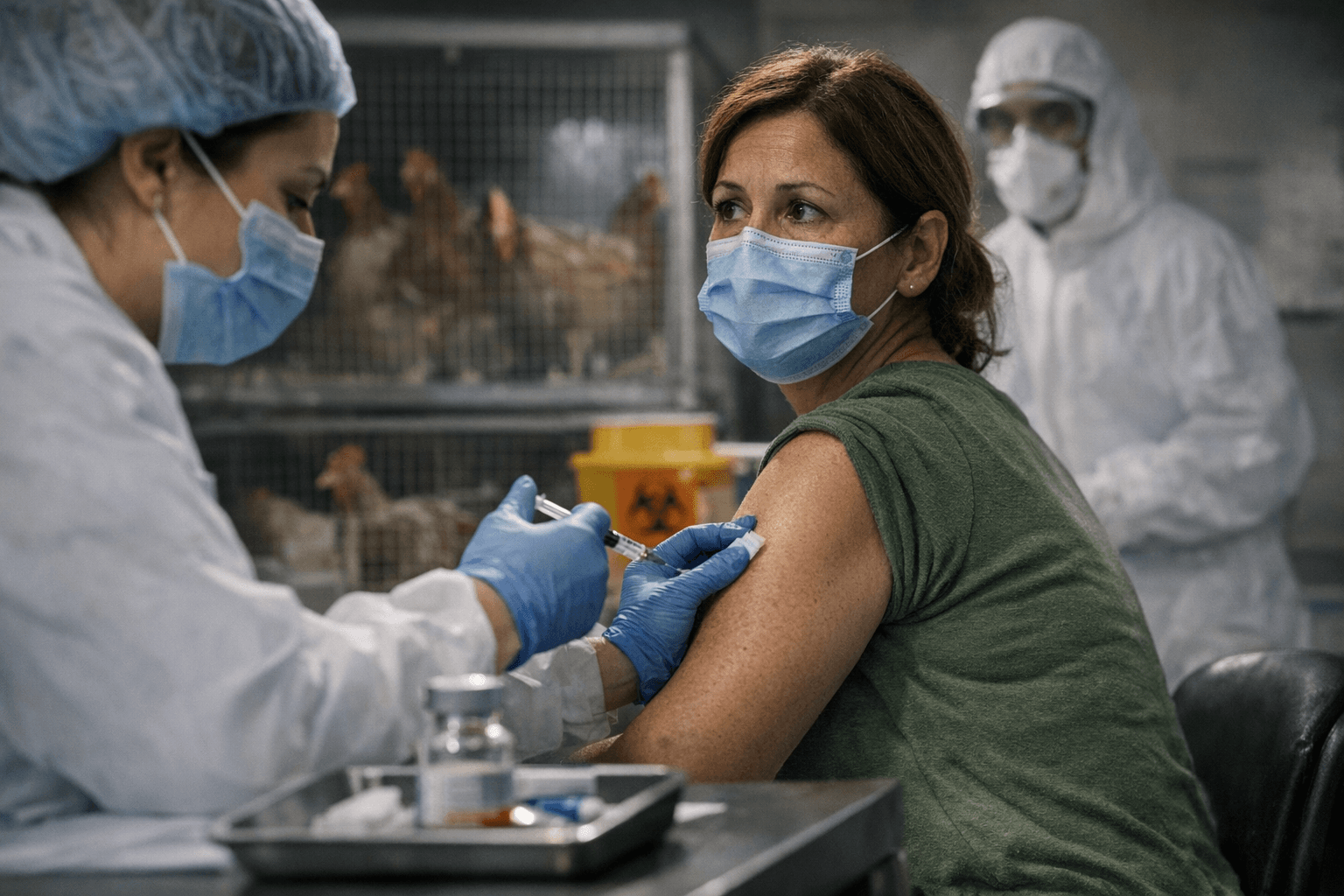
Moderna has moved its H5N1 vaccine candidate into the first late-stage human trial for a pandemic bird flu shot made with mRNA technology, a milestone that reflects preparation for a threat that has not yet found efficient human-to-human spread. The Phase 3 study of mRNA-1018 began in the United States and the United Kingdom and is expected to enroll about 4,000 healthy adults age 18 and older.
The trial matters because it can test safety and immunogenicity in a large group before any emergency hits, but it cannot answer the bigger question of whether the vaccine would halt a future pandemic. That gap is exactly why governments and public health agencies are trying to move faster than they did in past outbreaks, when delays in testing, manufacturing and procurement left gaps between warning signs and usable protection.
The study is backed by as much as $54.3 million from the Coalition for Epidemic Preparedness Innovations, which is helping push the vaccine toward licensure. Moderna said that if the shot is licensed and a flu pandemic is declared, it would set aside 20 percent of its H5 manufacturing capacity for low- and middle-income countries at affordable prices, a pledge that could shape how supply is shared in a crisis.
The timing also reflects political and institutional strain around pandemic readiness. U.S. Health Secretary Robert F. Kennedy Jr. canceled more than $700 million in Moderna bird flu vaccine contracts last May, yet the company still advanced the candidate into late-stage testing. Moderna chief executive Stéphane Bancel said bird flu remains a pandemic threat. Richard Hatchett, CEPI’s chief executive, said the pivotal trial could help reshape how emerging pathogens are confronted.
For now, the public health threat remains contained. The U.S. Centers for Disease Control and Prevention says A(H5) bird flu is widespread in wild birds globally and is causing outbreaks in poultry and U.S. dairy cows, with sporadic human cases among dairy and poultry workers. The CDC says there is no known person-to-person spread at this time. As of March 6, 2026, the agency reported 71 human cases in the United States since February 2024, including 2 deaths, with exposures mainly linked to dairy herds and poultry farms or culling operations.
British officials are treating avian influenza as a standing economic and animal-health problem as well as a future pandemic risk. The UK government has said annual outbreaks cost government and industry up to £174 million, and noted that recent outbreaks in the UK and Europe have been unprecedented. Richard Pebody of the UK Health Security Agency said the virus continues to evolve in birds and other animal hosts and could adapt to spread from person to person. Separate vaccine trials in turkeys, launched in the UK on March 5, are part of a broader effort to blunt losses in poultry while policymakers weigh vaccination alongside biosecurity, culling and movement controls.
This article was produced by Prism’s automated news system from verified source data, official records, and press releases, then run through automated quality and moderation checks before publishing. The system is built and supervised by the people who set the standards it runs under. Read our full AI policy.
Did this article answer your question?