RFK Jr. Defends NIH Cuts as Lawmakers Blast Health Budget Plan
RFK Jr. defended a $5.787 billion NIH cut even as lawmakers warned it would weaken research and vaccine policy. The fight exposed a broader test of federal health operations.
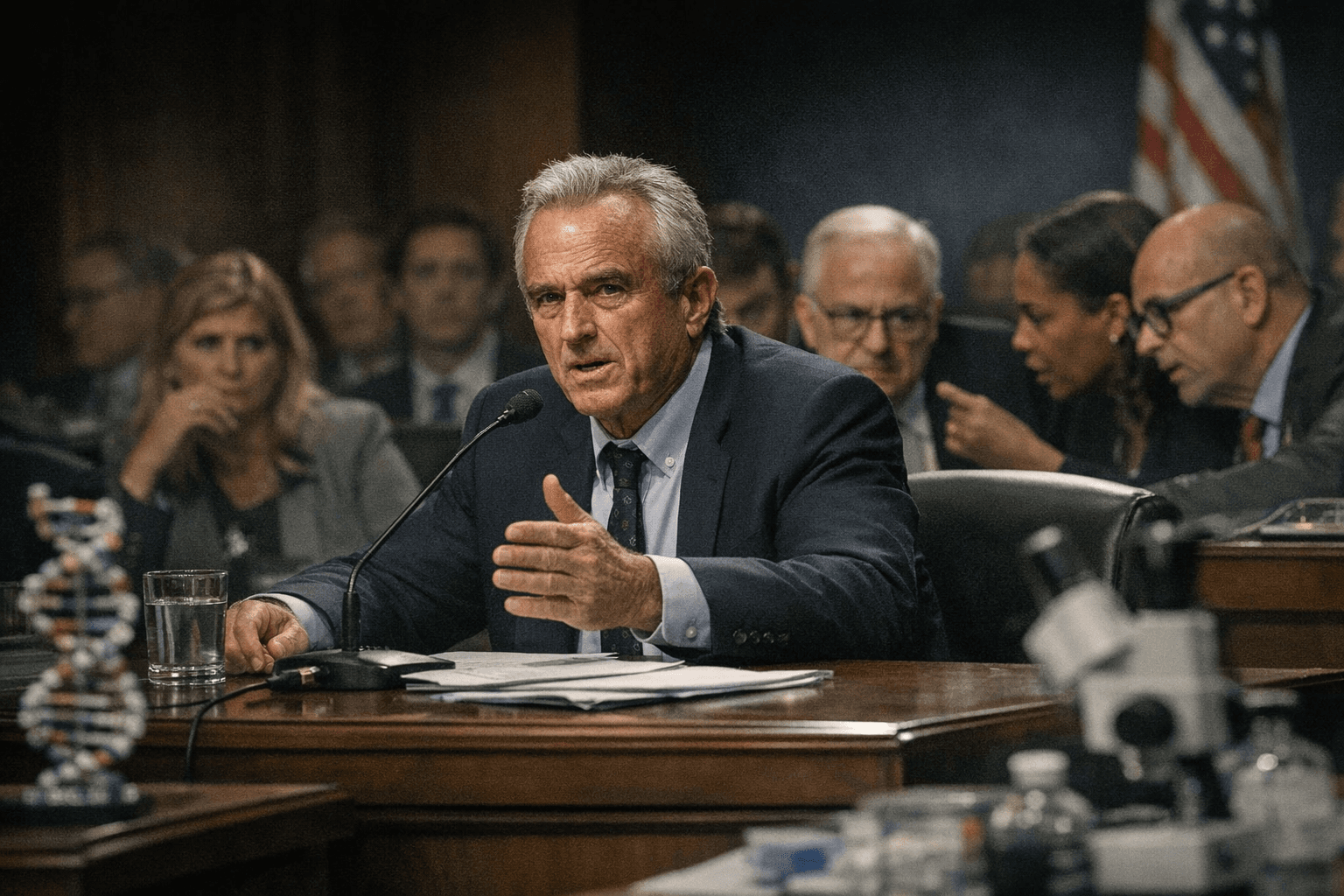
Robert F. Kennedy Jr. came under sharp bipartisan pressure over a proposed $5.787 billion cut to the National Institutes of Health, a reduction of 12.3%, as House lawmakers examined how his department’s budget would actually function if approved. The hearing before the House Committee on Energy and Commerce Subcommittee on Health was the final session of four budget hearings on Capitol Hill, and it put the Trump administration’s health plan under a brighter spotlight than any slogan about efficiency.
The U.S. Department of Health and Human Services has proposed $111.1 billion in discretionary budget authority for fiscal year 2027, a 12.5% reduction from fiscal 2026. HHS said the request is designed to support the MAHA agenda and to consolidate and restructure parts of the department, including a broader overhaul that would create the Administration for a Healthy America. Kennedy told lawmakers the NIH cuts were “painful” but still backed the White House proposal as a way to reduce wasteful spending.
That defense did little to calm lawmakers worried about the operational damage. Chair Robert Aderholt called extreme funding swings “counterproductive,” underscoring a central concern on Capitol Hill: research agencies cannot plan multi-year grants, staffing or disease-response work when funding is repeatedly jolted up and down. Democrats said they would reject cuts to NIH, the Centers for Disease Control and Prevention and the Agency for Healthcare Research and Quality, arguing the proposal would weaken the federal public-health system at the same time it is being asked to do more.
The stakes were not abstract. The American Society of Hematology said the proposed 12.3% reduction in NIH funding would impede progress in research, a warning that reflected broader anxieties across biomedical science about delayed trials, fewer awards and slower movement from lab work to treatment. For patients and researchers waiting on that pipeline, budget restraint translates into fewer grants, fewer studies and more uncertainty about what gets delayed or stopped.

Kennedy’s appearance also came against the backdrop of turmoil at the Centers for Disease Control and Prevention, where Susan Monarez, the former director, said she was fired for “holding the line on scientific integrity.” Monarez said Kennedy urged her to preemptively accept recommendations from a CDC vaccine advisory panel and to fire career officials overseeing vaccine policy, a version of events Kennedy denied. He said he asked whether Monarez was trustworthy, and said she replied “No.”
The clash left the hearing as more than a budget argument. It became a test of whether the administration’s drive to cut, consolidate and rewrite federal health priorities can be squared with the day-to-day demands of research, vaccine policy and public-health response.
This article was produced by Prism’s automated news system from verified source data, official records, and press releases, then run through automated quality and moderation checks before publishing. The system is built and supervised by the people who set the standards it runs under. Read our full AI policy.
Did this article answer your question?