Judge to rehear Trump bid to move hush-money conviction
A federal judge will reconsider removing Trump's Manhattan hush-money conviction to federal court, a step that could allow presidential immunity arguments.

A federal judge in New York will hear arguments after an appeals court ordered a fresh look at whether Donald Trump’s Manhattan hush-money conviction should be moved to federal court. The hearing follows a November directive from the 2nd U.S. Circuit Court of Appeals that sent the question back to U.S. District Judge Alvin K. Hellerstein for further consideration.
The appeals panel concluded that Hellerstein “erred by failing to consider ‘important issues relevant’ to Trump’s request to move the New York case to federal court.” The three-judge panel made clear it would “express no view” on how Hellerstein should ultimately rule, but instructed him to take a closer look at the arguments and evidence presented by both sides.
At issue is whether the state prosecution should be removed to federal court so Trump can pursue defenses grounded in presidential immunity. If the case is transferred, Trump’s legal team would be positioned to argue that actions taken while president are immune from state criminal prosecution and seek dismissal in federal court. The Manhattan district attorney’s office opposes removal and has urged that the case remain in state court.
Trump’s lawyers and prosecutors filed lengthy written submissions ahead of the hearing, laying out contrasting views of the legal standards that should govern removal and immunity. “Trump is not expected to attend Wednesday's arguments in federal court in New York City, which were preceded by lengthy written submissions from Trump's lawyers and the Manhattan district attorney's office, which prosecuted the case and wants it to remain in state court.”
In public filings and statements reported by prosecutors, Trump denies the underlying allegation. “Trump denies Daniels’ claim and said he did nothing wrong.” Separately, he has pursued parallel appellate relief in the New York state courts. “He has asked a state appellate court to overturn the conviction,” a filing noted.
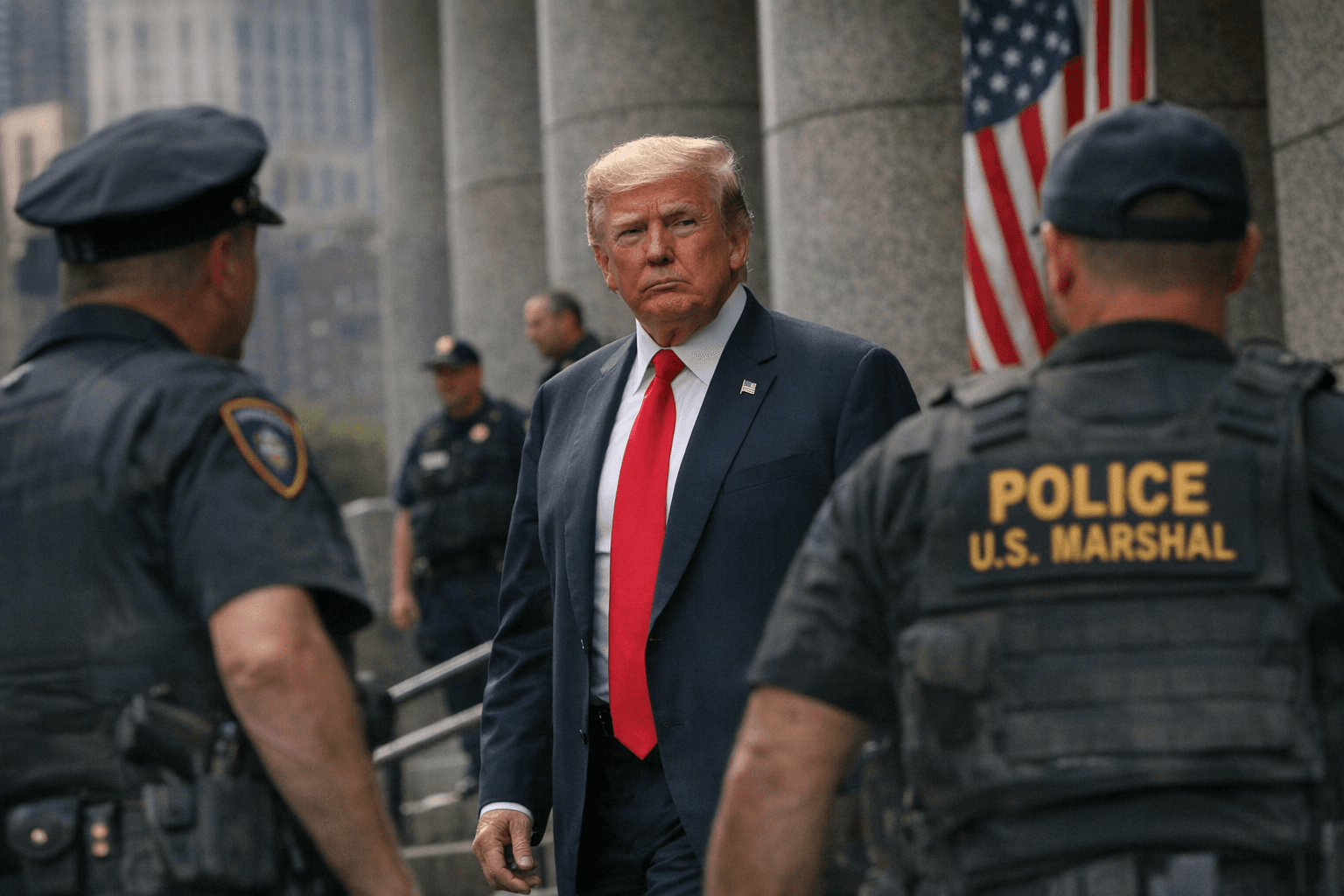
The procedural posture is layered and carries significant constitutional implications. The 2nd Circuit’s remand does not resolve whether presidential immunity applies; it simply requires the federal judge to reassess the removal motion in light of issues the appellate judges deemed insufficiently addressed. Depending on Hellerstein’s ruling, the case could return to the appeals court for further review, potentially setting up a sequence of federal and state appeals that could reach higher courts.
Legal experts say the dispute highlights the tension between state criminal authority and assertions of federal executive immunity. Defense lawyers favor federal adjudication as a forum more hospitable to constitutional defenses tied to the presidency. Prosecutors counter that state courts are competent to resolve criminal allegations and that removal would improperly shield conduct from local accountability.
The hearing in Manhattan will test how far federal courts must go in weighing immunity claims before allowing a state prosecution to proceed. The immediate question for Hellerstein is procedural: did he adequately evaluate the transfer request the first time, or must he now apply additional considerations outlined by the appeals panel.
The outcome will determine not only the forum for post-conviction litigation but also the trajectory of broader legal fights over immunity and the reach of state criminal law when actions are tied to the presidency.
This article was produced by Prism’s automated news system from verified source data, official records, and press releases, then run through automated quality and moderation checks before publishing. The system is built and supervised by the people who set the standards it runs under. Read our full AI policy.
Did this article answer your question?

