Kenyan Mother’s Kindness Shaped Her Children’s Lives and Values
A Kenyan mother’s insistence on serving tea to every visitor became a lesson in care, and only later did her children see it as inheritance.
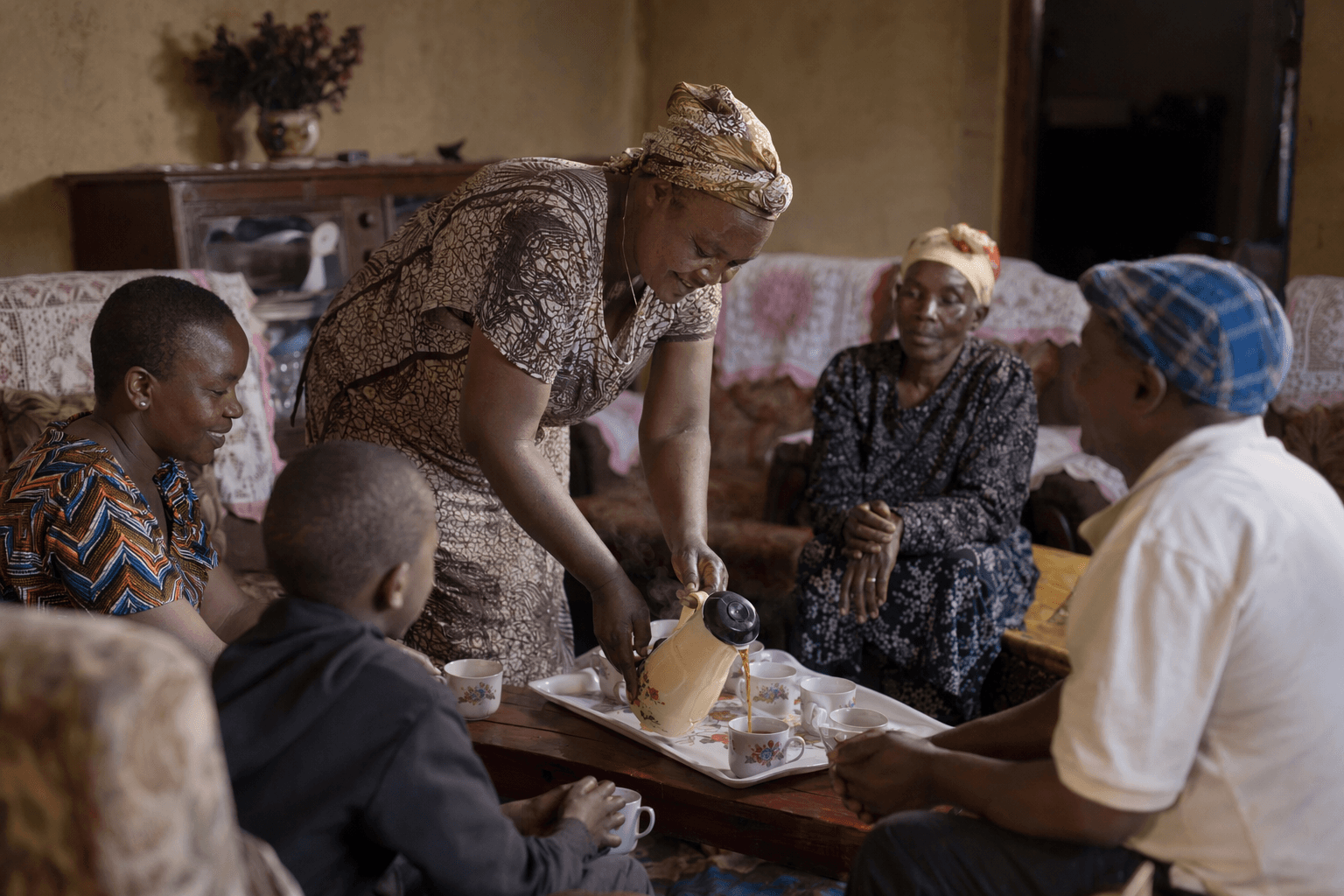
The lesson hidden in every cup
Bertha Ngumbi did not raise her children to treat hospitality as a gesture reserved for special occasions. In their home in Kenya, every visitor was expected to be welcomed with black tea, whether the person was expected, unannounced, a relative, or a stranger passing through. Esther Ndumi Ngumbi, who now lives and teaches in Illinois, says her mother is “one of the kindest women” she knows, but as a child she did not always experience that kindness as gentle.
The family routine was demanding. Esther and her siblings, three sisters and one brother who has since passed on, had to make tea for everyone who entered the house. If guests arrived at lunch or dinner, Bertha would invite them to join the family meal, which meant there was less food for the children. What felt like interruption and sacrifice in childhood later became a lesson Esther could not ignore: kindness was not an abstraction in her home, but a daily practice with a cost.
How a household ritual shaped character
The story gains its force from the tension between obligation and generosity. Esther says the practice did not make her happy when she was growing up, and Faith remembers especially hard days when there was not enough firewood, or rain had left the wood wet, making tea preparation even more difficult. Those details matter because they show that hospitality was not performed only when it was convenient. It was expected even when the family was short on fuel, short on time, or short on food.
That is what makes the change in Esther’s perspective so striking. As an adult in the United States, she now sees that her mother’s insistence on serving others shaped her own values. She says she has learned to help others even when she is struggling herself. In other words, what once felt like pressure became a moral inheritance, one that moved from resistance to recognition.
A kindness that was itself inherited
When Esther finally asked Bertha where that generosity came from, Bertha gave a simple answer: she learned it from her own mother, Esther’s grandmother. Bertha grew up with eight siblings, a household she described as “a basketball team with a reserve.” The image captures both crowded family life and the need to share scarce resources, and it helps explain why hospitality became such a deeply rooted habit.
Bertha also said that sometimes her children came home from school at lunch and found there was nothing to eat because she had given their food to people passing by. That is not a small domestic detail. It is the clearest expression of the story’s larger truth: generosity in this family was not symbolic, and it was not cost-free. It was a way of organizing life around the needs of others, even when that meant leaving less for one’s own children.
Why tea carries such weight in Kenya
The cup at the center of this story is also part of a much larger national tradition. Commercial cultivation of tea in Kenya began in 1924, according to the Kenya Tea Board, and Kenya has become one of the world’s leading black tea producers. Tea is not only a household staple or a sign of welcome; it is also a major economic force.
A 2025 report from the U.S. Department of Agriculture Foreign Agricultural Service says tea is Kenya’s leading export commodity, accounting for 16.3 percent of total exports. The same report says the industry supports the livelihoods of more than 7 million people directly and indirectly, and that tea accounted for about 1.2 percent of Kenya’s GDP in 2024. In that context, the tea Esther and her siblings were asked to prepare was never just tea. It was part of a national economy and a social ritual, linking private generosity to public life.
What this family story reveals about care and community
The deeper lesson here is not simply that Bertha was kind. It is that kindness, in this family, was practiced as discipline. The children were taught to serve first, even when that service came with inconvenience, hunger, or frustration. That kind of upbringing can be difficult in the moment, especially for children who feel the immediate loss of food, firewood, or ease. But it can also leave behind a durable ethic: care is something you do before you feel ready.
Esther’s reflection matters because it shows how moral habits travel across generations. Her mother learned from her mother. Esther, after resisting the burden of those family expectations, came to understand their value. In a more individualistic America, that kind of inheritance stands out precisely because it asks a different question than self-protection does. It asks what a household owes to a stranger, what a child learns from watching a parent give away scarce resources, and how generosity becomes a civic habit long before it becomes an idea.
Bertha Ngumbi’s kitchen was never just a private space. It was a classroom for obligation, a site where care was practiced in public and passed down through family life. The tea was black, but the lesson was clear: generosity can be demanding, and that is exactly why it lasts.
This article was produced by Prism’s automated news system from verified source data, official records, and press releases, then run through automated quality and moderation checks before publishing. The system is built and supervised by the people who set the standards it runs under. Read our full AI policy.
Did this article answer your question?