Kim Yo Jong Demands Seoul Explain Drone Incursions, Accountability Sought
North Korea’s Kim Yo Jong publicly pressed South Korea to furnish a “concrete” explanation after Pyongyang said it shot down a drone that crossed into its airspace on Jan. 4. The demand intensifies a diplomatic standoff with potential security and market implications for Seoul as investigators from both sides work to determine origin, intent and whether civilian operators were involved.
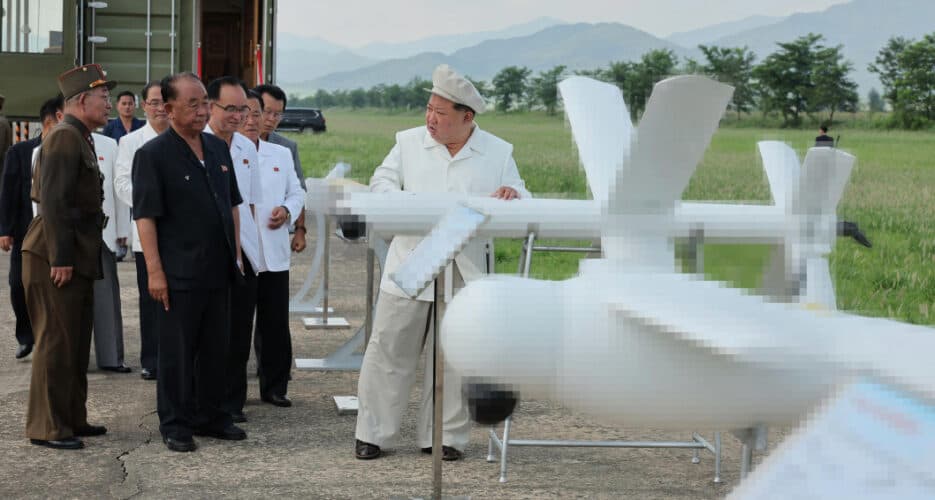
North Korea escalated pressure on Seoul on Jan. 11, when Kim Yo Jong urged South Korea to carry out a thorough investigation and provide a “concrete” explanation after Pyongyang said it had shot down an unmanned aerial vehicle that allegedly flew in from the South on Jan. 4. State media Korean Central News Agency published Kim’s remarks and photographs a day after the military released images of drone fragments scattered in Muksan-ri, Kaepung District, Kaesong City.
The North’s military reported that multiple unmanned aerial vehicles entered its airspace on Jan. 4 and that at least one was shot down. KCNA quoted Kim as saying the drones had filmed a uranium mine and stressed that South Korean authorities “can never evade responsibility” for infringing on North Korea’s sovereignty. Kim also “appreciated” Seoul’s public assurance that it had no intention of provocation but warned that any provocations would “result in terrible situations.”
Seoul has pushed back on the allegation that its military launched the craft. South Korea’s Defense Ministry said it did not operate drones at the times specified by the North and that it does not possess the models shown in the North Korean photographs, noting those models are widely used by civilians. Senior Defense Ministry official Kim Hong-Cheol said authorities will investigate whether civilians flew the drones and reiterated that South Korea has no intention of provoking North Korea. President Lee Jae-myung instructed relevant agencies to determine origin and operators and ordered that the government will “swiftly” release investigation results.
The incident comes amid a broader diplomatic chill. President Lee, who took office in June 2025, has sought to improve relations with Pyongyang and has engaged regional partners in mediation efforts, while North Korea has emphasized weapons development and rebuffed diplomatic overtures since earlier breakdowns. Pyongyang’s statement also referenced prior incursions, including one in September 2025, underscoring a pattern of cross-border drone episodes that complicate crisis management on the peninsula.

The immediate political stakes are clear: North Korea’s insistence on state-level responsibility narrows the diplomatic space for Seoul to treat the episode as civilian mischief, even as South Korean investigators weigh civilian involvement. If North Korea presses for concrete concessions or retaliatory measures, Seoul would face domestic pressure to strengthen airspace monitoring and potentially accelerate defense procurement, widening fiscal and political trade-offs for the new administration.
Financial markets and regional supply chains will be sensitive to any escalation. Investors typically price such flashpoints into a risk premium on Korean assets and defense-related equities, and insurers of regional shipping and logistics routes monitor increases in incident frequency. Longer term, repeated drone incursions complicate efforts to normalize inter-Korean ties and could harden security postures across Northeast Asia, feeding into higher defense spending and tighter controls on dual-use technology in a region critical to global semiconductors and manufacturing.
For now, both sides say investigations are underway. The core question remains whether Seoul can demonstrate a civilian source to defuse the incident or whether Pyongyang’s demand for a detailed state-level accounting will prompt a further diplomatic rupture.
This article was produced by Prism’s automated news system from verified source data, official records, and press releases, then run through automated quality and moderation checks before publishing. The system is built and supervised by the people who set the standards it runs under. Read our full AI policy.
Did this article answer your question?