King Arthur’s Sourdough Feeding Guide: Simple Routine for Reliable Starters
King Arthur's guide lays out a simple, weight-based feeding routine for sourdough starters so bakers can maintain vigor and hit predictable rise windows.
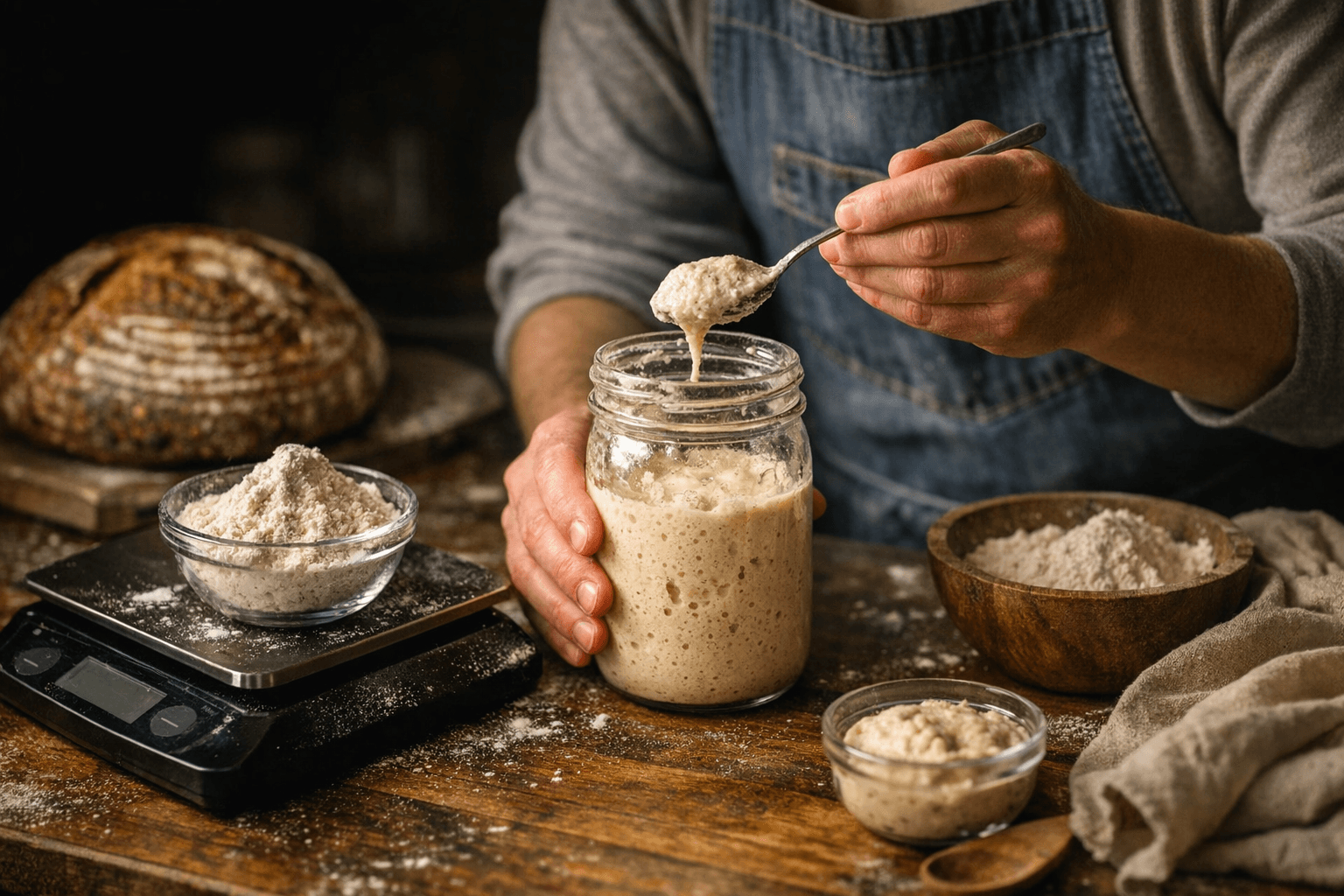
King Arthur offers a concise routine for keeping a sourdough starter active, focusing on measurement by weight and clear feeding schedules so bakers stop guessing and start timing. The guide centers on practical steps any home baker can follow: use a scale, choose a feeding ratio, and set a regular routine based on how often you bake.
Measurement matters first. Feed starter by weight using a scale and follow a 1:1:1 ratio (starter:flour:water) for regular maintenance. When you want to give the culture more food and slow acid build-up, increase the ratio to something like 1:4:4. Those numbers translate into predictable food availability for the yeast and bacteria and make it easier to plan when the starter will peak.
Decide where the starter lives and feed accordingly. Keep a starter on the counter and feed it about every 12 hours if you bake frequently. If you bake less often, store the starter in the refrigerator and feed it about once a week. Time your feedings at or just before peak activity or immediately after using the starter so the culture stays vigorous. When acidity or volume gets out of balance, discard and refresh to reset the starter’s health.
Revival techniques are clear and practical. For sluggish starters, perform a series of regular warm feedings and switch to whole-grain flours such as rye or whole wheat to re-energize the culture. Those flours provide extra nutrients and tend to speed activity, helping the starter become bubbly and lively again.
Pay attention to tools and behavior. Choose a container with room for expansion and loosely cover it (not airtight) to allow gas to escape while keeping out contaminants. The best readiness indicator is the starter’s rise-and-fall behavior: it should be bubbly and ideally double in volume within the expected time for your chosen routine before you use it in dough.
For community bakers chasing consistent loaves, this approach turns starter maintenance into a predictable part of the bake schedule rather than an unpredictable chore. Use a scale, pick the ratio that matches your baking cadence, and mark your starter’s peak times. With those habits, you’ll control acidity, timing, and volume more reliably and plan bakes around a vigorous, predictable starter.
Know something we missed? Have a correction or additional information?
Submit a Tip