Lawmakers Press JetBlue on Whether Personal Data Influences Ticket Prices
Lawmakers have asked JetBlue whether customer data helps set fares, turning one mistaken social post into a wider fight over surveillance pricing and airline transparency.
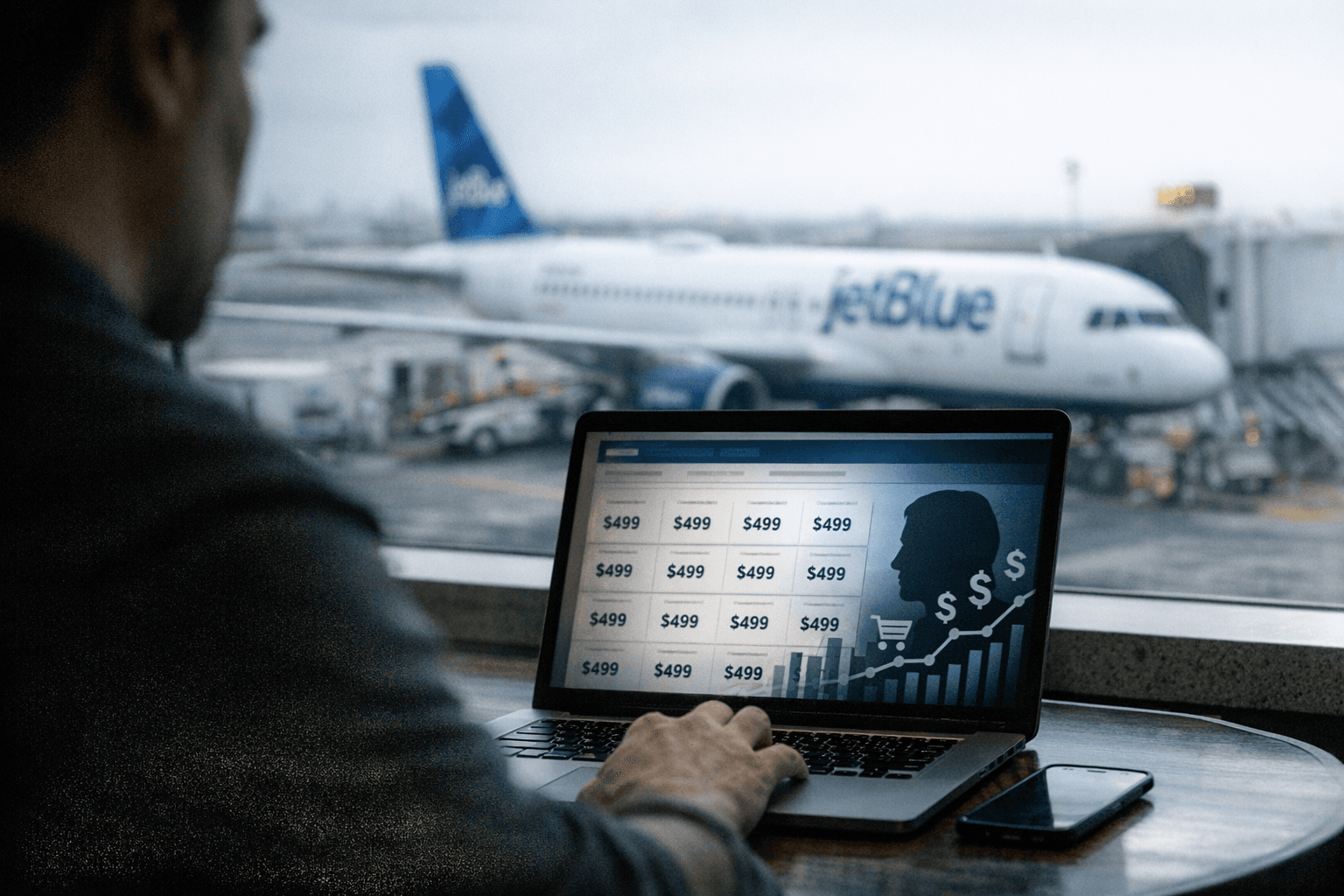
A JetBlue social-media reply that the company later said was sent in error has turned into a test of how far airlines can go in using customer data to shape ticket prices. Representative Greg Casar and Senator Ruben Gallego asked JetBlue to explain whether personal data plays any role in pricing, saying the post “still raises questions about how JetBlue sets prices - specifically, how JetBlue is defining personal data and whether personal data is used in any capacity to inform prices.”
The dispute lands in the middle of a growing backlash over surveillance pricing, the practice of tailoring prices with personal information, browsing behavior, device data or other signals that suggest how much a customer might pay. In airline sales, where fares already move constantly as seats sell and demand changes, that kind of individualized pricing can be hard for travelers to detect. A customer may see a fare rise and never know whether it reflected ordinary inventory management or a system that weighed personal data.
The Federal Trade Commission has already warned that the practice can reach deep into a consumer’s digital trail. In January 2025, the agency said its initial surveillance-pricing study found that companies can use precise location and browser history to set individualized prices. The FTC had issued 6(b) orders in July 2024 to intermediary companies to study those technologies, signaling that regulators were treating the practice as a national consumer issue, not just a Silicon Valley experiment.
JetBlue now faces pressure not only over one mistaken post but over the broader question of whether airlines should be allowed to personalize fares at all. Congress has been moving in that direction. Gallego introduced the One Fair Price Act of 2025 in December, and the bill would prohibit certain uses of automated decision systems to inform individualized prices. The proposal includes exceptions for reasonable cost differences and bona fide discounts, including loyalty programs, teachers, active-duty personnel, veterans, seniors and students.
The issue has already spread beyond JetBlue. In July 2025, Gallego and other Democratic senators pressed Delta Air Lines over plans to use artificial intelligence in fare setting, before Delta later said it would not use AI to set personalized prices for passengers. That fight helped recast airline pricing as a consumer-rights and privacy question rather than a back-office revenue tool. It also matters because a federal court blocked the Transportation Department’s airline fee transparency rule in January 2025 and sent it back for revision, leaving travelers with less clarity just as lawmakers are demanding more.
For JetBlue, the reputational damage may linger even if the company insists the post was a mistake. For lawmakers, the episode offers a fresh opening to press airlines, regulators and technology vendors on how much personal data belongs in the price of a plane ticket.
This article was produced by Prism’s automated news system from verified source data, official records, and press releases, then run through automated quality and moderation checks before publishing. The system is built and supervised by the people who set the standards it runs under. Read our full AI policy.
Did this article answer your question?

