Lecornu government survives two no-confidence votes after budget bypass
France's new government survives two no-confidence motions after forcing the income portion of the 2026 budget through the National Assembly without a full vote.
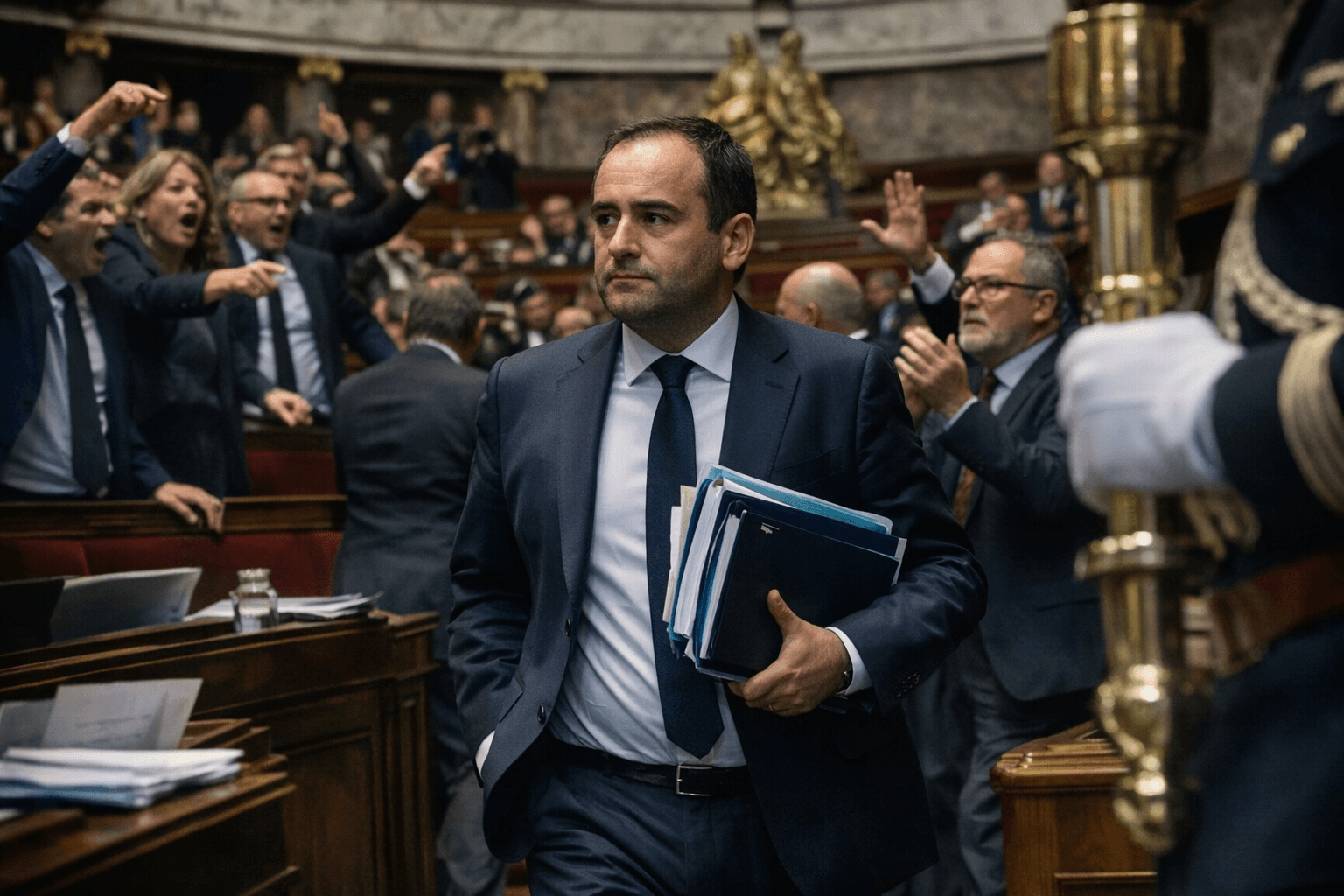
Prime Minister Sébastien Lecornu's new government survives two no-confidence motions after invoking a constitutional provision to force the income portion of the 2026 budget through the National Assembly without a full parliamentary vote. The move, which used Article 49.3 of the French Constitution, has deepened political divisions in a country already grappling with social and fiscal strain.
The first motion of no confidence was put forward by hard-left lawmakers, and a second motion also failed to secure the majority needed to topple the administration. By surviving both challenges, the government avoids immediate collapse but enters a period of heightened vulnerability and strained legitimacy. Opposition parties attacked the executive's decision to bypass debate, arguing that the measure short-circuited parliamentary scrutiny of taxes and revenue measures at a sensitive moment for households and public services.
Lecornu's ministers defend the tactic as an exceptional response to a tight calendar and urgent fiscal constraints. They argue the income measures are necessary to meet revenue targets set under the broader 2026 budget framework and to preserve France's commitments under European fiscal governance. The government says it acted within constitutional powers to prevent a standstill that could jeopardize public finances, though critics counter that legal authority does not replace democratic deliberation.
The episode revives long-standing tensions in French politics over executive primacy. Article 49.3 has been used by several governments in recent decades to push through contested legislation, but each instance triggers public debate about the balance between executive efficiency and parliamentary oversight. For a country that prizes republican institutions, the procedural shortcut has symbolic and practical consequences: it risks alienating voters and amplifying street mobilization among unions and activist groups that oppose the budget's measures.
Internationally, the decision will be watched closely across the European Union and by financial markets, where France's fiscal trajectory carries outsized influence. As the bloc negotiates rules and norms around public debt and deficits, visible domestic rifts in Paris complicate diplomatic conversations with partners that demand fiscal discipline alongside social cohesion. Foreign investors and credit observers are likely to monitor how the government follows through on revenue assumptions and whether political instability forces policy revisions.
Survival of the motions does not guarantee longer-term stability. The government must now navigate a fragmented legislature where its proposals risk repeated opposition and where the legitimacy of future fiscal and social reforms may be questioned. Political analysts note that resorting to constitutional mechanisms can provide short-term certainty while magnifying long-term uncertainty about consensus-building.
For many French citizens, the episode underscores a familiar pattern: a centralised executive making consequential fiscal choices while institutions and movements press for deeper consultation. How Lecornu's cabinet capitalises on the reprieve, by engaging adversaries, reaching compromises, or pressing ahead, will determine whether the government transforms survival into durable governance or sets the stage for renewed confrontation in the months ahead.
This article was produced by Prism’s automated news system from verified source data, official records, and press releases, then run through automated quality and moderation checks before publishing. The system is built and supervised by the people who set the standards it runs under. Read our full AI policy.
Did this article answer your question?

