Lobbyists cash in as white-collar criminals seek Trump pardons
Lobbyists collected more than $2.1 million from pardon seekers in 2025, as Trump’s clemency power drew a growing market for access and influence.
Lobbyists have turned presidential mercy into a paid chase, collecting more than $2.1 million in 2025 from people seeking a pardon or clemency from Donald J. Trump. At least $815,000 of that money was spent in the fourth quarter alone, underscoring how quickly the scramble for access intensified as white-collar defendants and other legally imperiled clients tried to reach the White House.
The formal path for clemency still runs through the U.S. Department of Justice’s Office of the Pardon Attorney. That office receives applications, evaluates them, investigates the claims and prepares a recommendation for the president. Applicants are supposed to submit the required form to the office, receive a case number and track the status of their request online. On paper, it is a structured process. In practice, critics say the real currency is proximity to Trump and his inner circle.
That tension has sharpened the ethical stakes of clemency in Trump’s second term. The president alone holds constitutional authority to grant it, a power the Justice Department says has existed since the early republic. But when access can be bought through lobbyists, the system begins to look less like a transparent justice mechanism and more like a privatized influence market, one that rewards those who can pay to be heard.
The financial consequences are especially high for white-collar criminals. Clemency can wipe out prison terms, fines, restitution and other penalties, making it one of the most valuable forms of executive relief in Washington. Congressional Democrats have said Trump’s pardons and commutations have erased roughly $1.3 billion in legal debts tied to Jan. 6 defendants and white-collar offenders, a figure that turns mercy into a major financial instrument as well as a political one.
Trump has already used that power aggressively in his second term. On January 20, 2025, he issued a pardon proclamation covering certain offenses related to events at or near the United States Capitol on January 6, 2021. He also pardoned Ross Ulbricht in January 2025. The Justice Department says Trump continued issuing clemency grants throughout 2025.
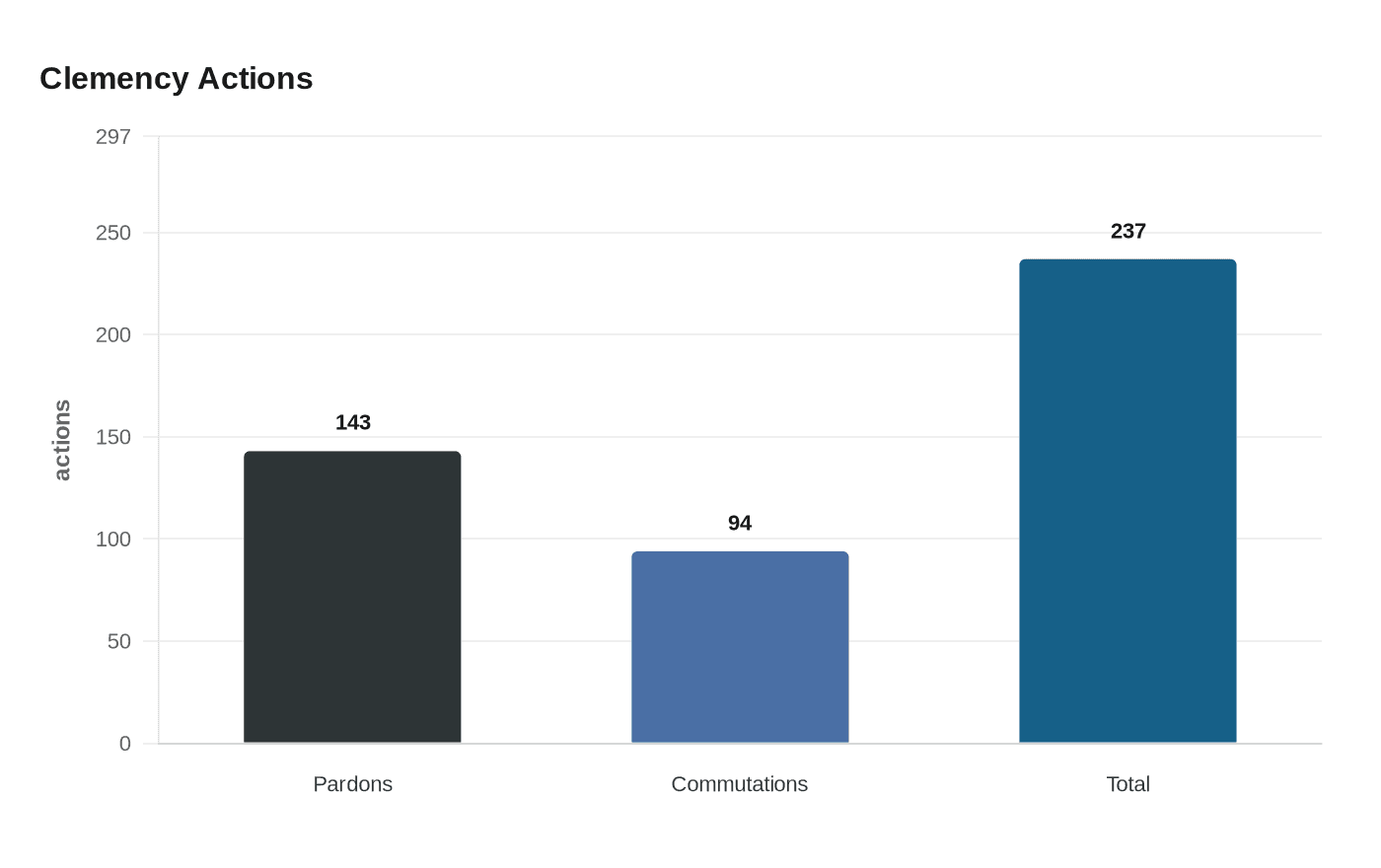
The broader pattern reflects a familiar Trump-era contradiction. His first term ended with 237 clemency actions, including 143 pardons and 94 commutations. Supporters describe that record as a legitimate exercise of executive mercy. Critics, across party lines, see something else: a pay-to-play ecosystem in which access, lobbying and money increasingly determine who gets a shot at presidential forgiveness.
Know something we missed? Have a correction or additional information?
Submit a Tip