Local Zoning, ADU Rules and Building Codes Shape Tiny Home Use
Local zoning, ADU rules and code choices, not the romantic “tiny home” label, dictate where you can live, whether your unit is taxed, and how builders will size their models.
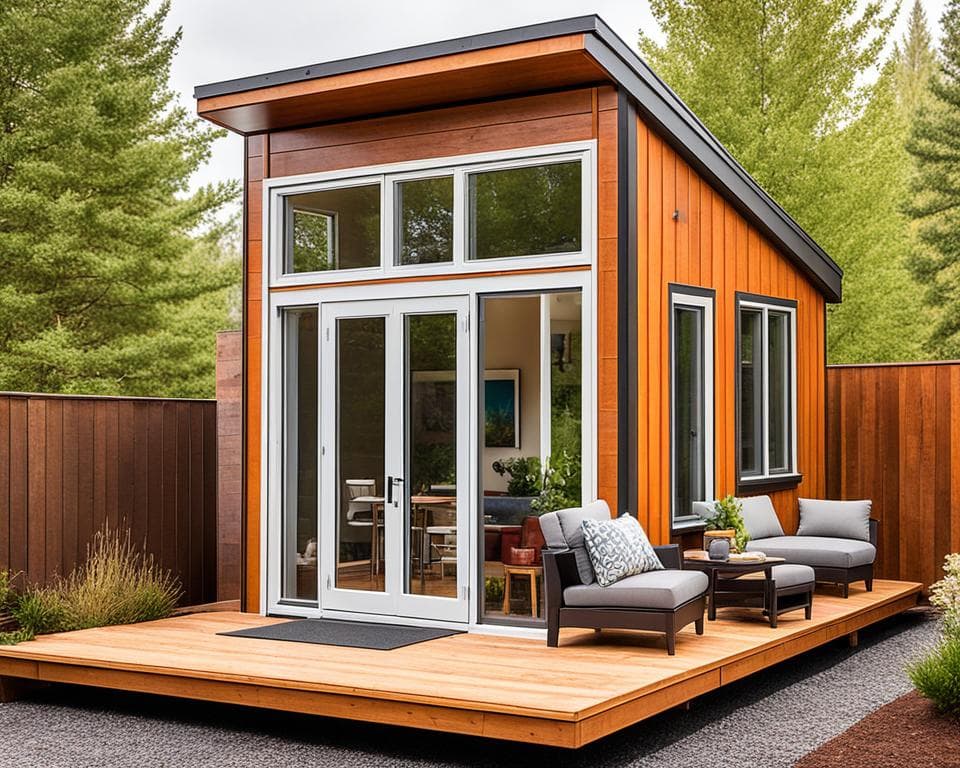
1. Why this matters: the practical intersection
Tiny homes live at the intersection of housing design, land use law, and building codes. That framing matters because, as the original report puts it, “Local zoning and accessory dwelling unit (ADU) rules, and whether tiny homes are treated as RVs, park models, or conventional dwellings, determine where, how and for how long a [unit can be occupied].” If you skip that part and buy a trailer or prefab, you’ll discover the legal classification, not the square footage or your aesthetic, controls whether you can put that unit in a backyard, on a foundation, or in a park.
2. Classification: RV, park model, THOW or conventional dwelling
The way a jurisdiction labels your unit is the first gatekeeper. Sources consistently stress that tiny homes “may be treated as RVs, park models, or conventional dwellings depending on the locality.” That classification dictates everything from inspection standards to permitted locations. Don’t expect a uniform answer, zoning offices will treat the same footprint differently depending on the code definition they apply.
3. Codes you’ll bump up against: UCC and the IBC in practice
Every ADU route ends up at a building code. Multiple sources use the abbreviation UCC to describe that standard and note that ADUs and tiny homes “will need to conform to UCC.” For Pennsylvania-specific projects, Ironstone Homes notes that “Pennsylvania has adopted the 2018 International Building Code, which mandates that each dwelling unit must have a minimum of 120 square feet of floor area for one room, with at least 70 square feet of additional living space.” Know which code your local inspector enforces, UCC versus IBC interpretations change what’s buildable.
4. Minimum-dwelling-size thresholds you’ll see (and why they matter)
Expect wildly different numbers depending on jurisdiction. Capstonecre warns that “Some municipalities will have minimum dwelling sizes, starting at 700 SF. This in turn causes many modular builders to provide larger models. ‘Tiny homes’ are still a small portion of the market, which limits the options modular builders provide.” By contrast, parts of Pennsylvania and Allentown reference much smaller room minima, 70 square feet or the IBC’s 120 + 70 language mentioned above, so don’t assume one rule fits all. Those three figures (700 SF, 70 SF, and 120+70 SF) are real but jurisdiction-specific; verify the local ordinance before buying.
5. ADU forms and permanence: what counts as an ADU
An ADU can take many physical forms. Capstonecre states that “A backyard ADU can take the form of any of the above, provided the zoning on your land permits it,” listing detached garage conversions, detached tiny homes in backyards, or converted master suites. Permanence matters: “The homes are fixed to the ground and become deeded real estate, with real estate taxes affixed.” If you bolt your tiny house to a foundation, expect it to be treated like real property and taxed accordingly.
6. THOWs (tiny houses on wheels), recreational use vs ADU conversion
Expect greater restrictions if your unit stays on wheels. In Allentown’s rules, “THOWs are confined to recreational use in parks, unless converted via permitting for ADU roles on larger properties.” That means a THOW parked in a backyard without permissive zoning or a change of classification is likely a recreational unit, not a permanent dwelling. If you plan to use wheels for mobility and permanency, budget for permitting and likely conversion to a foundation status.
7. Permitting steps: the sequence that works
Follow the practical sequence recommended by Capstonecre and the Original Report:
1. Research local zoning laws to identify permitted ADU types and district restrictions.
2. Confirm which code your ADU will be classified under, UCC, IBC, RVIA standards, etc., and gather the documentation to prove it.
3. Apply for necessary permits with that code classification in hand.
Capstonecre emphasizes that “The first step to determining if it is permitted is to provide to the officials what type of ADU and the associated code it will be classified under.” Missing that clarity gets you an instant denial.
8. Permitting tips that save time and headaches
Practical, testable tactics matter. Capstonecre’s exact tip: “TIP: If struggling to get a detached unit approved in your zoning, try researching if a detached building for other purposes works: Game Room, Finished Shed, office or other name may work as an alternate building and provide the space you need.” And their shout-out in all caps: “TIP: DON’T call the zoning officer and ask if you can put a ‘Tiny Home’ in your backyard. This is not a legal term, and they will not know what classification to put you in, rendering you a ‘NO’. Understand the classification and make sure you share what Code will apply to your unit.” Use precise code language when you talk to officials.
9. Construction methods and builder market dynamics
Whether you go stick-built or modular, expect code compliance to be the baseline: “Whether stick built or modular, the ADU will need to conform to UCC and provide for basis health and safely.” Builders react to the market: “Some municipalities will have minimum dwelling sizes, starting at 700 SF. This in turn causes many modular builders to provide larger models. ‘Tiny homes’ are still a small portion of the market, which limits the options modular builders provide.” If you’re in a 700 SF-minimum area, you’ll have fewer true tiny options from modular manufacturers.
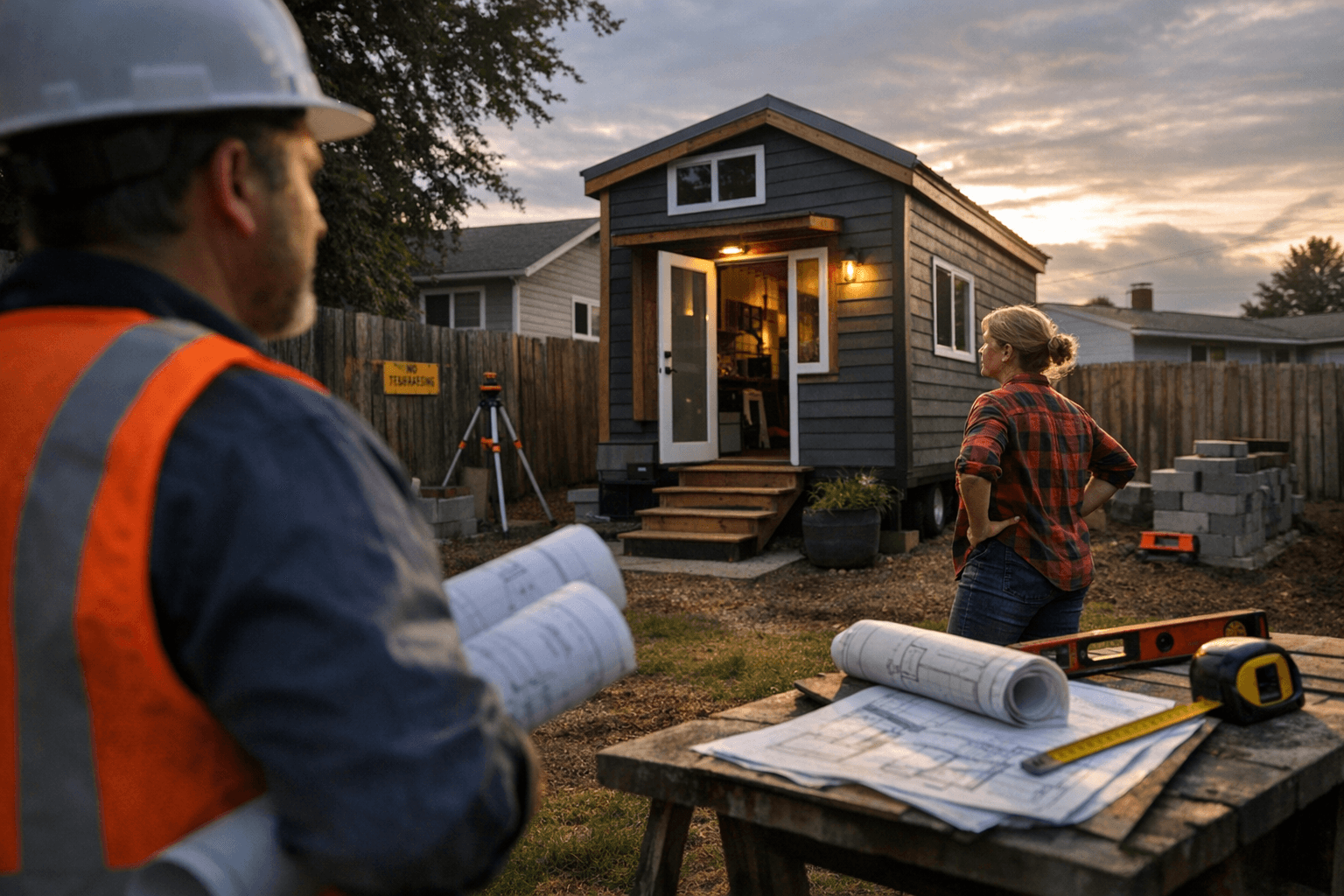
10. Builder credentials and regional adaptations
Buyers should prioritize experience and certs. Great Lakes Tiny Homes markets itself as an “RV Industry Association (RVIA) licensed manufacturer” and stresses Pennsylvania-specific build tweaks: “Our builds incorporate Pennsylvania-specific adaptations, like enhanced insulation for variable weather.” That RVIA licensing matters if your unit will be treated as a park model or RV; if you plan to affix to land, verify the manufacturer’s experience with UCC/IBC conversions.
11. County and municipal snapshots you can use as templates
Local rules vary even inside a state. Ironstone Homes summarizes Pennsylvania county differences: “Chester County has a fairly supportive stance towards tiny homes and ADUs... York County, on the other hand, has strict zoning regulations concerning tiny homes and ADUs... Bucks County falls somewhere in the middle.” Allentown is a concrete example: “Allentown’s updated zoning ordinance explicitly references tiny home villages, allowing three or more units on a single lot in designated districts to promote affordable housing clusters. Individual tiny houses must adhere to a 70-square-foot minimum for habitable spaces under the UCC, with foundations required for permanent status. THOWs are confined to recreational use in parks, unless converted via permitting for ADU roles on larger properties. The Bureau of Planning and Zoning reviews applications, emphasizing compatibility with the city’s revitalization goals.” Use these as models, not universals.
12. Temporary options and ECHO housing
If your need is family care rather than permanent housing, check for ECHO options. Capstonecre recommends: “If you have an aging family member that you would like to have close to your home, look at the ‘ECHO’ housing option if it is in your zoning.” They add that “Usually structures must be ‘Temporary’ (Like a Mobile Home) and occupied be a senior family member.” That can be a fast route if your jurisdiction recognizes it, but confirm occupancy and temporariness clauses locally.
13. HOAs, taxes and the paperwork trail
HOA covenants can block otherwise code-compliant ADUs. Ironstone Homes flags that “Navigating local building department regulations, correct permits, zoning laws, and HOA restrictions can be challenging,” and offers local help in Lancaster for those who need it. On taxation: expect that units “are fixed to the ground and become deeded real estate, with real estate taxes affixed,” so check your assessor’s office before you make permanence decisions.
14. Tiny home communities and cost tradeoffs
If you don’t want to battle zoning, consider a community lot. Great Lakes notes that “Tiny home communities emphasize sustainable designs, with lots starting at $500 monthly including maintenance.” Communities reduce permit friction but limit customization; private lots offer freedom but demand owner-initiated zoning checks and potential variances.
15. Practical design and cost-saving moves that actually work
Work within the rules to save money: Capstonecre’s go-to idea is straightforward, “Often the most cost effective ADU construction strategies is to take a large master suite and turn it into a small studio apartment.” That interior-conversion route avoids new-build setbacks, foundation questions, and some permitting hurdles. When you do build out, consider labelling the structure as an accessory use the zoning already recognizes (game room, office) while you pursue ADU approvals.
- What code classification would apply to my unit: ADU, park model/RV, or conventional dwelling?
- Which building code (UCC, IBC 2018, or local amendment) will inspectors enforce?
- Are there minimum dwelling-size or habitable-room requirements (e.g., 70 SF, 120 SF, or 700 SF) in my district?
- If I fix a unit to a foundation, how will the assessor treat it for taxes?
- Does my HOA or neighborhood covenants restrict ADUs, THOWs, or accessory structures?
16. Questions to take to your zoning/building office (short checklist)
Ask for code sections and a written checklist, municipal staff can and should point you to ordinance language.
17. Final, practical verdict
This is less a design problem than a legal one: classification, not style, determines whether your tiny home is welcome. Use the exact language of codes and zoning when you apply, lean on builder certifications like RVIA when relevant, and expect county-by-county variance, the Ironstone Homes county breakdown and Allentown’s tiny-village language are perfect examples. Do your homework up front: get the ordinance text, confirm the code (UCC vs IBC), and decide whether you want to live in a community lot for $500/month or fight for a private-lot ADU. If you treat the law as part of your build plan, you’ll save months and a lot of money; if you ignore it, you’ll end up paying for relocation or conversion.
Know something we missed? Have a correction or additional information?
Submit a Tip

