Magnitude 5.8 quake off Philippines shakes Manila, damage assessed
Manila felt shaking from a magnitude 5.8 offshore quake off Occidental Mindoro, while PHIVOLCS said no damage was expected and aftershocks were possible.
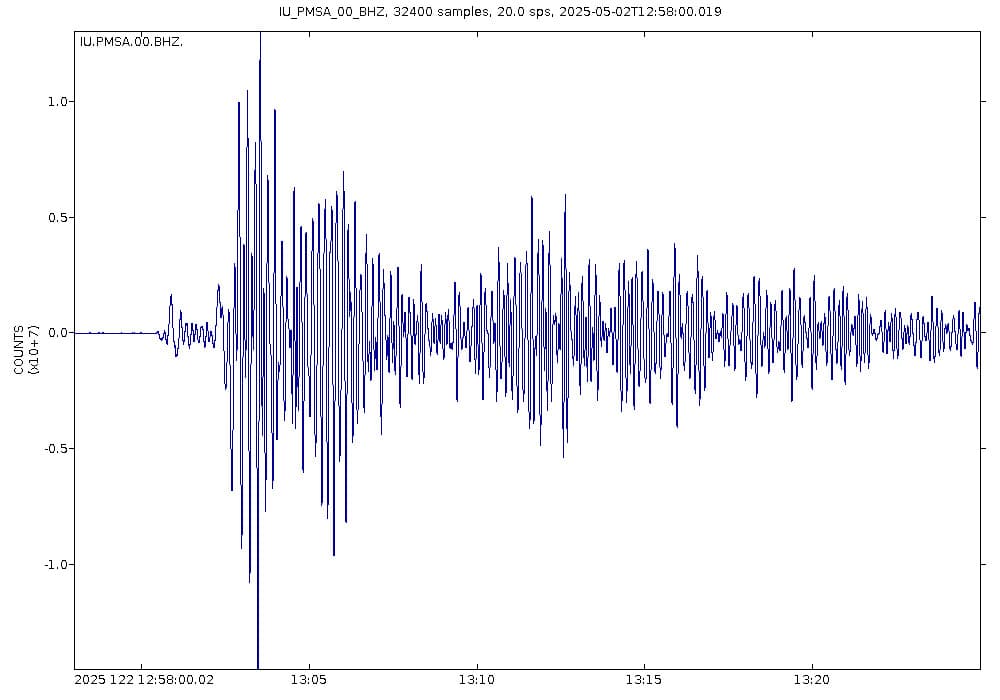
A magnitude 5.8 earthquake struck off Occidental Mindoro province in western Philippines at 10:38 a.m. local time Friday, and tremors were felt in Manila. The offshore epicenter was far from the capital, but the shaking still reached a densely packed urban area that sits on the eastern shore of Manila Bay on Luzon.
The Philippine Institute of Volcanology and Seismology said no damage was expected from the earthquake, though aftershocks were possible. That early assessment is the first signal many residents and local officials use to judge whether a jolt is likely to pass quickly or require checks on buildings, bridges, roads and transit links.
The Philippines sits on the Pacific Ring of Fire, where multiple tectonic plates meet and generate frequent seismic activity. That geography makes offshore earthquakes common, and it helps explain why a moderate event in western waters can still be felt in the capital. Manila is the country’s capital and second-most populous city, and the scale of its population and infrastructure means even brief shaking can interrupt work, slow traffic and trigger precautionary inspections.
PHIVOLCS has seen how quickly a moderate quake can lead to a string of follow-up tremors. After a magnitude 5.8 earthquake in Southern Leyte on Jan. 23, 2025, the agency said its seismic network had recorded 73 aftershocks by 1:30 p.m. that day. The pattern underlines why the hours after an earthquake matter as much as the initial shock: officials need to determine whether the event was isolated or the start of a longer sequence.
For the Philippines, readiness is built around that reality. Dense cities, ports and transport corridors have to account for shaking, while the public has to be ready for earthquakes that arrive with little warning and can be felt far from their source. Friday’s tremor again showed that even when the epicenter is offshore, Manila is close enough to feel the country’s seismic vulnerability immediately.
This article was produced by Prism’s automated news system from verified source data, official records, and press releases, then run through automated quality and moderation checks before publishing. The system is built and supervised by the people who set the standards it runs under. Read our full AI policy.
Did this article answer your question?