May Day rallies worldwide target rising costs, wages and peace demands
Workers from Manila to Paris tied May Day to fuel bills and wages, while police in Istanbul clashed with marchers and unions blamed the Iran war.
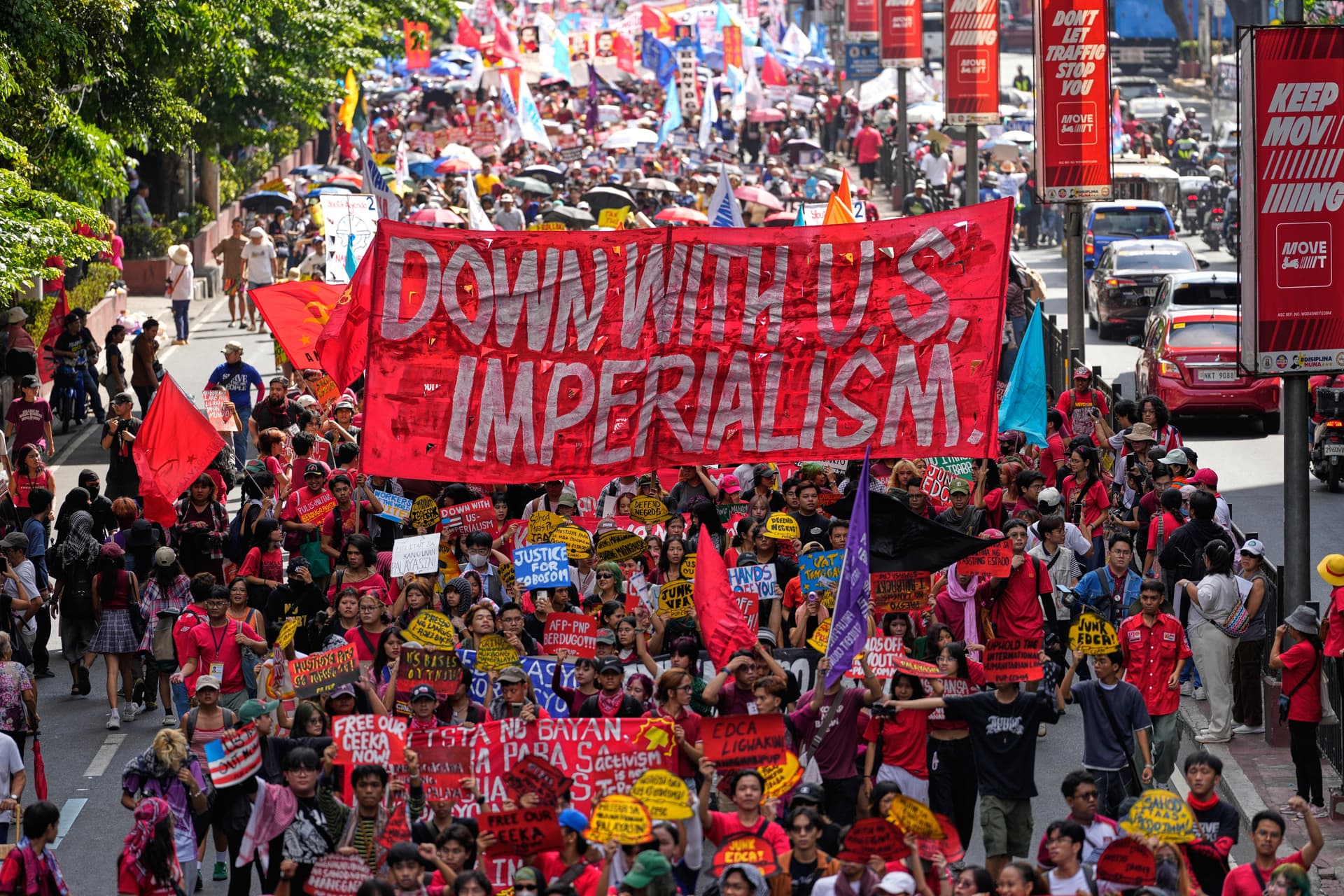
Workers from Seoul to Istanbul turned May Day into a global protest over the price of fuel, food and power, as the Iran war pushed energy costs deeper into household budgets and squeezed paychecks already stretched thin.
On Friday, May 1, activists across many countries called for peace, higher wages and better working conditions. In Paris, a man flashed a victory sign beside a mock gasoline pump during the traditional labor march, a pointed image of how transport and household energy bills have become a visible part of labor anger. The day carried added weight because May 1 is a public holiday in many countries, long used by unions to press for wages, pensions and broader economic justice.
The European Trade Union Confederation sharpened the political edge of the protests with a direct accusation: “Working people refuse to pay the price for Donald Trump’s war in the Middle East.” The federation, which represents 93 trade union organizations in 41 European countries, said the rallies showed workers would not stand by while jobs and living standards were damaged. That message echoed in demonstrations reported from Seoul, Sydney, Jakarta and major European capitals, where organizers linked higher energy bills to shrinking purchasing power.
In Manila, large crowds marched for higher wages and lower taxes while also protesting the United States’ role in the Iran war. The mix of demands reflected the way global conflict has reached kitchen tables far from the battlefield, where fuel prices affect bus fares, deliveries and the cost of keeping homes running. Reuters reported that in the United States, manufacturing activity held steady in April, but supplier deliveries worsened because the conflict disrupted shipping in the Strait of Hormuz, pushing raw-material and input prices to a four-year high.
Not every march unfolded peacefully. In Istanbul, Turkish police clashed with demonstrators who tried to march toward Taksim Square, and one roundup said more than 500 people were arrested. The confrontation underscored how May Day remains both a labor holiday and a pressure valve for deeper political anger.
The roots of the day reach back to the labor movement’s fight for an eight-hour workday, including the Haymarket Affair in Chicago in 1886 and the international labor decision in 1889 that set May 1 as a day of workers’ solidarity. More than a century later, the slogans on the street were still about wages, hours and dignity, but this year they were sharpened by the cost of war reaching homes through fuel tanks, buses and utility bills.
This article was produced by Prism’s automated news system from verified source data, official records, and press releases, then run through automated quality and moderation checks before publishing. The system is built and supervised by the people who set the standards it runs under. Read our full AI policy.
Did this article answer your question?


