Medicaid Work Requirements Strain State Agencies Already Facing Staff Shortages
State Medicaid agencies, already short-staffed, face a Jan. 1, 2027 mandate to verify 80-hour monthly work thresholds for millions of enrollees.
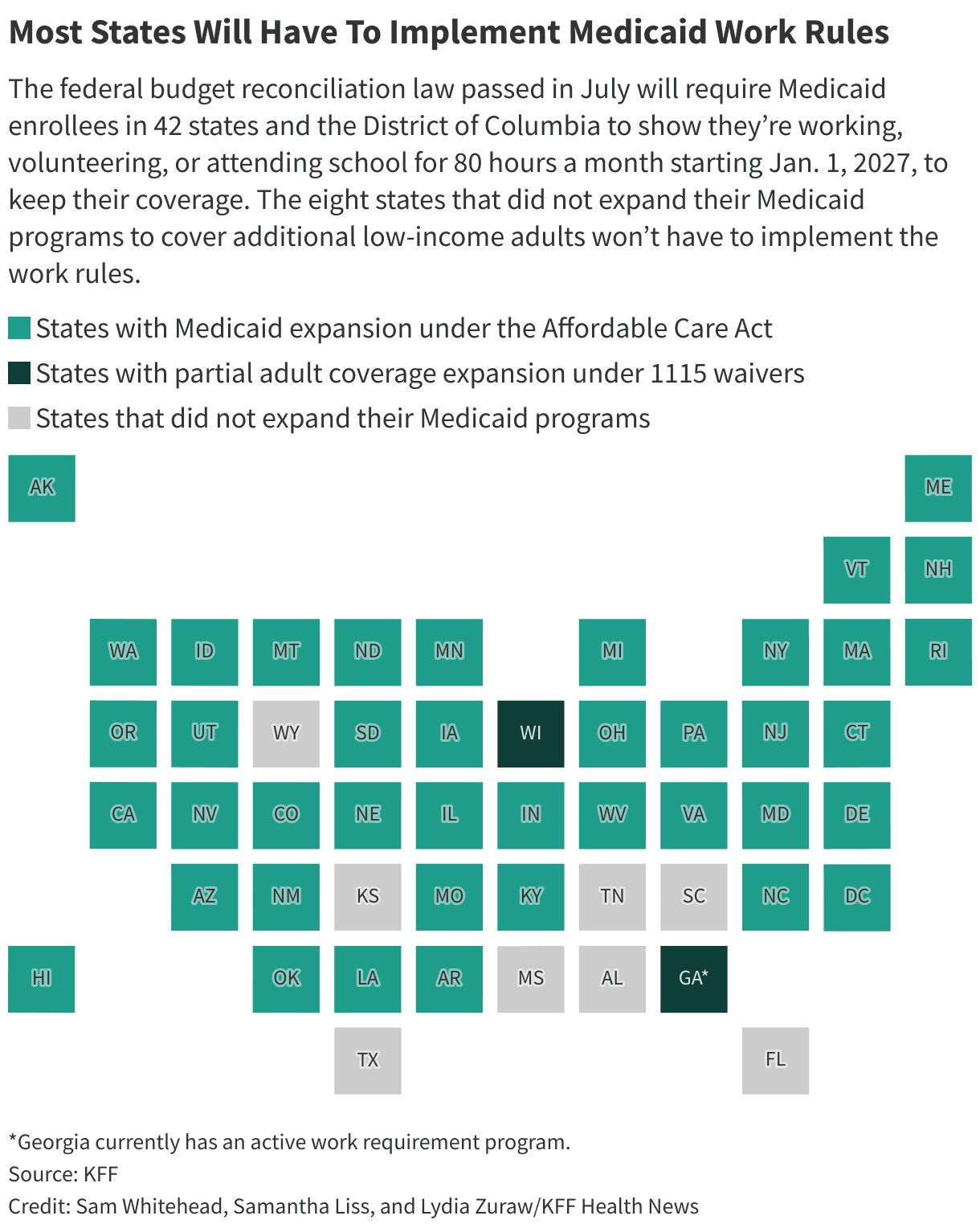
State Medicaid agencies across nearly all 50 states and the District of Columbia were already struggling to process routine eligibility renewals when Congress handed them a considerably heavier lift: verifying that millions of enrollees meet monthly work, education or volunteering thresholds under the One Big Beautiful Bill Act. With a January 1, 2027 deadline approaching and federal guidance still incomplete, state officials said they will need more staff, upgraded technology and contracted support they do not yet have.
The law, which President Donald Trump signed last summer and is projected to cut federal and state Medicaid spending by nearly $1 trillion over eight years, requires working-age adults in expansion states to demonstrate roughly 80 hours of qualifying activity per month. Critically, that verification must happen every six months rather than the current annual renewal cycle, doubling the administrative contact points between agencies and enrollees.
The human cost of administrative breakdown is already legible in states like Delaware. Katie Crouch, a Medicaid beneficiary there, described the experience of navigating a system already overwhelmed. "The first time, it'll ring interminably," she said, recounting repeated phone transfers and months-long delays that left her without reapproval for Medicaid services and personally responsible for Medicare deductibles that Medicaid had previously covered.
Jennifer Wagner, director of Medicaid eligibility and enrollment at the Center on Budget and Policy Priorities, put the broader situation plainly: states are already "struggling significantly." Policy researchers noted that when complex administrative requirements have been layered onto Medicaid in the past, the practical outcome has frequently been avoidable coverage losses rather than increased employment.
The fiscal logic of the new rules contains a paradox that state budget officials are now confronting directly. The law is designed to shrink Medicaid rolls and reduce government expenditures, yet states will likely need to spend heavily on additional eligibility workers, IT system overhauls and contracted modernization projects to implement it. An HHS interim rule that could clarify key implementation parameters may not be released until June 2026, potentially leaving states fewer than seven months to redesign their processes before the law takes effect.

Consumer-advocacy groups flagged particular risks for people with disabilities, caregivers, workers in unstable employment and those without reliable internet access, populations that may struggle to track, document and report monthly activity hours. Exemptions and data-matching requirements built into the law will also vary by state, raising the prospect of uneven coverage outcomes across the country.
If coverage losses materialize at scale, the downstream consequences extend beyond individual beneficiaries. Safety-net hospitals and community health centers could face higher volumes of uncompensated care, chronic-disease management could deteriorate and pressure on state-funded programs could intensify, partially offsetting the projected federal savings. Lawmakers and advocacy organizations are pushing for dedicated funds to help states upgrade systems and for detailed federal guidance to reduce erroneous terminations.
Watchdogs and researchers plan to monitor state readiness, IT upgrades and early disenrollment data closely as 2027 approaches, treating the administrative capacity of agencies as a leading indicator of whether the policy functions as workforce policy or primarily as a mechanism to pare enrollment through paperwork.
This article was produced by Prism’s automated news system from verified source data, official records, and press releases, then run through automated quality and moderation checks before publishing. The system is built and supervised by the people who set the standards it runs under. Read our full AI policy.
Did this article answer your question?


