Wildlife Trade in Pangolins and Giant Rats Raises Spillover Disease Risks
Traded mammals are 1.5 times more likely to harbor human disease than non-traded animals, with 41% of 2,000-plus wildlife trade species sharing pathogens with people.
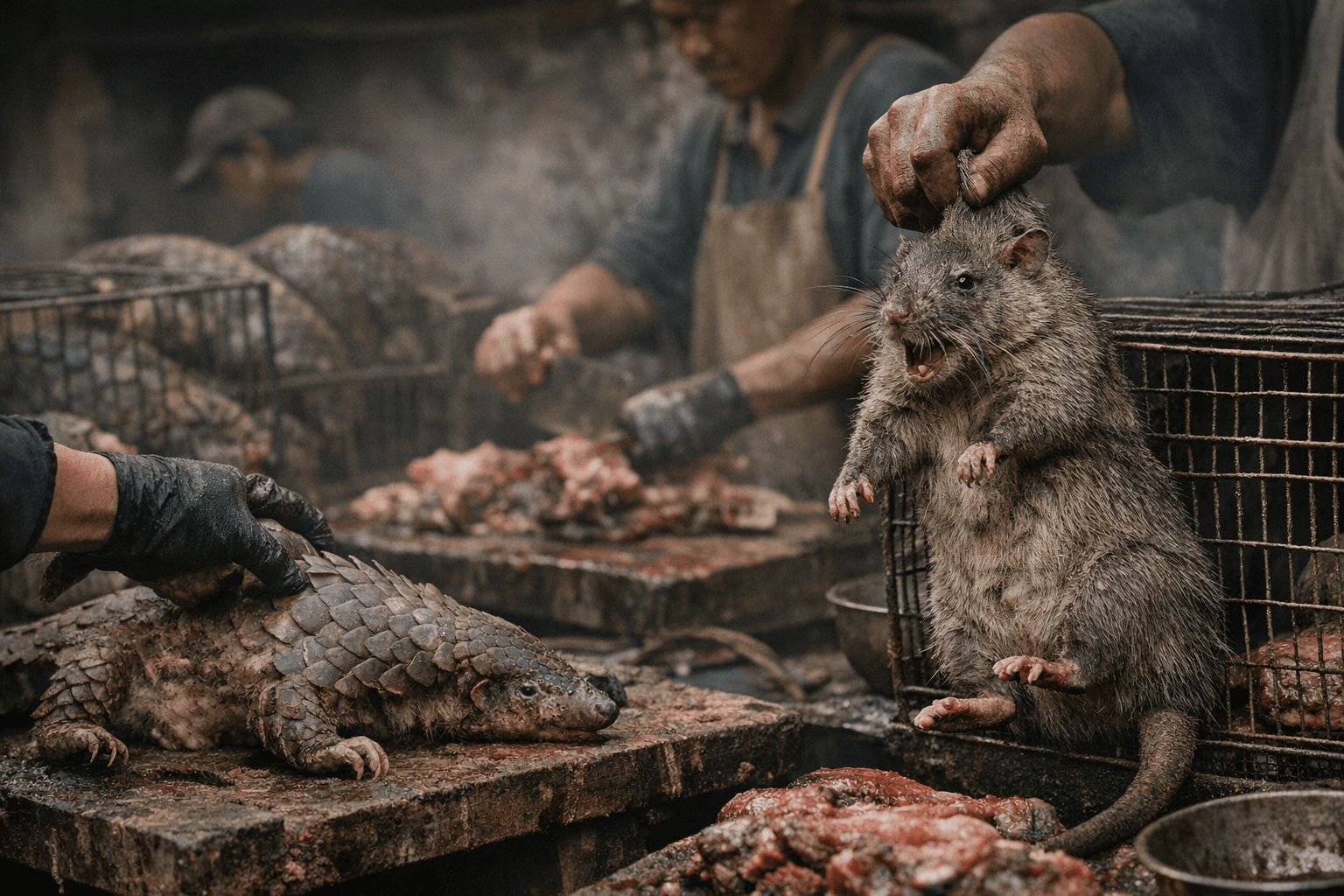
A single shipment of exotic African rodents to an Illinois pet store in 2003 set off America's first mpox outbreak. Gambian giant rats infected prairie dogs, which went on to sicken nearly 100 people who handled the animals. That chain of transmission now anchors a far larger scientific accounting: a new study published in Science has quantified the disease risk woven into the global wildlife trade, and the numbers challenge the assumption that most of the commerce is someone else's concern.
Researchers led by Carlson and colleagues found that traded mammals are approximately 1.5 times as likely to be sources of human diseases as non-traded animals. Examining more than 2,000 traded species, the team found 41% shared at least one pathogen with humans, against just 6.4% of non-traded species. The data were drawn from a pathogen database the researchers built themselves, cross-referenced against records of which mammal species enter the wildlife trade and for how long, given that no comparable atlas previously existed in analyzable form.
The illegal segment of the trade carried an even steeper risk. Species such as pangolins and squirrel monkeys, protected under international law but still routinely trafficked, showed elevated spillover rates compared with legally traded animals. Carlson attributed that to two possible drivers: such species may harbor more viruses, or hygienic conditions in underground markets may be considerably worse than in regulated ones.
Duration in the trade compounded the danger. For every ten years a species spends in the wildlife trade, another new pathogen crosses into humans, the study found. Kevin Olival, a disease ecologist at the University of Hawai'i who was not involved in the research, called that a "significant" finding, though he noted it could partly reflect improvements in pathogen detection rather than purely increased spillover.
The conditions inside live animal markets function as a transmission engine of their own. Carlson described animals in poor health pressed together in unusual species combinations, giving viruses the opportunity to mutate and jump hosts in real time. That dynamic is central to the current scientific understanding of how COVID-19 emerged. Multiple scientific papers suggest the pandemic originated at the Huanan Seafood Wholesale Market, where scores of live wild animals, including raccoon dogs, civets, and Himalayan marmots, were kept in cramped quarters. Ebola follows a similar logic, with outbreaks frequently traced to contact with bats consumed as food or incorporated into traditional medicine.
The study's policy implications are not straightforward. Banning or criminalizing the trade risks pushing it further underground, making spillovers harder to detect and contain. Demand is the other lever: the global appetite for exotic wildlife generates billions of dollars a year. Olival argued that ordinary consumers are more entangled in that market than they recognize, pointing to the 2003 Midwest mpox cases as a direct consequence of people purchasing exotic pets through routine commercial channels.
Altogether, hundreds of species have spent decades or millennia in human commerce. For Olival, that history makes some degree of shared viral exposure permanent; the viruses that have already crossed over are not going back. What the findings make clear is that reducing demand and improving market surveillance now, even incrementally, would lower the odds of the next spillover reaching the scale of COVID-19.
This article was produced by Prism’s automated news system from verified source data, official records, and press releases, then run through automated quality and moderation checks before publishing. The system is built and supervised by the people who set the standards it runs under. Read our full AI policy.
Did this article answer your question?