U.S. Births Fell 1% in 2025, Teen Birth Rates Hit New Lows
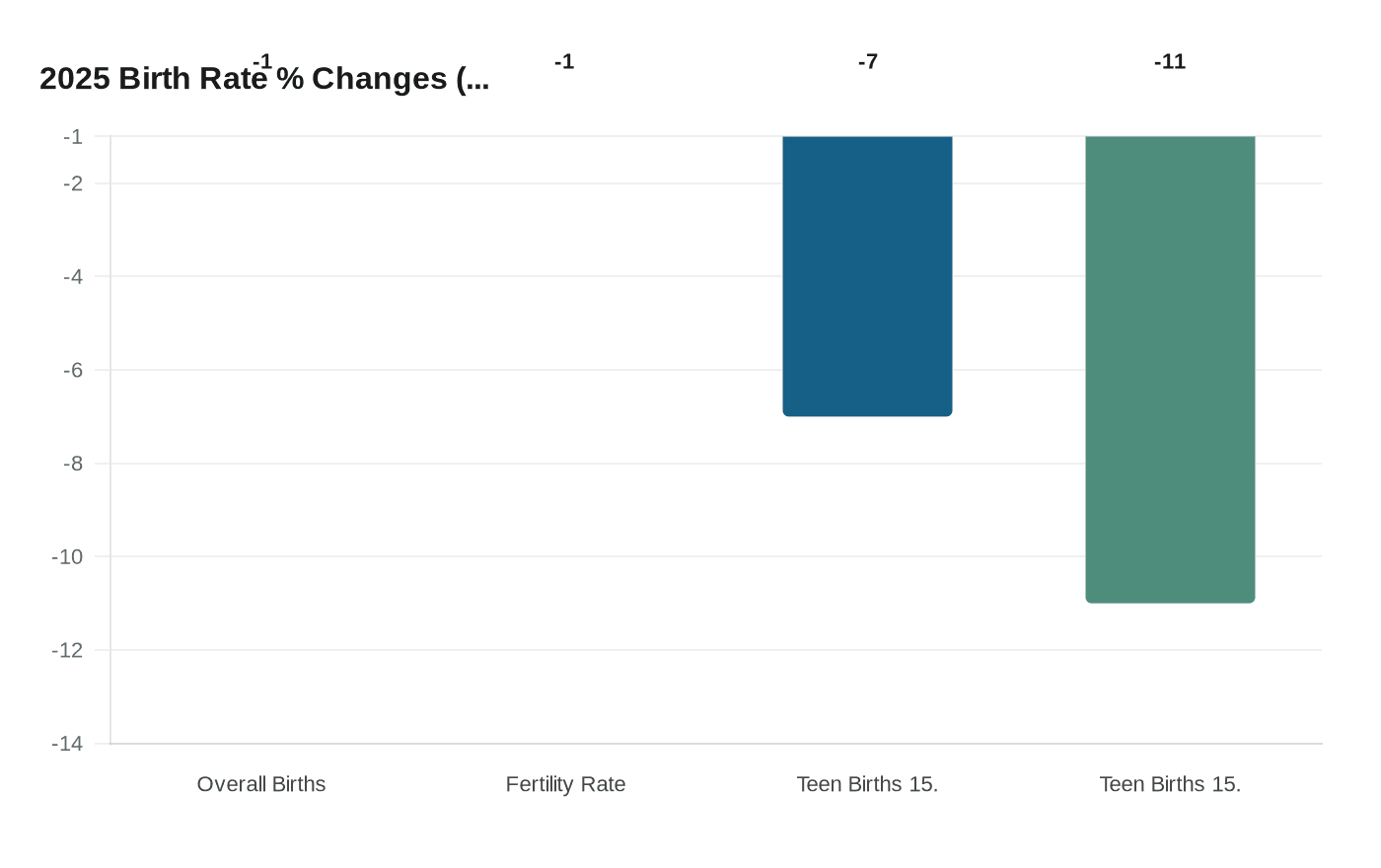
Teen births dropped 7% in 2025 to a record low 11.7 per 1,000 females as total U.S. births fell to 3.6 million, extending a two-decade decline.

The United States recorded approximately 3,606,400 live births in 2025, a 1% decline from 2024 and the latest step in a prolonged demographic contraction that has now persisted for roughly two decades. The National Center for Health Statistics released the provisional figures as part of the CDC's Vital Statistics Rapid Release series, drawing on birth certificate data processed through the National Vital Statistics System that captured 99.95% of 2025 birth records as of early February 2026.
The general fertility rate reached 53.1 births per 1,000 women ages 15 to 44, itself down 1% from the prior year and well below the replacement threshold of approximately 2.1 births per woman over a lifetime. NCHS analysts described the 2025 figures as consistent with the multi-year trajectory rather than an isolated dip.
Among the report's sharpest findings: teen birth rates fell by 7% overall, landing at 11.7 births per 1,000 females ages 15 to 19. The youngest cohort drove the steepest drop, with girls ages 15 to 17 seeing an 11% decline in birth rates. Public health researchers have tracked teen birth rates as a marker of access to reproductive health services and education, making the sustained fall among the youngest teens particularly significant.

The cesarean delivery rate nudged upward to 32.5% in 2025 from 32.4% the year before, while the low-risk C-section rate climbed from 26.6% to 26.9%. Preterm births held steady at 10.41%, unchanged from 2024. NCHS noted that more detailed analysis of prenatal care, low birthweight, and other maternal-infant indicators would accompany the final 2025 data release.
Analysts and advocacy groups responding to the provisional report pointed to a range of potential drivers: economic pressures on family formation, a continuing shift toward childbearing at older ages, access to contraception and abortion services, and broader changes in how Americans structure adult life. None of those factors operates in isolation, and demographers cautioned against reading any single year as definitive. Still, a fertility rate that has declined for two decades carries compounding consequences for workforce size, school enrollment, elder care demand, and long-term fiscal planning at every level of government.
The NCHS authors acknowledged that provisional data can shift when final annual records are compiled but noted that previous provisional releases have tracked closely with final counts. Policy planners routinely use the rapid-release series to calibrate maternal and child health programs ahead of those final figures, giving the 3.6 million birth estimate immediate practical weight.
This article was produced by Prism’s automated news system from verified source data, official records, and press releases, then run through automated quality and moderation checks before publishing. The system is built and supervised by the people who set the standards it runs under. Read our full AI policy.
Did this article answer your question?