Metalysis expands Western supply of high-purity Al-Sc powder for semiconductors and AM
Metalysis began Western production of a high‑scandium Al3Sc master alloy, supplying low‑impurity powder and discs for AlScN sputtering targets and metal additive manufacturing.
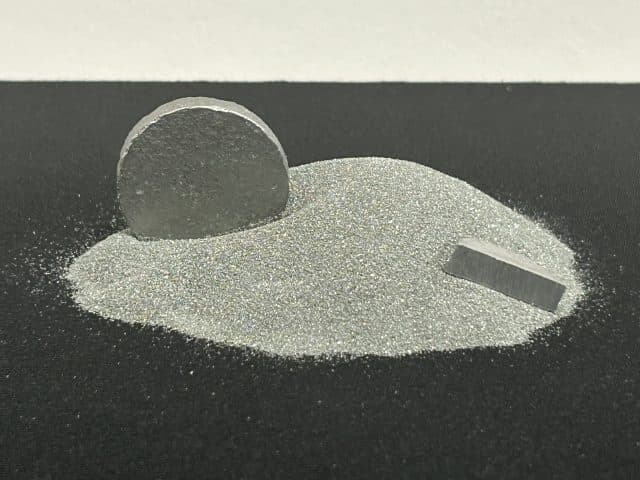
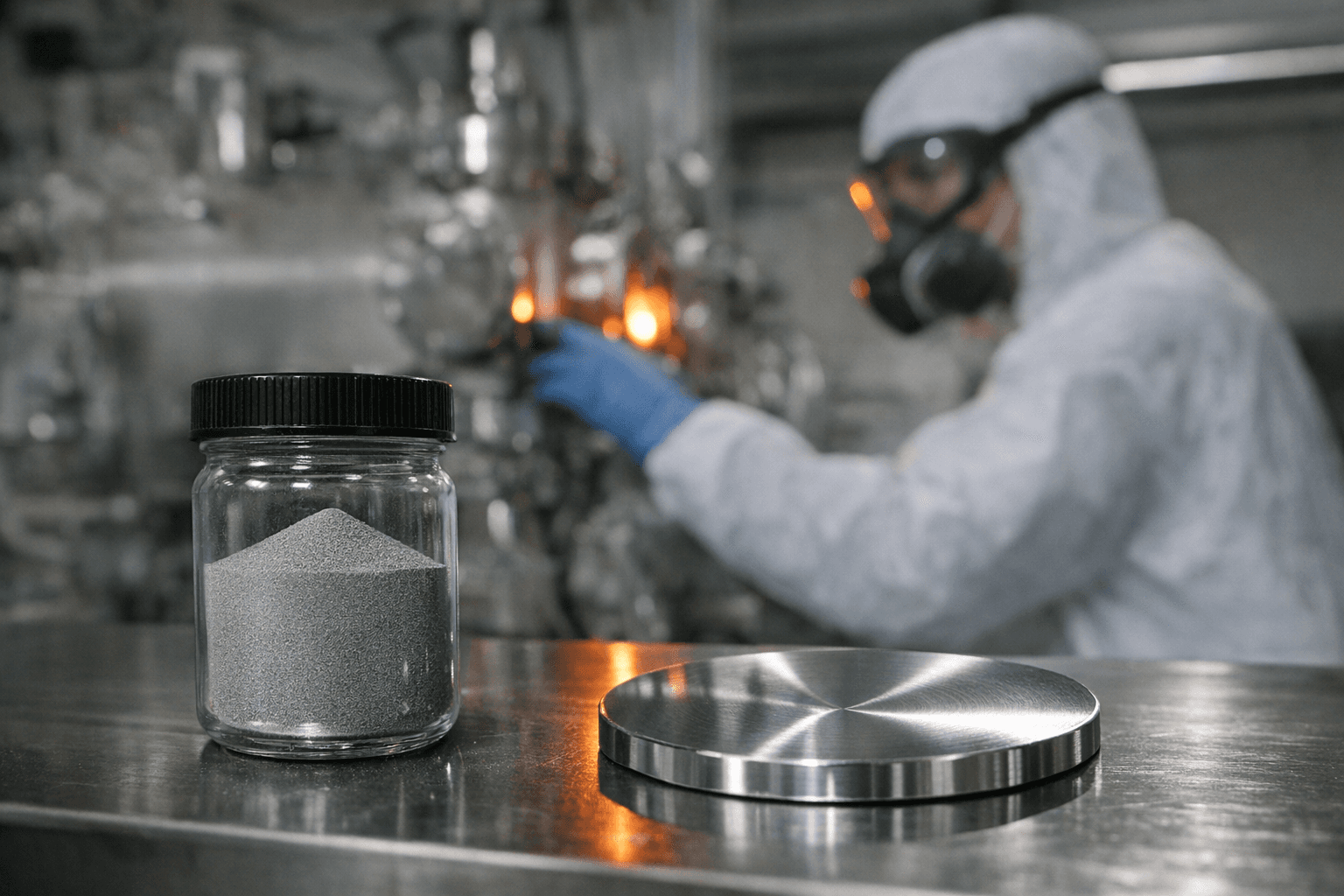
Metalysis has begun producing a high‑scandium aluminium‑scandium (Al3Sc) master alloy aimed at bolstering Western supply for semiconductor sputtering targets and metal additive manufacturing. The material is a 36 wt% scandium / 64 wt% aluminium alloy (25 at% Sc, 75 at% Al), supplied as powder or consolidated discs and specified with oxygen at around 500 ppm and carbon at about 50 ppm.
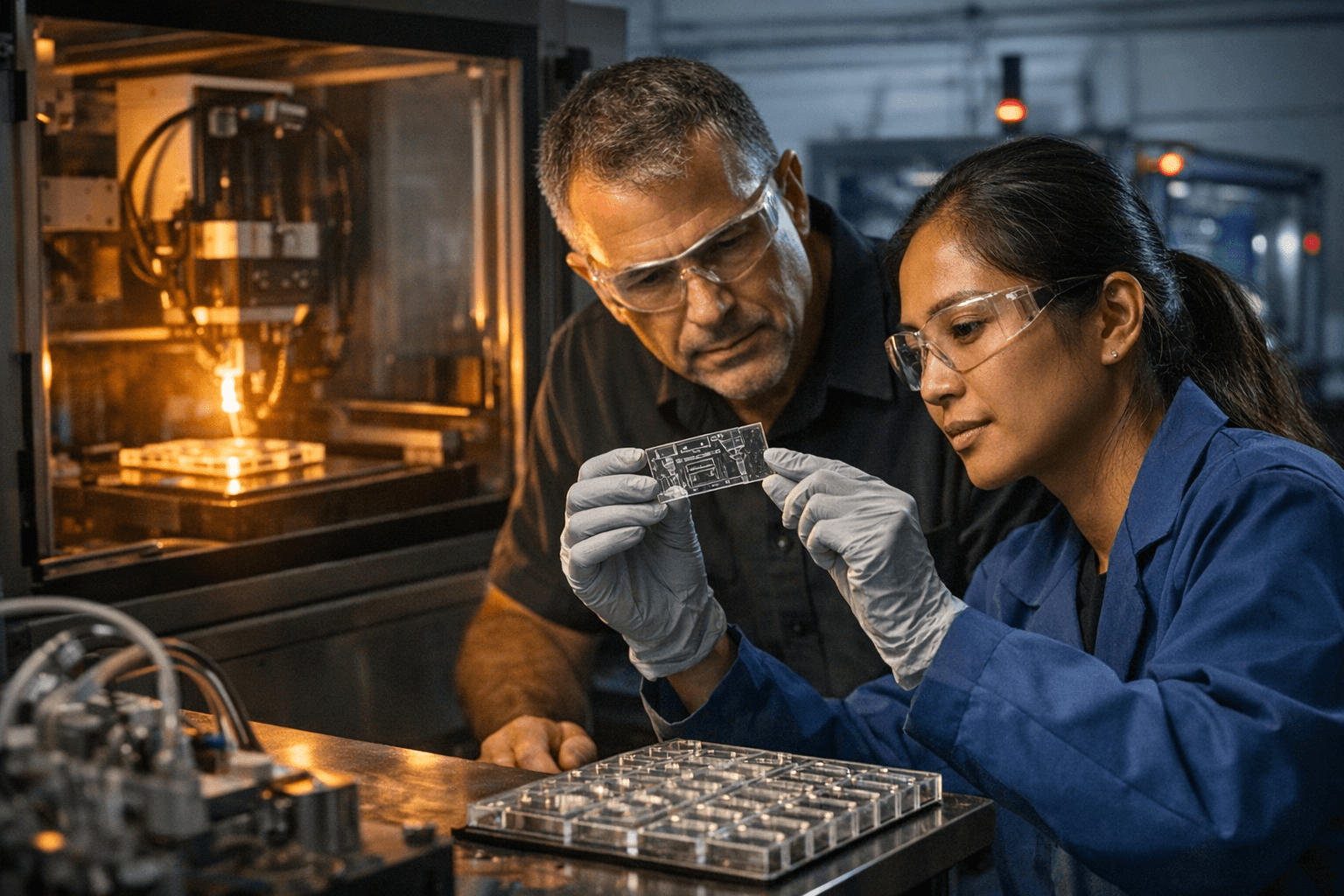
The company uses its patented FFC Cambridge electrolysis to co‑reduce aluminium oxide and scandium oxide directly in molten calcium chloride at 650–950°C, a solid‑state route that is presented as more energy efficient and able to deliver fully homogenised alloys. Metalysis highlights the low impurity profile as critical for sputtering targets, saying, "This ultra‑low impurity content ensures sputtering targets meet the strict quality demands of semiconductor manufacturing." The alloy is intended as feedstock for LPBF and binder‑jetting processes and as a high‑Sc master alloy that customers can dilute to lower scandium loadings for aerospace and defence structural uses.
Trials with RHP‑Technology GmbH produced consolidated discs via Spark Plasma Sintering and hot pressing that "achieved relative densities above 98 per cent with uniform chemical composition." Those trials also demonstrated dilution of the 36 wt% master alloy to a 10 wt% scandium composition, showing flexibility for producing lower‑Sc alloys for structural parts. For AM practitioners, that means a potential new feedstock pathway for printing high‑performance, scandium‑strengthened aluminium without the inhomogeneity issues associated with conventional melting routes.
Metalysis currently operates four Gen‑2 development units, recently doubled to four, each rated to produce up to 350 kg of Al3Sc annually. If all four Gen‑2 units run at full capacity, theoretical output is 4 × 350 kg = 1,400 kg (1.4 tonnes) per year; this is a derived calculation based on stated unit counts and per‑unit capacity. The estimated market for aluminium‑scandium is roughly 3–4 tonnes per year, and Metalysis says it is transitioning from Gen‑2 to larger Gen‑3 facilities to reach tonne‑scale production per unit, with Gen‑4 described as capable of producing tens of tonnes annually. CEO Nitesh Shah framed the move as strategic: "Metalysis has a clear strategy with a focus on high value critical materials. Our aluminum‑scandium alloy is fully homogenized and has an extremely low impurity content, making it suitable for high‑performance applications in semiconductor manufacturing, while defense and aerospace manufacturers are looking at applications with lower scandium content. China's recent export controls on rare earths have accelerated the urgent adoption of our aluminum‑scandium alloys, and we are currently scaling production to meet this demand by transitioning from our current Gen 2 facilities to ton scale production with Gen 3 facilities in the coming months."
The defence angle is evident in existing interest from military programs. Dr. Vic Ramdass, Acting Under Secretary of Defense for Industrial Base Policy, observed that "Scandium alloys are increasingly replacing titanium and older aluminum alloy components in U.S. Department of Defense systems because of their high strength at low weight."
For the 3D printing community and procurement teams, the immediate practical value is clear: a Western source of high‑Sc master alloy opens options for qualifying sputtering targets for AlScN and for testing LPBF or binder‑jetting process windows with a homogenised, low‑impurity feedstock. Verify certification and analytical reports for oxygen and carbon, check particle size distribution and flowability for your chosen AM process, and factor in qualification lead times for sputtering target or aerospace part approvals. Watch for Gen‑3 deployment and published sintering and LPBF processing data; those will determine when Al3Sc moves from demo and trials into routine use.
Know something we missed? Have a correction or additional information?
Submit a Tip