Mills vetoes Maine’s data center moratorium, cites Jay redevelopment project
Janet Mills blocked Maine’s first-in-the-nation data center moratorium, saying it would have stalled a $550 million Jay mill redevelopment tied to hundreds of jobs.

Janet Mills vetoed Maine’s data center moratorium after deciding the bill would have swept too broadly and endangered a $550 million redevelopment at the former Androscoggin paper mill site in Jay. The decision turned a state-level permitting fight into a test case for how lawmakers want to manage the AI-era buildout, balancing new investment against strain on the grid, water use and local backlash.
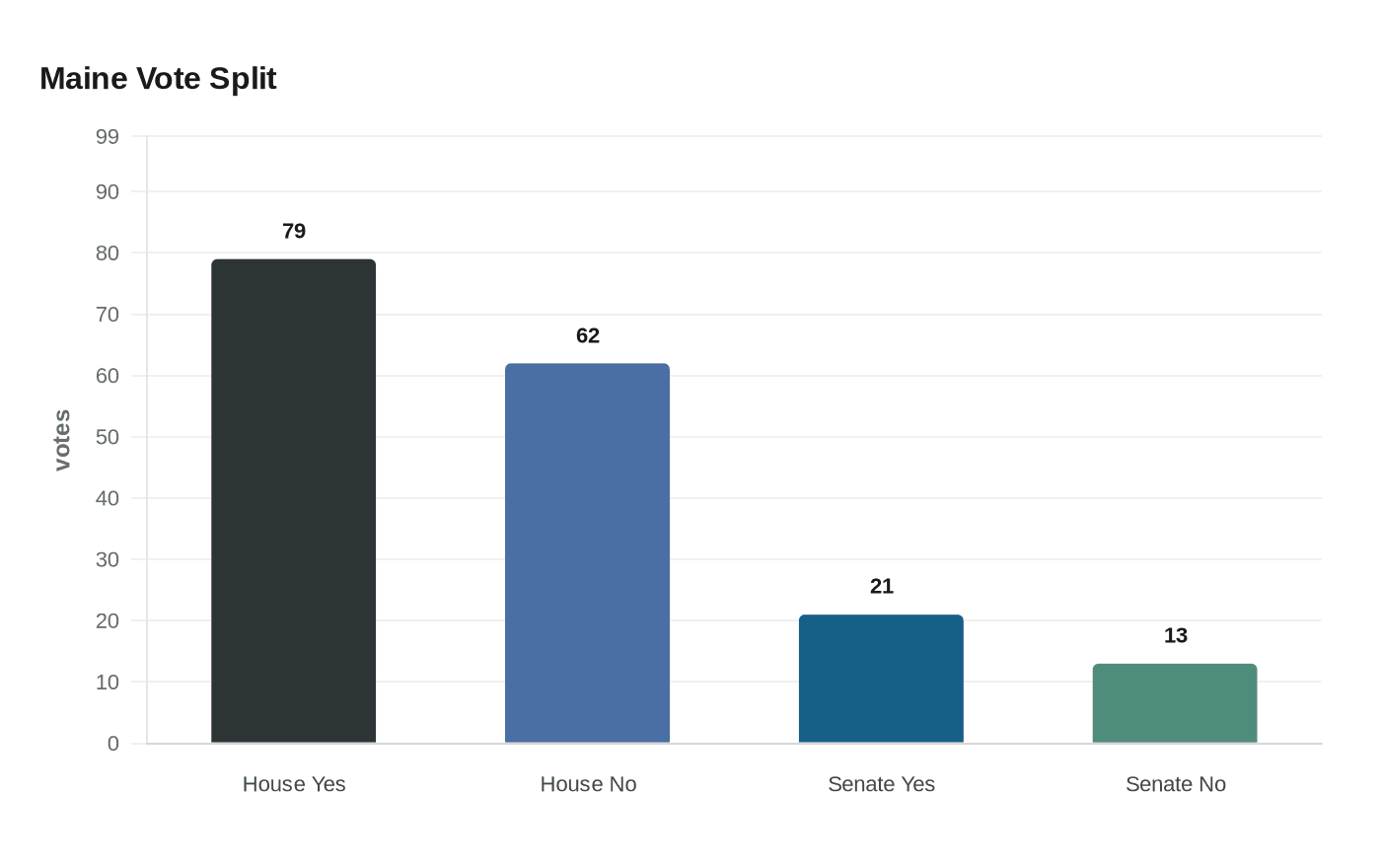
The bill, LD 307, would have imposed a temporary halt through Nov. 1, 2027, on data centers drawing 20 megawatts or more of electric load while a new state council studied their impact on the electric grid, household power bills, air and water, and other concerns. It cleared the Maine House 79-62 and the Senate 21-13, but that left it well short of the two-thirds majority needed to survive a veto override.

Mills said she supported a temporary moratorium in principle because of the effects large data centers have had in other states, but she said she would have signed the measure if it had included an exemption for the Jay project. That redevelopment, planned for the site of a mill explosion in 2020 and the paper mill’s closure in 2023, is expected to create more than 800 construction jobs and at least 100 permanent jobs, while also generating property tax revenue for the town.
The governor said she plans to issue an executive order creating a council to examine data center impacts in Maine. She also signed a separate bill that would bar data center projects from receiving Maine business development tax incentive programs, signaling that she is not backing away from scrutiny of the industry even as she protected the Jay proposal.
The veto widened a familiar split in the debate over hyperscale data centers built for artificial intelligence. Maine Conservation Voters and other supporters of the moratorium argued that large facilities can push up electricity demand, power bills and water use. Opponents, including Franklin County Commissioner Tom Saviello and Jay Town Manager Shiloh LaFreniere, pressed Mills to protect a project they said would reuse existing infrastructure on a brownfield site and carry far less grid impact than a new-build facility.
The stakes extend beyond Maine. At least a dozen states are weighing limits on data centers, making Maine’s fight a proxy battle over whether states should slow the industry to protect ratepayers and land use, or speed redevelopment that can revive distressed towns. In Jay, where the paper mill shutdown left a deep economic hole, the project remains one of the few large-scale bets on a new industrial future.
This article was produced by Prism’s automated news system from verified source data, official records, and press releases, then run through automated quality and moderation checks before publishing. The system is built and supervised by the people who set the standards it runs under. Read our full AI policy.
Did this article answer your question?

