Rubio’s Iran Absence Signals Trump’s Outsourced Diplomacy Approach
Rubio has stayed off the Iran front while Trump’s aides and envoys drive talks, leaving accountability blurred if negotiations succeed or collapse.
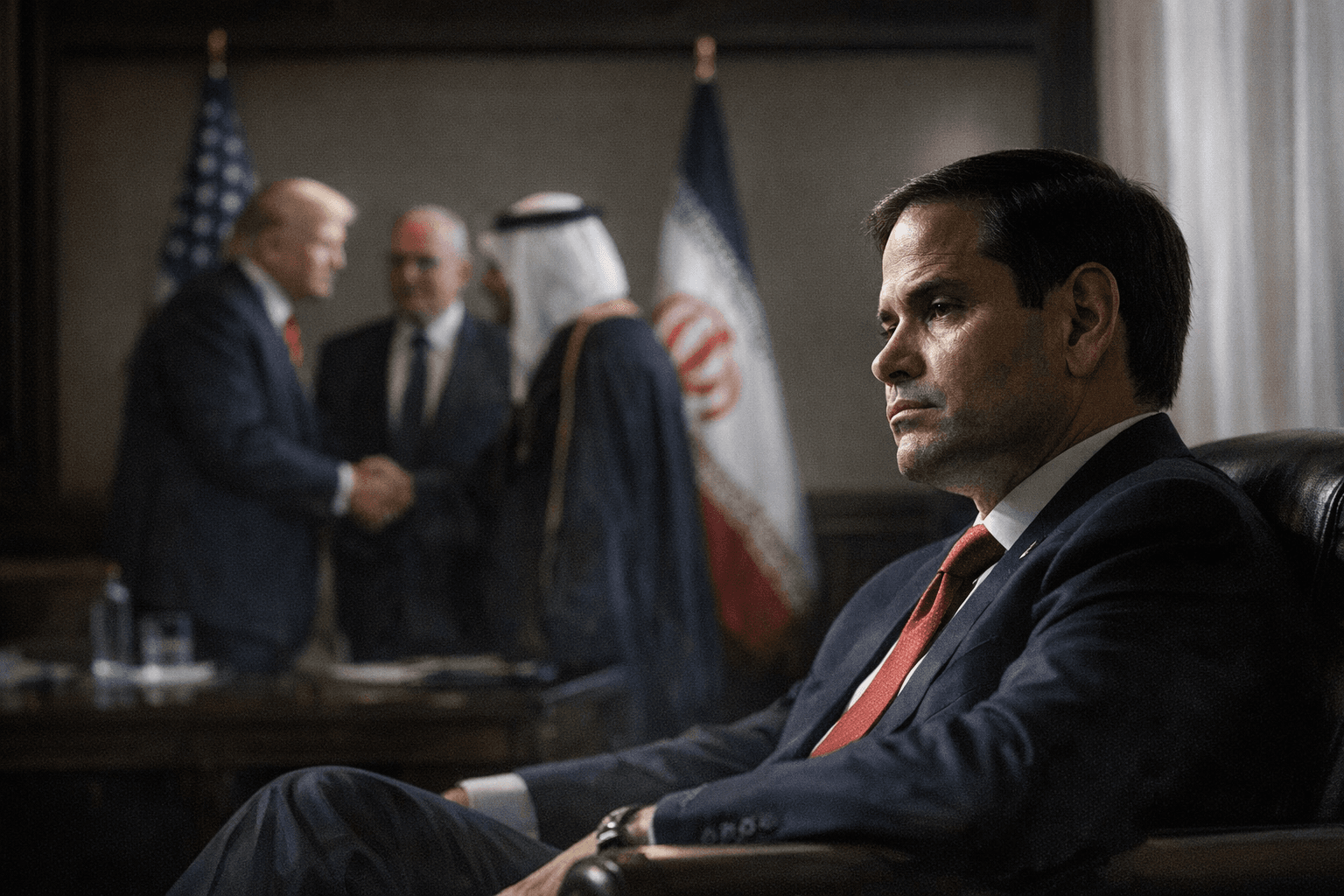
Marco Rubio’s absence from the Iran channel has become its own signal: in Donald Trump’s second term, the diplomacy is being run by a wider cast of White House aides and special envoys, while the secretary of state handles a shrinking role from inside the building.
That shift stands out because Iran has long been the kind of crisis portfolio that usually runs through the top U.S. diplomat. During Barack Obama’s negotiations over the 2015 nuclear deal, John Kerry was the point person and met with his Iranian counterpart on at least 18 different days over 20 months, sometimes several times in a single day. Rubio, by contrast, has publicly described the current contacts only in indirect terms. On March 30, he said there were “messages and some direct talks” between the United States and people inside Iran, mainly through intermediaries.
His travel calendar reinforces how little of the Iran file is visibly in his hands. State Department records show Rubio had visited six foreign cities so far in 2026: Milan, Germany, Slovakia, Hungary, Saint Kitts and Nevis, and France. His last listed Middle East trip in the department’s travel record was to Israel in October 2025.
Rubio did travel to France on March 27 for the G7 Foreign Affairs Ministerial in Cernay-la-Ville, where the State Department said the agenda included the Russia-Ukraine war, the Middle East and threats to peace and stability. But even there, the emphasis was broader than Iran-specific diplomacy, underscoring how far the Iran talks appear to have moved outside the normal secretary-of-state lane.
The more active negotiating track has been shifting toward other Trump allies. On April 25, reporting said Steve Witkoff and Jared Kushner were traveling to Islamabad for talks, while Iran said no U.S.-Iran meeting was planned and that it would convey its position through Pakistani officials. That arrangement leaves the real negotiating authority harder to pin down, with messages flowing through intermediaries, envoys and trusted presidential aides rather than through the State Department’s top civilian diplomat.
At the same time, the administration has kept up pressure on Tehran. On April 24, the State Department announced sanctions targeting Iran’s oil trade network in China, a reminder that coercive measures are still moving through the department even as the principal diplomatic channel seems to sit elsewhere.
If talks advance, the architecture of the process could matter as much as the substance. If they fail, it will be harder to say who owned the opening, who shaped the terms and who will be held responsible for the outcome.
This article was produced by Prism’s automated news system from verified source data, official records, and press releases, then run through automated quality and moderation checks before publishing. The system is built and supervised by the people who set the standards it runs under. Read our full AI policy.
Did this article answer your question?

