Mount Maunganui campground landslide leaves families awaiting identification
Human remains were recovered after a landslide hit a busy Mount Maunganui campground; authorities are working to identify victims and notify families.
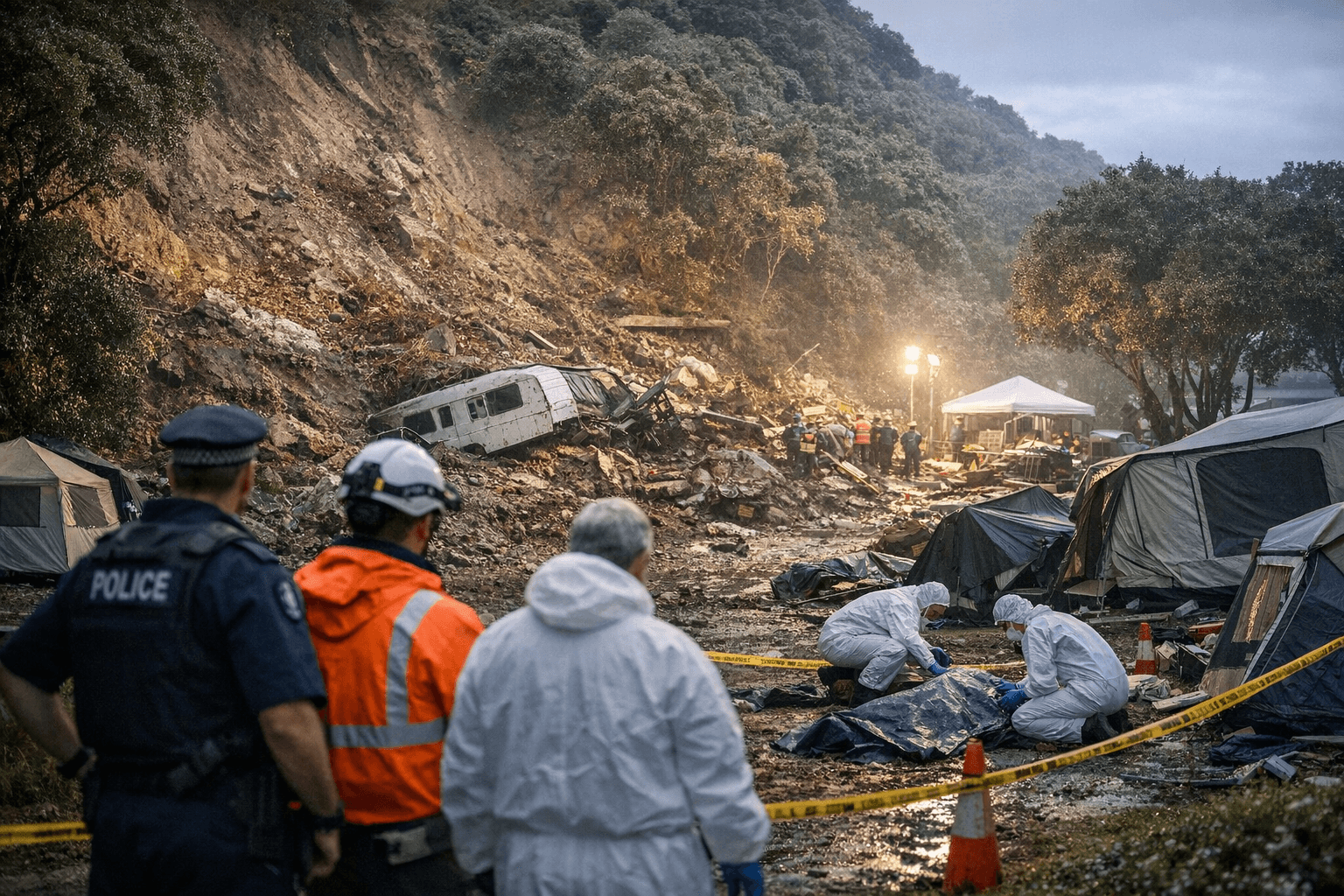
Human remains recovered overnight have prompted a forensic identification effort after a landslide struck a busy campground at Mount Maunganui on New Zealand’s North Island on January 23. Police and emergency services said they were working to confirm the identities of victims as residents and holidaymakers contend with the immediate human toll and a broader reckoning over risk on steep coastal terrain.
Early reports listed six people, including two teenagers, among those affected, and authorities emphasized the priority of family notifications and careful forensic work. Search and rescue teams secured the site and carried out recovery operations in unstable ground conditions; access to the campground remained restricted as investigators completed their initial examinations. Local emergency management officials cautioned that identification is likely to take time because of the nature of the recoveries and the need for specialist pathology support.
Mount Maunganui, adjacent to the city of Tauranga, is a major summer destination with campgrounds that typically fill during the January holidays. The landslide interrupted the peak tourist season and raised questions about the exposure of recreational sites to slope failure. For residents and business owners who rely on summer visitors, the event threatens short-term revenue from cancellations and could increase scrutiny of campsite siting and management practices.
Beyond immediate economic disruption, the incident highlights persistent challenges for New Zealand’s land-use planning and disaster preparedness. Steep topography, episodic heavy rainfall and coastal erosion combine to produce landslide risk across parts of the North Island. Scientists and government agencies have repeatedly warned that more intense rainfall events linked to climate change are likely to increase the frequency of slope failures, intensifying pressure on councils to improve risk mapping and restrict development in high-hazard zones.
For insurers and reinsurance markets, concentrated losses from natural hazards can drive claims and put upward pressure on premiums for properties in exposed locations. While this event alone will not alter national risk pools, a pattern of damaging landslides coupled with extreme weather can influence underwriting decisions, prompt reassessments of coastal and hillside exposures, and accelerate demand for resilience investments by local authorities.
Policy options under discussion following events of this kind typically include stricter zoning around known landslide-prone slopes, mandatory geotechnical assessments for campgrounds and holiday parks, improved early-warning systems tied to rainfall thresholds, and targeted buyouts or retreat where risks are highest. Funding such measures will be a test for central and local governments, which must balance property rights, community livelihoods and the public safety imperative.
As forensic teams work to confirm identities, authorities are also coordinating victim support services for families and for the broader community shaken by the disaster. The event will likely prompt reviews of campsite safety standards, emergency access routes and the adequacy of current hazard mapping in a region where tourism, residential growth and natural risk intersect.
This article was produced by Prism’s automated news system from verified source data, official records, and press releases, then run through automated quality and moderation checks before publishing. The system is built and supervised by the people who set the standards it runs under. Read our full AI policy.
Did this article answer your question?