Netherlands Becomes First European Country to Approve Tesla's Full Self-Driving
Dutch regulators approved Tesla's FSD Supervised on April 10 after 18 months of testing, making the Netherlands Europe's first country to greenlight the AI driving feature.

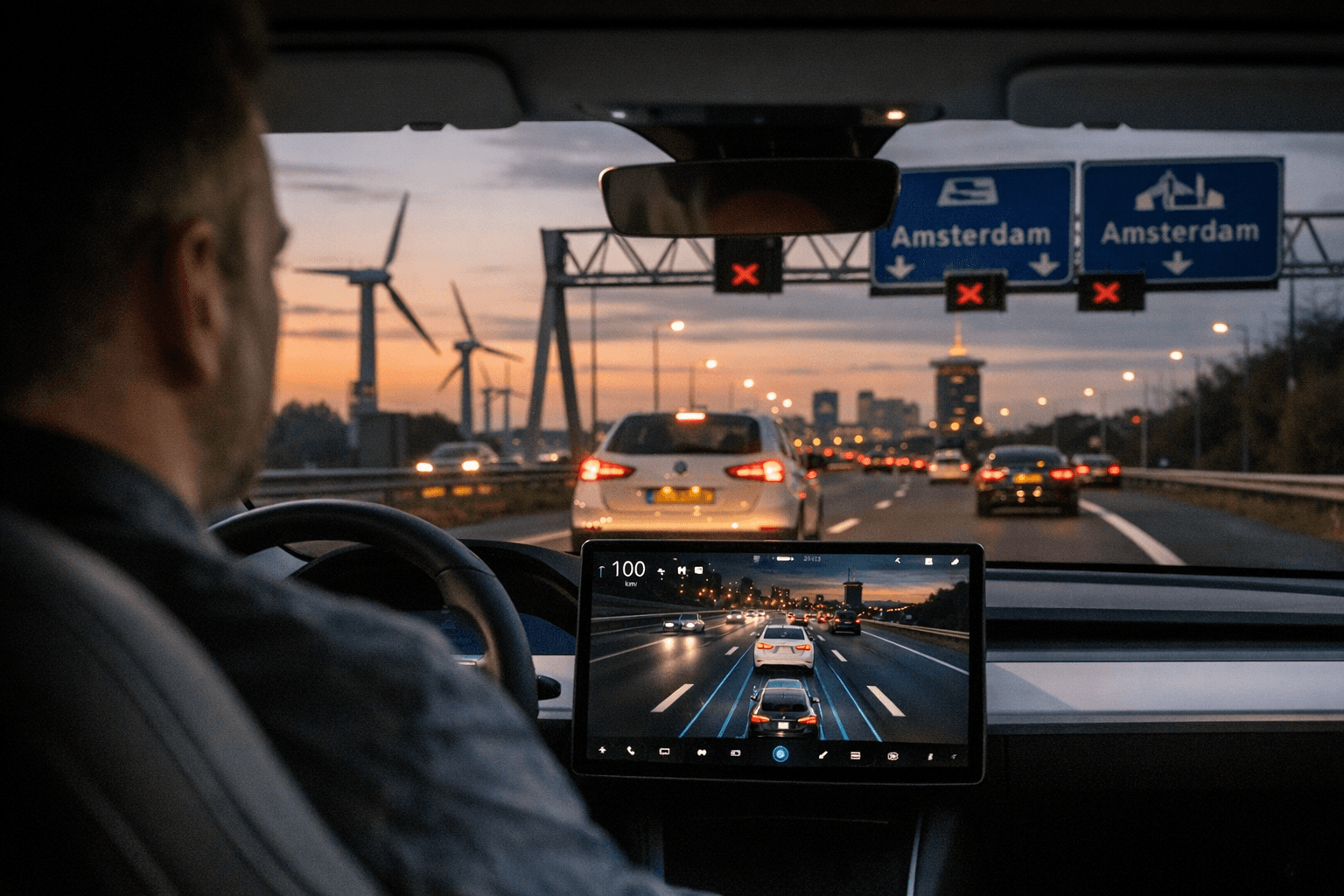
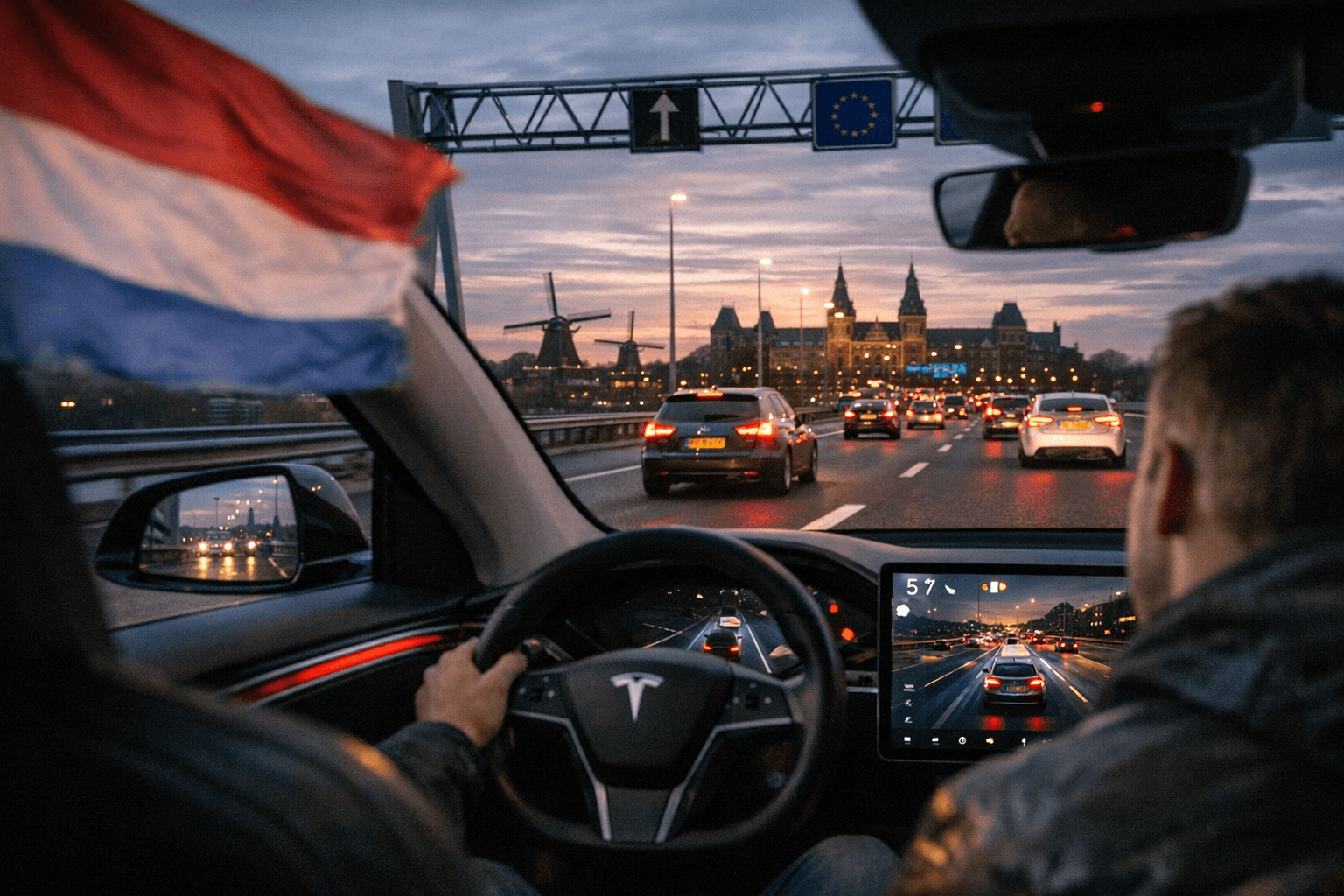
The Dutch vehicle authority RDW granted Tesla a type approval for its Full Self-Driving Supervised system on April 10, 2026, making the Netherlands the first European country to authorize the driver-assist technology on public roads. The decision followed more than 18 months of testing conducted on RDW's own track and on public roads, with regulators concluding the system can improve safety when used correctly.
What the approval actually permits is more precise than the "Full Self-Driving" branding implies. FSD Supervised is classified as a Level 2 driver-assistance system under UN R-171 regulation for Driver Control Assistance Systems. The technology handles steering, braking, route navigation, and parking, but the RDW was unambiguous in its official statement: the vehicles "are NOT autonomous or self-driving." Drivers' hands no longer need to rest on the steering wheel, but they must be positioned to intervene immediately. Onboard sensors continuously monitor eye position and hand availability; if the system detects insufficient attention, it issues escalating alerts and can temporarily disable itself. Reading, phone use, or any activity that diverts focus is both prohibited and, by design, actively prevented.
The regulatory pathway matters as much as the approval itself. Europe's vehicle certification model differs fundamentally from the United States, where manufacturers self-certify and regulators audit compliance after the fact. In the EU, type approval must be granted in advance by a recognized national authority. The RDW's certification, designated as a European type approval with provisional validity, applies only in the Netherlands for now. Broader EU recognition requires the RDW to submit a formal application to the European Commission, after which member states would vote on bloc-wide authorization. That process has not yet begun. Tesla has set a target of a wider European rollout over the summer of 2026, though that timeline depends entirely on how fast individual countries move through their own national processes. Other member states can choose to recognize the Dutch approval voluntarily, but recognition is not automatic.
The RDW also clarified that the European version of FSD Supervised is not directly comparable to the software running in the United States, citing differences in software versions that make any one-to-one performance comparison invalid.
Tesla Europe hailed the news on X, posting: "FSD Supervised has been approved in the Netherlands & will begin rolling out in the country shortly! No other vehicle can do this. We're excited to bring FSD Supervised to more European countries soon." Elon Musk echoed the announcement, writing: "Congratulations to the Tesla team and thank you to the regulatory authorities in the Netherlands for all the hard work required to make this happen."
The approval arrives at a commercially precarious moment. Tesla's European sales have struggled under the dual weight of an aging electric vehicle lineup and consumer backlash against Musk's far-right political commentary. Sales across the continent did tick upward in February 2026 for the first time in more than a year. One Morningstar analyst predicted that "FSD approval by the Dutch authority and subsequent European regulators will lead to improved sales in Europe over the coming months as consumers are excited to try FSD." Broader adoption of FSD is central to Tesla's long-term financial case: much of the company's $1 trillion valuation rests on Musk's assertion that AI-driven autonomous driving and robotaxi revenue will define its future.
The Netherlands is also home to Tesla's European headquarters, a detail that likely made RDW the natural first mover among EU regulators. The contrast with Waymo's European ambitions is instructive: Alphabet's autonomous driving subsidiary is preparing fully driverless Level 4 robotaxis for London, a system that requires no human driver at all. Tesla's hard-won Dutch certification sits at a different tier entirely, yet its significance as a regulatory template for the rest of the continent should not be understated.
Sources:
Know something we missed? Have a correction or additional information?
Submit a Tip