Artemis II Makes History as First Crewed Lunar Mission in 53 Years
NASA's Artemis II splashed down on April 10, completing humanity's first crewed lunar voyage in 53 years and a critical stress test for the heat shielding needed for a 2028 Moon landing.
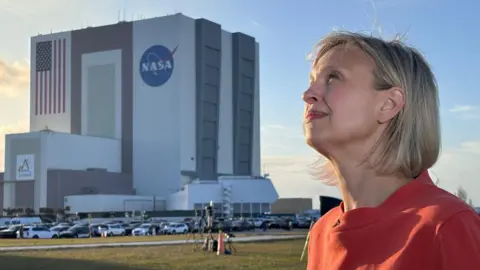
Nine days and 694,481 miles after leaving Earth, Orion capsule Integrity splashed down in the Pacific Ocean on April 10, completing a circumlunar flyby that stopped short of a lunar landing by design and validated the life support, navigation, and heat shielding systems on which a 2028 Moon landing will depend.
The Space Launch System ignited at 6:35 p.m. EDT on April 1 from Kennedy Space Center's Launch Complex 39B, its 8.8 million pounds of thrust carrying Commander Reid Wiseman, Pilot Victor Glover, Mission Specialist Christina Koch, and Canadian Space Agency Mission Specialist Jeremy Hansen on the first crewed journey beyond low Earth orbit since Apollo 17 in December 1972. The gap: 53 years and four months.
The mission made history on multiple fronts simultaneously. Glover became the first person of colour to travel beyond low Earth orbit; Koch, the first woman; Hansen, the first non-U.S. citizen; Wiseman, as commander, the oldest person ever to make the journey.
The distance record fell early. At 1:56 p.m. EDT on April 6, the crew surpassed Apollo 13's 56-year-old mark of 248,655 miles, reaching a maximum of 252,756 miles from Earth, roughly 4,100 miles beyond any previous human travel. That earlier record had been set not by design but by catastrophe; the Apollo 13 crew reached it while improvising survival aboard a crippled spacecraft in April 1970. Artemis II surpassed it during a planned seven-hour flyby that brought Integrity within 4,067 miles of the lunar surface. During those hours, the crew documented terrain on the Moon's far side that no human had directly observed, including the ancient Orientale and Hertzsprung impact basins, and witnessed a rare total solar eclipse from space. NASA released the images publicly on April 8.
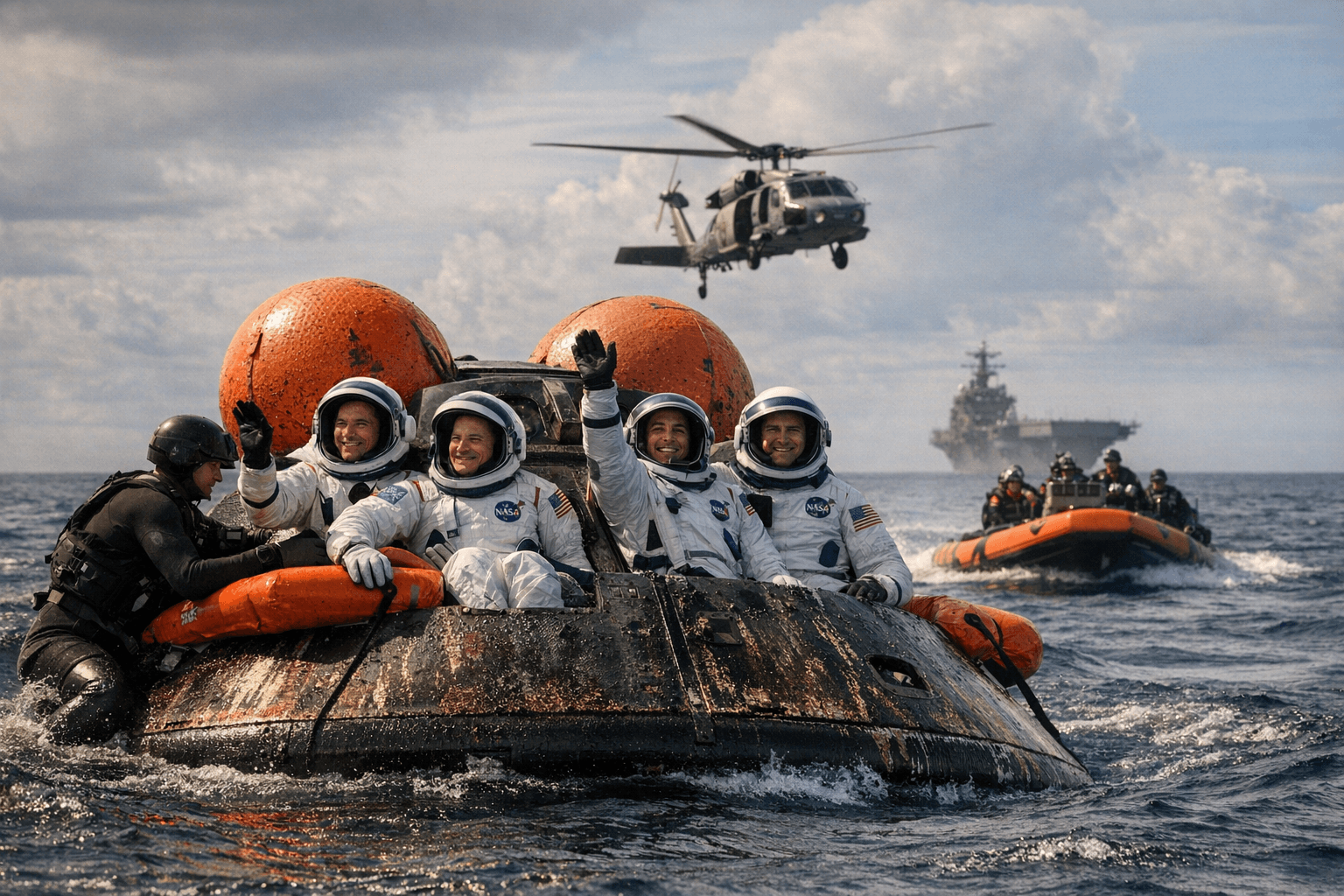
The most tense phase was not the record-breaking but the return. Re-entry at Mach 33, approximately 24,661 mph, subjected Orion's heat shield to the hottest and fastest crewed atmospheric entry since the Apollo era. The concern was not theoretical: the same shield had returned from the uncrewed Artemis I test flight in 2022 with significant surface pitting. NASA lead flight director Jeff Radigan acknowledged the "irrational fear that is human nature" during a six-minute communication blackout at peak heating. When the signal returned, Mission Control erupted. Splashdown at 8:07 p.m. EDT, approximately 40 miles off San Diego, was called a "perfect bull's-eye splashdown" by NASA commentator Rob Navias. The USS John P. Murtha recovered the crew within two hours.
NASA Associate Administrator Amit Kshatriya called the mission "an incredible test of an incredible machine" and "a gift to the world from NASA." Administrator Jared Isaacman, waiting aboard the recovery ship, said he was "still at a loss for words."
What Artemis II was not is a Moon landing. That distinction belongs to Artemis IV, planned for 2028, which aims to put two crew members near the lunar south pole. Artemis III, scheduled for 2027, will first test docking procedures with a lunar lander in Earth orbit, a step made necessary after the Lunar Gateway programme was cancelled in March 2026. Both missions depend on what engineers now extract from the heat shield, life support, and navigation data gathered across these nine days. The shakedown is complete; the hard part begins.
Sources:
Know something we missed? Have a correction or additional information?
Submit a Tip