Northern Ireland riots target migrants after Belfast stabbing
Masked men burned homes and vehicles in Belfast after a stabbing that police said was not terrorism, turning one attack into a racial flashpoint.

Masked men burned families out of their homes in Belfast after a stabbing in north Belfast set off two nights of anti-immigrant violence that police and officials said targeted people because of their skin color. Cars and a bus were set on fire, residents were evacuated and officers came under attack as the unrest spread beyond the original crime scene.
The violence began after a June 8 knife attack in north Belfast, where a man in his 40s suffered serious injuries to his eyes, face, neck and back. Police said members of the public intervened before officers arrived and were credited with helping save his life. A 30-year-old Sudanese man was charged with attempted murder, possession of a knife in a public place and threats to kill.
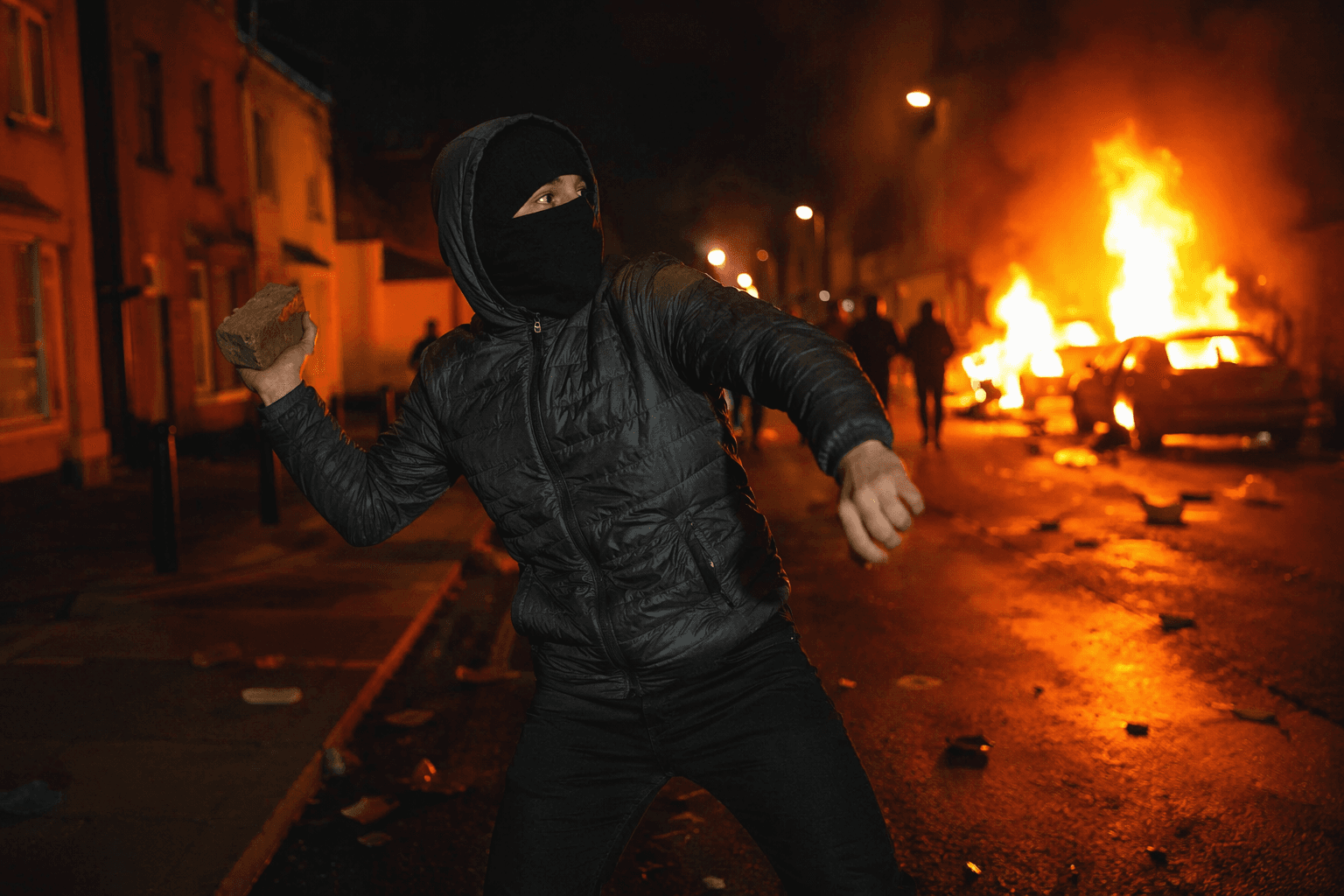
Police said they were not treating the stabbing as terrorism and had no information suggesting anyone else was involved. Despite that, the attack quickly became the trigger for racial unrest, with hundreds of protesters, many of them masked, confronting officers and hunting for people they believed to be immigrants. Police deployed armoured vehicles and water cannon as the disorder spread through parts of Belfast and beyond.
Northern Ireland First Minister Michelle O’Neill condemned the violence as “disgusting cowardice,” while Prime Minister Keir Starmer called the stabbing “sickening.” Police and political leaders urged calm and warned against inciting hate or targeting particular communities. A pastor quoted by Reuters said families were being put out “just because they’re black,” underscoring the racial character of the attacks.
The unrest fit into a wider pattern of anti-immigrant agitation across Britain, where ministers have blamed far-right online agitators for stoking racial tension. It also followed anti-immigrant rioting in Northern Ireland last year in Ballymena, where tensions erupted over an alleged sexual assault. The latest violence has deepened concern that Belfast’s streets are again becoming a stage for communal fear, where one brutal crime can be turned into a broader attack on migrants and minority residents.
This article was produced by Prism’s automated news system from verified source data, official records, and press releases, then run through automated quality and moderation checks before publishing. The system is built and supervised by the people who set the standards it runs under. Read our full AI policy.
Know something we missed? Have a correction or additional information?
Submit a Tip