Oil Surges Above $115 as US-Israel War With Iran Escalates
Brent crude surged above $115 a barrel, on pace for its biggest monthly gain on record, after Tehran's threats halted traffic through the Strait of Hormuz, a chokepoint for 20% of the world's oil.

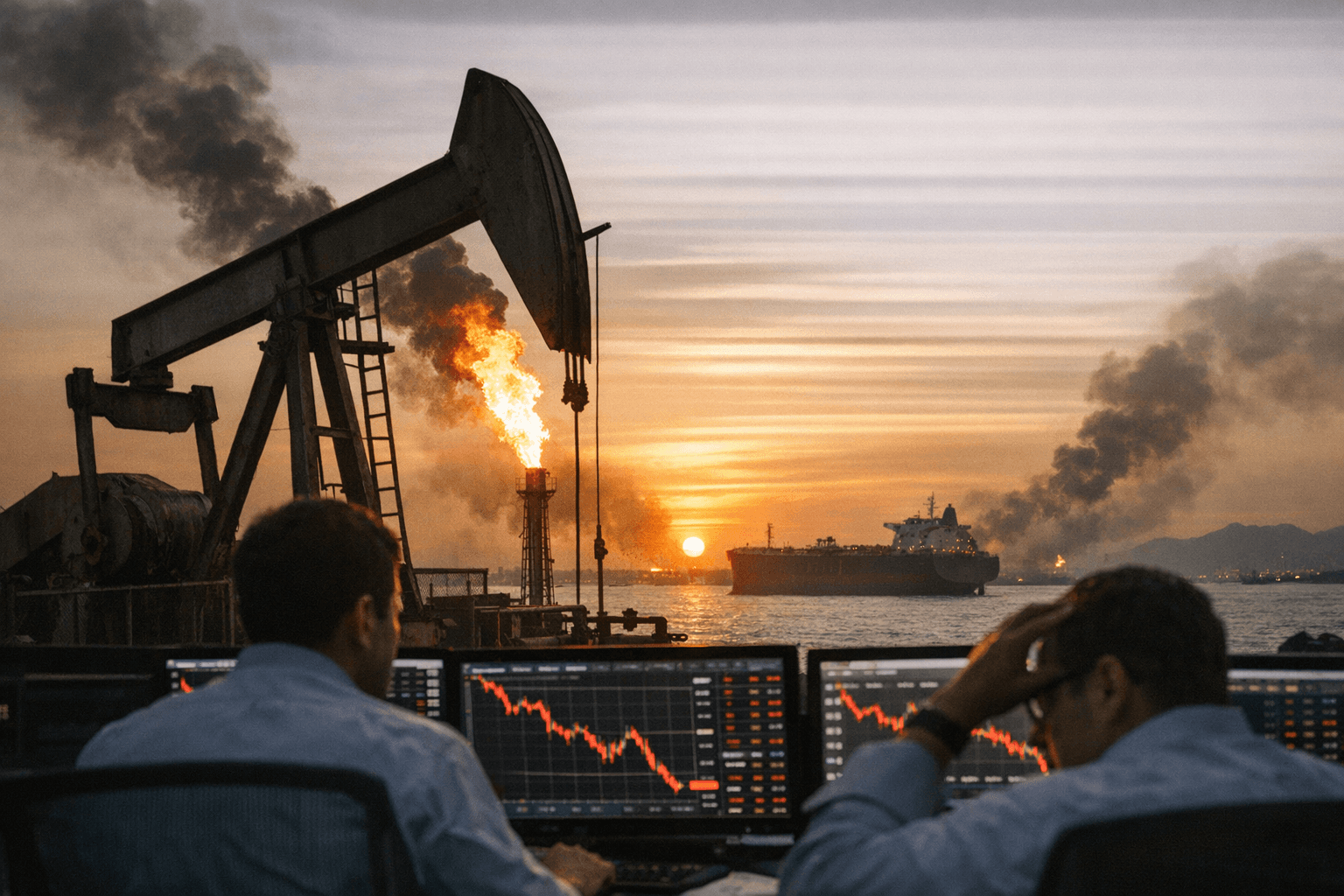
Somewhere in the mid-Atlantic over the weekend, a tanker originally bound for Europe reversed course and turned toward Asia. It was one of the clearest early signals of a supply chain fracture that pushed Brent crude above $115 a barrel on Monday and sent Asian stock markets into sharp retreat, as the US-Israel war with Iran moved into a more dangerous phase.
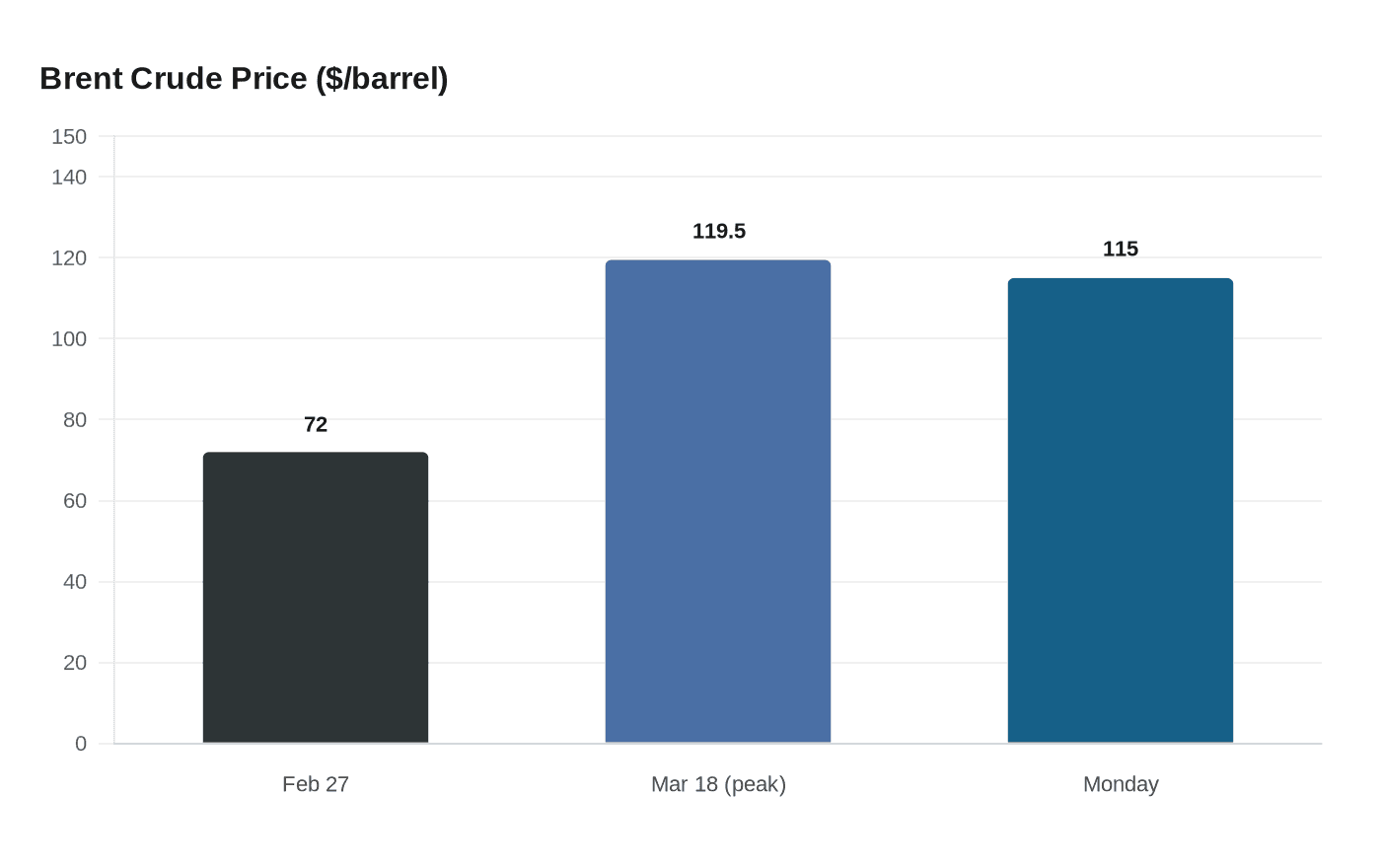
Brent crude rose more than 3% to above $115 a barrel, placing it on track for its biggest monthly gain on record. US-traded West Texas Intermediate climbed roughly 3.5% to $103. The trajectory over the past month captures the speed of the disruption: Brent was near $72 on February 27, the day before the US and Israel struck Iran. It spiked to $119.50 on March 18, the highest level since June 2022, before the weekend's escalation pushed it back above $115.
The heart of the supply crisis is the Strait of Hormuz, a narrow waterway at the entrance to the Persian Gulf through which around 20% of the world's oil and gas supply ordinarily flows. Tehran retaliated to US and Israeli strikes by threatening to attack any ships attempting to cross it, and shipments largely came to a standstill. The physical supplies that transit the Gulf flow primarily to Asian markets, and Asian consumers have already begun bidding up prices for US gas, pulling tankers away from European buyers before they ever reach port.
Sean Foley, an energy markets expert at Macquarie University, said he expected oil prices to rise further unless the conflict eases. Foley also flagged a second chokepoint: Houthi strikes on Israel raised concerns that the armed group could stop energy shipments through the Bab al-Mandeb strait near Yemen, which funnels oil volumes toward Europe and beyond.
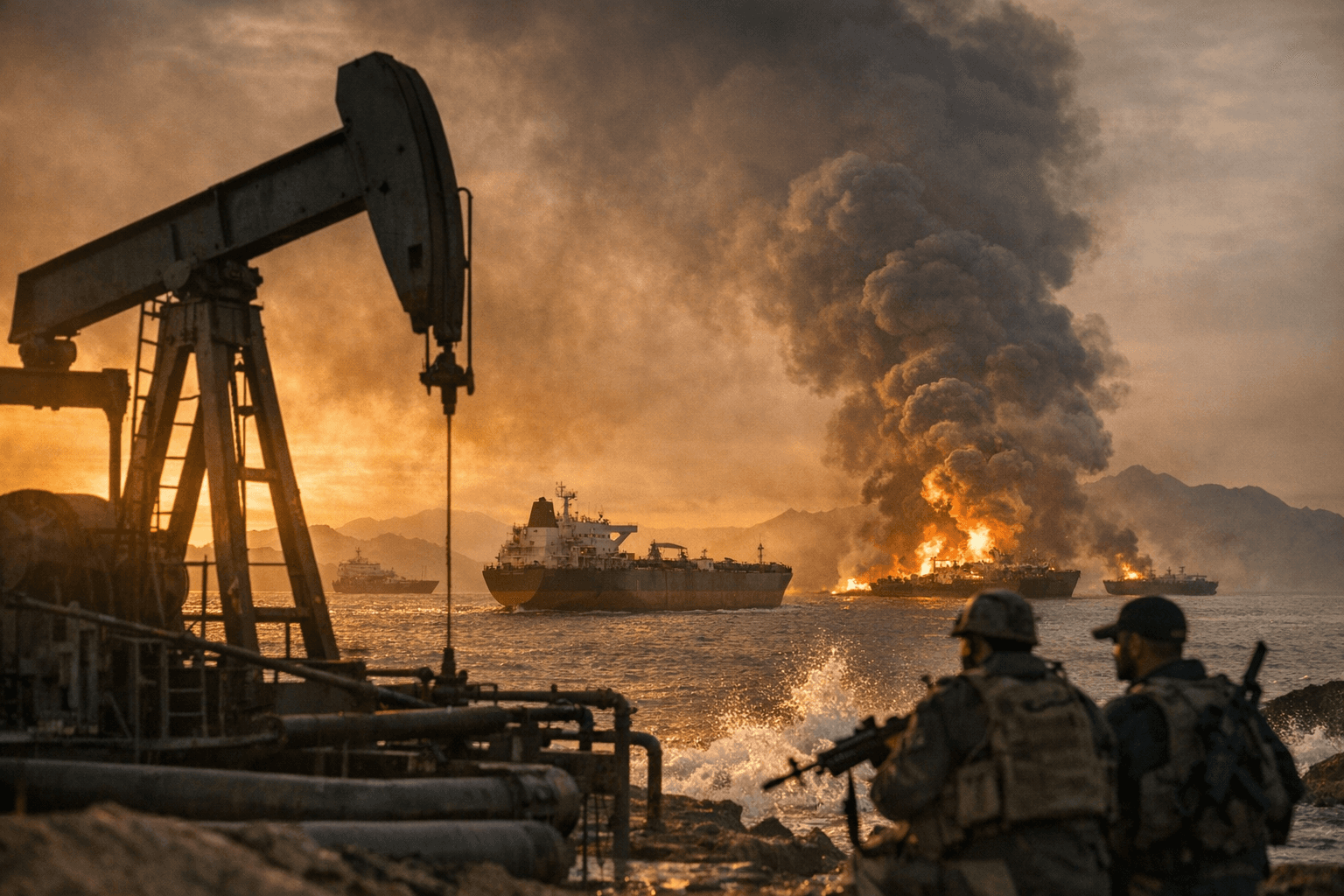
Two scenarios now dominate market thinking. If shipping through both straits remains disrupted and fighting intensifies, the conditions for another leg higher in prices are firmly in place. If the conflict stabilizes and Tehran stands down its Hormuz threat, the rapid compression seen between late February and mid-March could partly reverse. Either way, the rise in crude threatens to increase the cost of jet fuel and fertilizer precursors, compounding inflationary pressures that reach far beyond the pump.
The weekend produced several new escalations. Iran-backed Houthi rebels in Yemen struck Israel on Saturday and Sunday. The US and Israel launched fresh waves of airstrikes across Iran, hitting multiple targets including oil depots. On March 8, Iran named Mojtaba Khamenei to succeed his father, Ali Khamenei, as Supreme Leader, a move that signaled hardliners remain in command a week into the conflict.
Iran's parliament speaker warned that his country's forces were "waiting for American soldiers" as a further 3,500 US troops arrived in the Middle East. President Donald Trump, speaking with the Financial Times on Sunday, said he could "take the oil in Iran" and potentially seize Kharg Island, Iran's primary oil export hub. Asked about Iranian defenses there, Trump said: "I don't think they have any defence. We could take it very easily." He compared the idea to the US seizure of Venezuela's oil industry following the January capture of then-President Nicolás Maduro, saying Washington planned to control that operation "indefinitely." On oil prices, Trump called short-term increases a "small price to pay" for eliminating Iran's nuclear threat.
Asian equity markets absorbed the escalation sharply. Japan's Nikkei 225 fell 4.5% at the open and South Korea's Kospi dropped 4%, with later intraday figures showing steeper losses: the Nikkei down more than 7%, the Kospi off more than 8%, with the latter triggering a 20-minute trading halt through a circuit-breaker mechanism designed to curb panic selling. The Hang Seng in Hong Kong lost more than 3% and Australia's ASX 200 fell more than 4%. The Kospi's circuit breaker had already fired once during the conflict, when the index slumped 12% in a single session.
The combination of closed shipping lanes, escalating military action, and the formalization of hardline succession in Tehran leaves energy markets with little stable ground beneath them.
Know something we missed? Have a correction or additional information?
Submit a Tip