Only Two Ships Cross Hormuz as Ceasefire Brings Fragile Opening
Just two ships crossed the Strait of Hormuz on Friday, four days into a ceasefire that left more than 600 vessels still stranded in the Gulf.
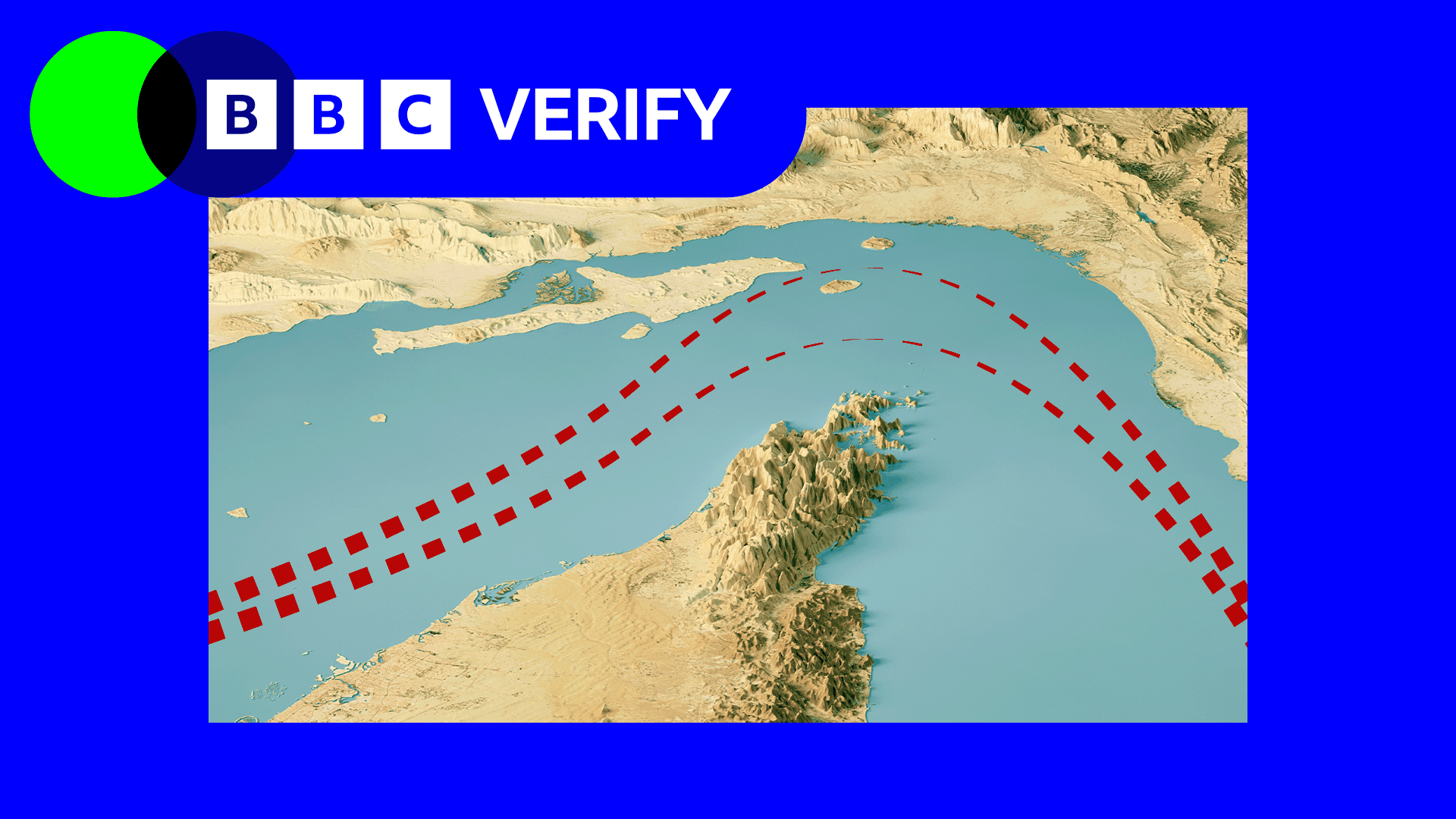
The Liberia-flagged Daytona Beach cleared the Strait of Hormuz at 06:59 UTC Friday, followed nearly two hours later by the Greek-owned bulk carrier NJ Earth at 08:44 UTC. Those two crossings, recorded by maritime monitor MarineTraffic, were the sum total of commercial passage through one of the world's most critical chokepoints on the fourth day of a ceasefire meant to reopen it.
MarineTraffic described the pair as "early signs of vessel activity emerging in the Strait of Hormuz following a ceasefire announcement, which includes a temporary reopening of the strategic waterway to allow for negotiations." The Daytona Beach had departed the Iranian port of Bandar Abbas at 05:28 UTC before making its crossing. Before the crisis, 56 tankers sailed the same route in a typical 18-hour window.
The blockade dates to February 28, when the United States and Israel launched Operation Epic Fury, a coordinated air campaign that killed Supreme Leader Ali Khamenei and targeted Iranian military facilities and nuclear sites. The Islamic Revolutionary Guard Corps responded by broadcasting VHF warnings forbidding all passage, subsequently confirming at least 21 attacks on merchant vessels while reportedly laying sea mines across the channel.
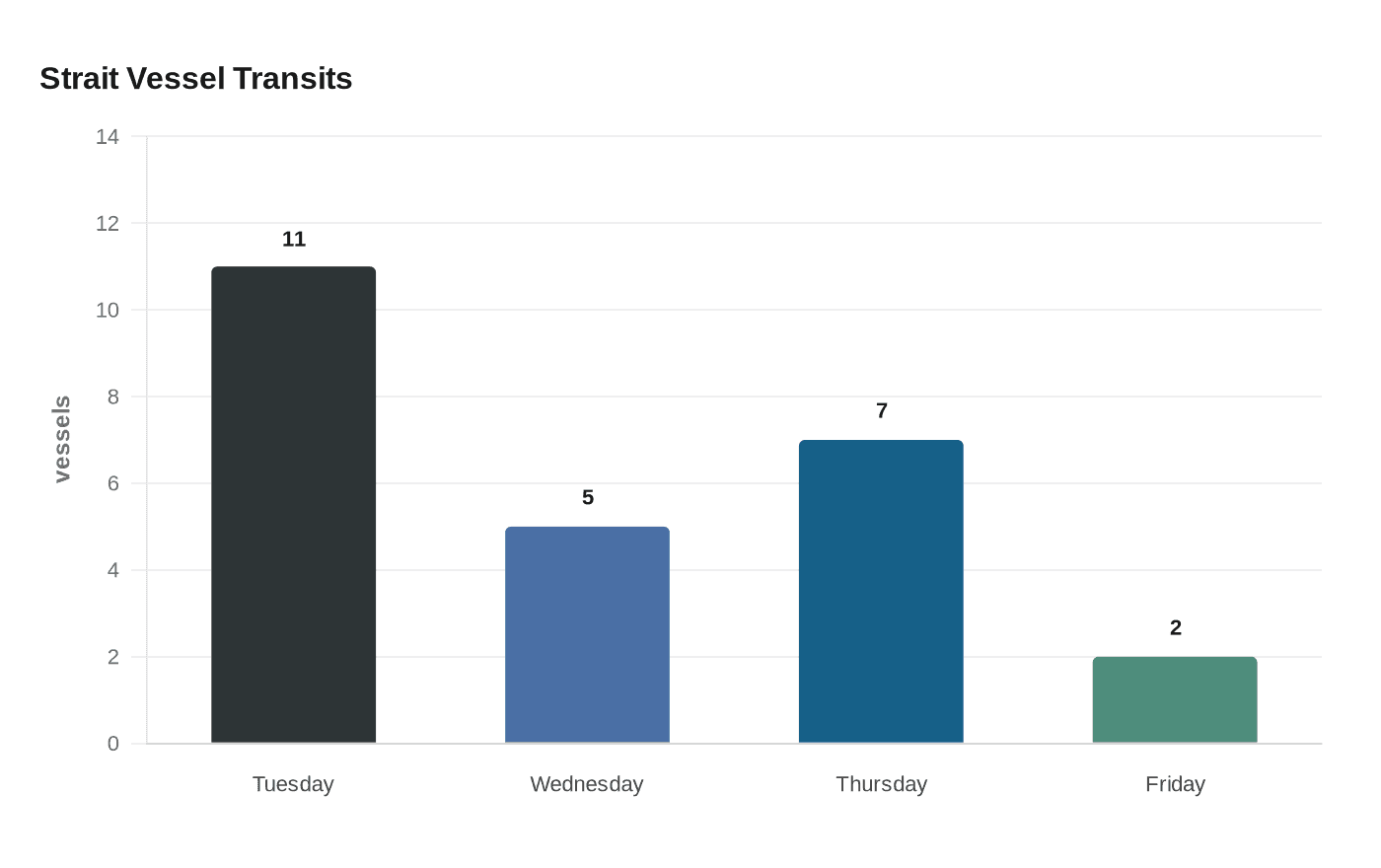
A two-week ceasefire announced April 7 has barely moved the needle. Kpler data showed 11 vessels transiting Tuesday, falling to five on Wednesday and seven on Thursday before dropping to two on Friday. More than 600 vessels, including 325 tankers, remained stranded in the Persian Gulf, according to Lloyd's List Intelligence.
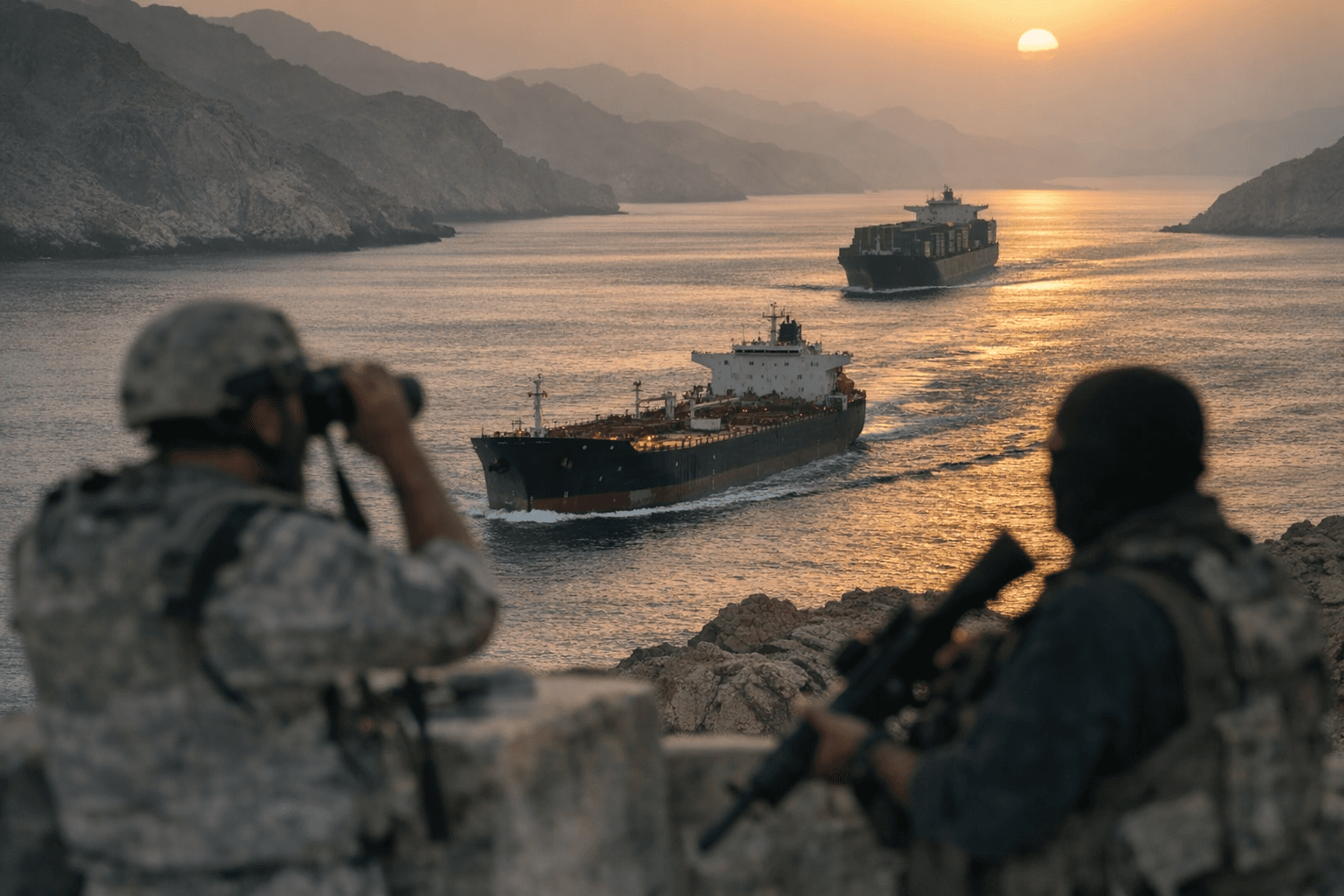
Iran has conditioned passage on prior approval from its armed forces and asserted the right to charge tolls, with one vessel reportedly paying $2 million, assessed in Chinese yuan by the IRGC. A revised shipping map directs vessels north of Larak Island, designating a broad zone including Oman's territorial waters as "hazardous."
Iranian Foreign Minister Abbas Araqchi confirmed passage would "be possible via coordination with Iran's Armed Forces and with due consideration of technical limitations," then separately accused the U.S. of violating the ceasefire by not restraining Israeli strikes on Lebanon. President Trump pushed back Thursday, posting on Truth Social that Iran was "doing a very poor job, dishonorable some would say, of allowing Oil to go through the Strait of Hormuz."
Sultan Ahmed Al Jaber, CEO of ADNOC, the UAE's state oil company, offered the industry's bluntest assessment: "The Strait of Hormuz is not open. Access is being restricted, conditioned and controlled...That is not freedom of navigation. That is coercion."
The economic weight behind that statement is considerable. The strait carries roughly 25% of the world's seaborne oil trade and 20% of its liquefied natural gas — about 20 million barrels per day before the war. QatarEnergy declared force majeure on all LNG exports after the full closure took effect March 4. The Federal Reserve Bank of Dallas estimated the closure could shave an annualized 2.9 percentage points off global real GDP growth. Brent crude stood at $96.39 Friday, well below its March peak above $120 per barrel but still elevated on residual tension.
For those trapped inside the standoff, the geopolitics have given way to something more immediate. Rex Pereira, a 28-year-old Indian seaman stranded on a tanker for over a month, put it plainly to NBC News: "The ships which are already stuck near the Strait of Hormuz, they just want to escape from there. Most of the seafarers, I feel they didn't sign up for all this. They just want to be home."
The first round of ceasefire negotiations was scheduled Saturday in Islamabad. Two ships have crossed. Six hundred remain.
This article was produced by Prism’s automated news system from verified source data, official records, and press releases, then run through automated quality and moderation checks before publishing. The system is built and supervised by the people who set the standards it runs under. Read our full AI policy.
Did this article answer your question?


