Troubled Nation With Hostile Neighbors to Host First Formal U.S.-Iran Talks
Pakistan, juggling a shaky economy, surging terrorism, and tense borders with India and Afghanistan, is hosting the highest-level U.S.-Iran talks since 1979.
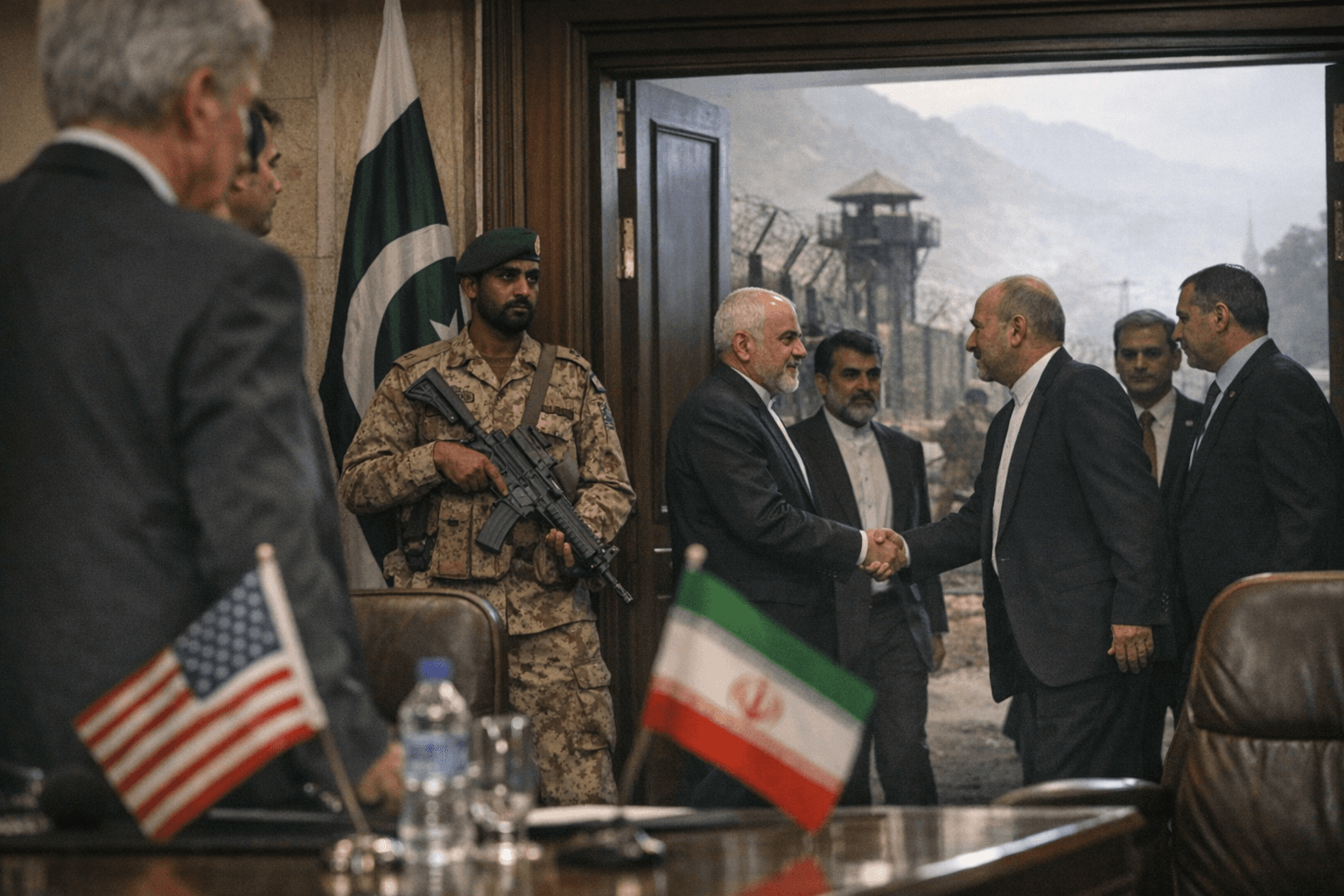
Pakistan is a nation consumed by crises of its own. Its economy is fragile, terrorism-related deaths climbed 21 percent in 2025 to more than 1,000 fatalities, and it sits between two deeply hostile neighbors: India to the east, locked in long-running tensions over Kashmir, and Taliban-controlled Afghanistan to the west, from which Pakistani Taliban militants continue to launch cross-border strikes. Yet it is this same embattled country that has pulled off one of the most unexpected diplomatic coups of recent years, corralling the United States and Iran into the same room.
The United States and Iran are holding their highest-level talks in years in Islamabad in a Pakistan-brokered bid to turn a fragile two-week ceasefire into a lasting end to a war that has roiled global energy markets. The talks represent the most senior U.S. engagement with Iran since Secretary of State John Kerry negotiated the 2015 nuclear deal.
Vice President JD Vance left Washington on Friday to lead the American delegation, which also includes special envoy Steve Witkoff and presidential son-in-law Jared Kushner. Iran has not formally confirmed its representatives, but Parliament Speaker Mohammad Bagher Ghalibaf and Foreign Minister Abbas Araghchi are expected to lead Tehran's side. The talks are being held at Islamabad's Serena Hotel, located next to the foreign ministry in the capital's Red Zone, which was requisitioned from Wednesday evening through Sunday, with guests asked to vacate.
The Iran war, which prompted the need for talks, has cost at least 3,800 lives across ten nations while cascading economic hardships across the planet. The conflict's most acute global pressure point has been the Strait of Hormuz, a strategic shipping chokepoint through which roughly a fifth of the world's oil passes. President Donald Trump announced "major combat operations" against Iran on February 28 with massive joint U.S.-Israeli strikes targeting military and government sites. He then set a deadline for Iran to fully reopen the Strait of Hormuz or face broad strikes on its critical infrastructure.
Hours before the deadline expired, Trump said he had agreed to suspend planned bombing for two weeks if Iran agreed to reopen the strait. Pakistan's Prime Minister Shehbaz Sharif seized on that opening. He announced the two-week ceasefire on April 8 and invited both sides to Islamabad on April 10 for negotiations aimed at a conclusive settlement.
Pakistan's path to mediator was neither smooth nor obvious. The country is more frequently in international headlines for heightened militancy and a shaky economy. Its own security services have long been viewed with suspicion in Washington, and Pakistan's 2025 security report recorded at least 1,034 people killed in a renewed wave of violence, marking a 21 percent rise in terrorism-related fatalities. A 2025 mutual defense pact with Saudi Arabia also constrained how far Islamabad could tilt toward Tehran. Nevertheless, Pakistan's Foreign Minister Ishaq Dar addressed the Senate as early as March 3, telling lawmakers: "Pakistan is ready to facilitate dialogue between Washington and Tehran in Islamabad." Qatar had declined a similar offer.
The security footprint inside Islamabad reflects just how high the stakes are. More than 10,000 police and security personnel were deployed to provide multi-layered protection for visiting delegates. Authorities declared April 9 and April 10 public holidays in the federal capital, exempting only police, hospitals, and utilities.
With key differences in the Iranian and American positions seemingly intact, Pakistan is aiming for what officials describe as a realistic, if modest, outcome: getting both sides to find enough common ground to continue talking. Iran's 10-point proposal includes a protocol for reopening the Strait of Hormuz, an end to all regional conflicts, the lifting of sanctions, and a reconstruction commitment. Whether Vance, arriving as the highest-ranking U.S. official to enter negotiations with Iranians since 1979, can bridge that gap will determine whether Pakistan's unlikely gamble pays off.
This article was produced by Prism’s automated news system from verified source data, official records, and press releases, then run through automated quality and moderation checks before publishing. The system is built and supervised by the people who set the standards it runs under. Read our full AI policy.
Did this article answer your question?