Trump Warns Iran of Military Action if Nuclear Talks Collapse, Ships Deployed
Trump said the U.S. is "loading up the ships" with its best weapons as VP Vance flew to Pakistan for make-or-break Iran nuclear talks Saturday.
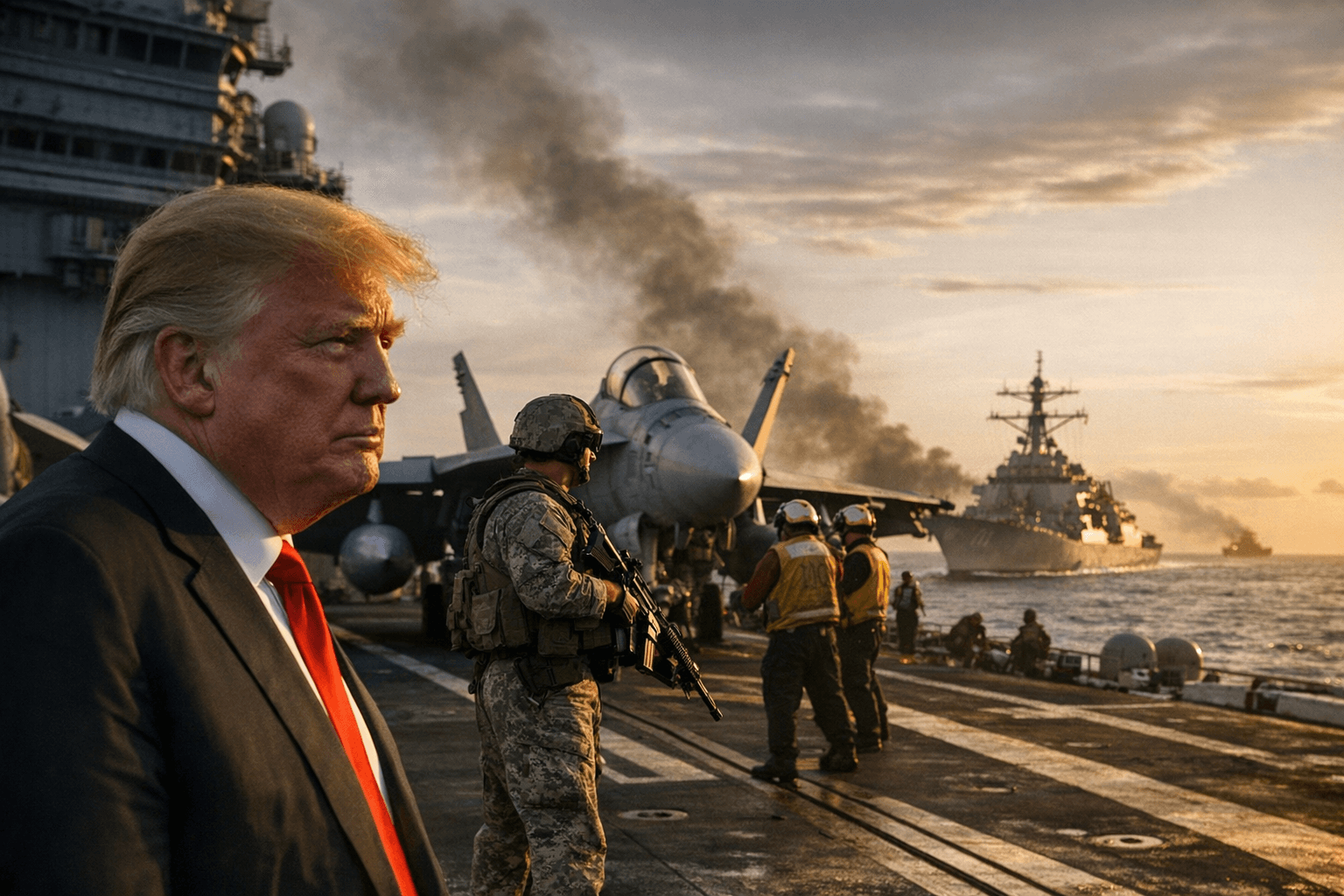
President Donald Trump issued a stark warning to Iran on Friday, telling the New York Post that U.S. warships are being loaded with fresh weaponry in case peace negotiations break down, as Vice President JD Vance boarded Air Force Two bound for Islamabad to lead the most consequential diplomatic push of the administration's Iran conflict.
"We have a reset going. We're loading up the ships with the best ammunition, the best weapons ever made, even better than what we did previously, and we blew them apart," Trump told the Post in a phone interview conducted just as Vance departed Joint Base Andrews. "And if we don't have a deal, we will be using them, and we will be using them very effectively."
Trump said he expected to know within roughly 24 hours whether the talks would hold. The first round of negotiations is scheduled for Saturday in Islamabad. Vance is accompanied by special envoy Steve Witkoff and Jared Kushner. Speaking briefly to reporters before departure, Vance said he expected "positive" results but drew a hard line. "If the Iranians are willing to negotiate in good faith, we are certainly willing to extend an open hand," he said. "If they're going to try to play us, then they're going to find that the negotiating team is not that receptive."
The trip comes three days after Washington and Tehran reached a fragile two-week ceasefire, brokered by Pakistan Prime Ministers Shehbaz Sharif and Field Marshal Asim Munir, pausing six weeks of open conflict. Trump had threatened earlier in the week that "a whole civilization will die tonight" unless Iran agreed to terms before his deadline. He ultimately agreed to suspend bombing contingent on Iran's complete and immediate reopening of the Strait of Hormuz, through which roughly 20 percent of the world's oil and natural gas flows.
The ceasefire quickly showed signs of strain. Iranian officials closed the strait on Wednesday in response to a massive Israeli air assault on Beirut that killed more than 300 people. Trump responded by accusing Iran of doing "a very poor job, dishonorable some would say, of allowing Oil to go through the Strait of Hormuz." In a near-midnight Truth Social post on April 9, Trump ordered all U.S. ships, aircraft, and personnel to remain in position around Iran. "In the meantime our great Military is Loading Up and Resting, looking forward, actually, to its next Conquest," he wrote, closing with "AMERICA IS BACK!"
Iran's negotiating delegation in Islamabad will be led by Parliament Speaker Mohammad Bagher Qalibaf and Foreign Minister Abbas Araghchi. Tehran's military joint command, meanwhile, warned it has its "fingers on the trigger" over what it described as repeated "breaches of trust" by the U.S. and Israel. Iranian semi-official agencies also published charts suggesting the Islamic Revolutionary Guard Corps had placed sea mines in the Strait of Hormuz's Traffic Separation Scheme during the conflict.
Israeli Prime Minister Benjamin Netanyahu complicated the diplomatic picture by declaring the ceasefire does not apply to Lebanon, referring to Israel's ongoing campaign against Hezbollah as a "separate skirmish." That position contradicted Pakistani Prime Minister Sharif's announcement of a universal ceasefire. A State Department official confirmed that Israeli and Lebanese representatives are expected to meet in Washington in the coming days. British Prime Minister Keir Starmer, speaking Friday as he departed Qatar following a three-day Gulf visit, called for unrestricted commercial shipping through the strait and told Trump directly that any resolution "has to involve" Iran's Gulf neighbors.
The talks carry weight beyond the region. Nearly 2,076 Iranians have been killed since the war's outbreak, along with 13 U.S. military personnel, 28 people in Gulf states, and 26 in Israel. Hundreds of commercial vessels remain stranded in the Persian Gulf, and gas prices have surged globally since Iran first moved to restrict Hormuz traffic. Trump acknowledged Friday that high fuel costs could persist into summer, even as his Truth Social posts described the Iranians as holding "no cards, other than a short term extortion of the World by using International Waterways.
This article was produced by Prism’s automated news system from verified source data, official records, and press releases, then run through automated quality and moderation checks before publishing. The system is built and supervised by the people who set the standards it runs under. Read our full AI policy.
Did this article answer your question?


