Pasta, Pizza Popular as Milano Cortina Addresses Paris Games Food Issues
Milano Cortina redesigned athlete catering as a response to Paris 2024 complaints; simple dishes like plain pasta and pizza are crowd favorites and central to the new service plan.
Organizers of the Milano Cortina 2026 Winter Olympics have reworked menus and kitchen workflows so meals function as fuel for athletes, a direct reaction to complaints about food at the Paris 2024 Games. With about 2,900 athletes from 92 countries arriving for the Feb. 6–22 event, kitchen teams are preparing food at an Olympic scale while leaning on Italy’s familiar staples.
Elisabetta Salvadori, head of food and beverages for the Games, framed the mission plainly: “Food must be actually prepared and served to enhance the performance of the athletes in the Olympics which most of them have worked and trained for years.” Menu planning took around a year and the households in the Olympic villages will be busy: up to 4,500 breakfasts, lunches and dinners will be prepared each day at the Milan Village, nearly 4,000 in Cortina and 2,300 in Predazzo.
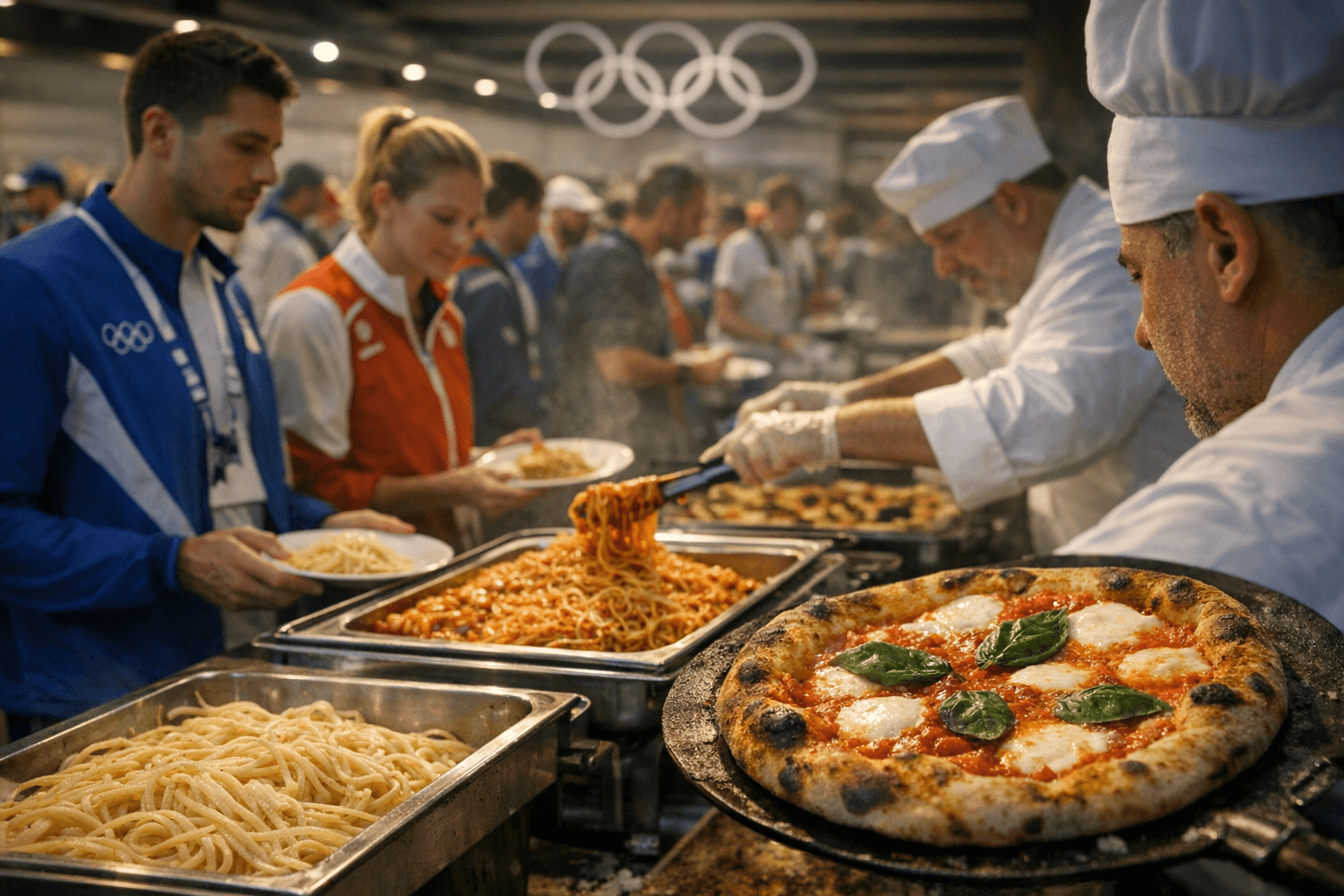
Operational choices reflect athletes’ nutritional habits. Organizers report that, despite a broad range of dishes on offer, competitors often pick simple, high-energy items such as plain pasta, basic sauces and straightforward proteins. Pasta is one of the most popular dishes, typically served plain or with ragu or tomato sauce and described as prepared “espresso style.” Salvadori summarized the service approach in a concrete detail: “Pasta is just cooked behind the athletes.”
The redesign addresses clear lessons from Paris 2024, when several delegations complained about the quantity and quality of food. Grievances in Paris ranged from egg rationing to a limited supply of protein options; some athletes demanded more meat, and organisers had to make late adjustments. Milano Cortina’s planners say that operational emphasis on performance nutrition and rapid service is meant to avoid a repeat.
On-the-ground and social-media snapshots add sensory detail. A first-look athlete-canteen review praised staples such as lasagna and pizza while noting mixed impressions: “That’s fine and all, but lacking the ‘wow factor’ for the most part. From the outside looking in, that pizza look pedestrian but he rates it an 8.5. The cheese grated right off the wheel is a very nice touch though.” The same review cataloged breakfast options including cereals, coffee, pizza and pasta, “every bread type under the sun,” eggs, bacon, yogurts, grains and pastries. An Instagram post put it simply: “Yeah, pasta, pizza, and yeah, pasta is my favorite dish. It ... Team Italy celebrates the Road to Milano Cortina 2026 with Olympic Pasta.” South African cross-country skier Matt Smith, nicknamed “snowbok,” is uploading daily food vlogs from the athlete cafeterias, giving athletes and fans a running account of menus and service.
For athletes, coaches and national team chiefs, the changes matter because predictable, calorie-dense meals reduce the logistical burden of arranging outside catering and minimize last-minute nutritional shortfalls. For local food teams and volunteers, the test will be execution under pressure: sustaining thousands of portions a day while accommodating sport-specific needs and dietary restrictions. If the villages can keep pasta hot, proteins plentiful and lines moving, Milano Cortina may be remembered as the Games that learned from Paris and let athletes focus on competition rather than calories.
Know something we missed? Have a correction or additional information?
Submit a Tip