Pests invade Gaza camps, biting children and raising disease fears
Rats, insects, and parasites have turned Gaza’s displacement camps into a disease trap, with children bitten in their sleep and sanitation systems collapsing.

In Gaza’s displacement camps, the emergency has taken on a smaller, uglier form: rats and parasites are biting children as they sleep, chewing through belongings, and pushing families into a daily fight against infection as well as bombardment. What is unfolding in the tented camps and ruined neighborhoods is not just a nuisance. It is evidence that war has broken the public-health system that was supposed to keep a crowded civilian population alive.
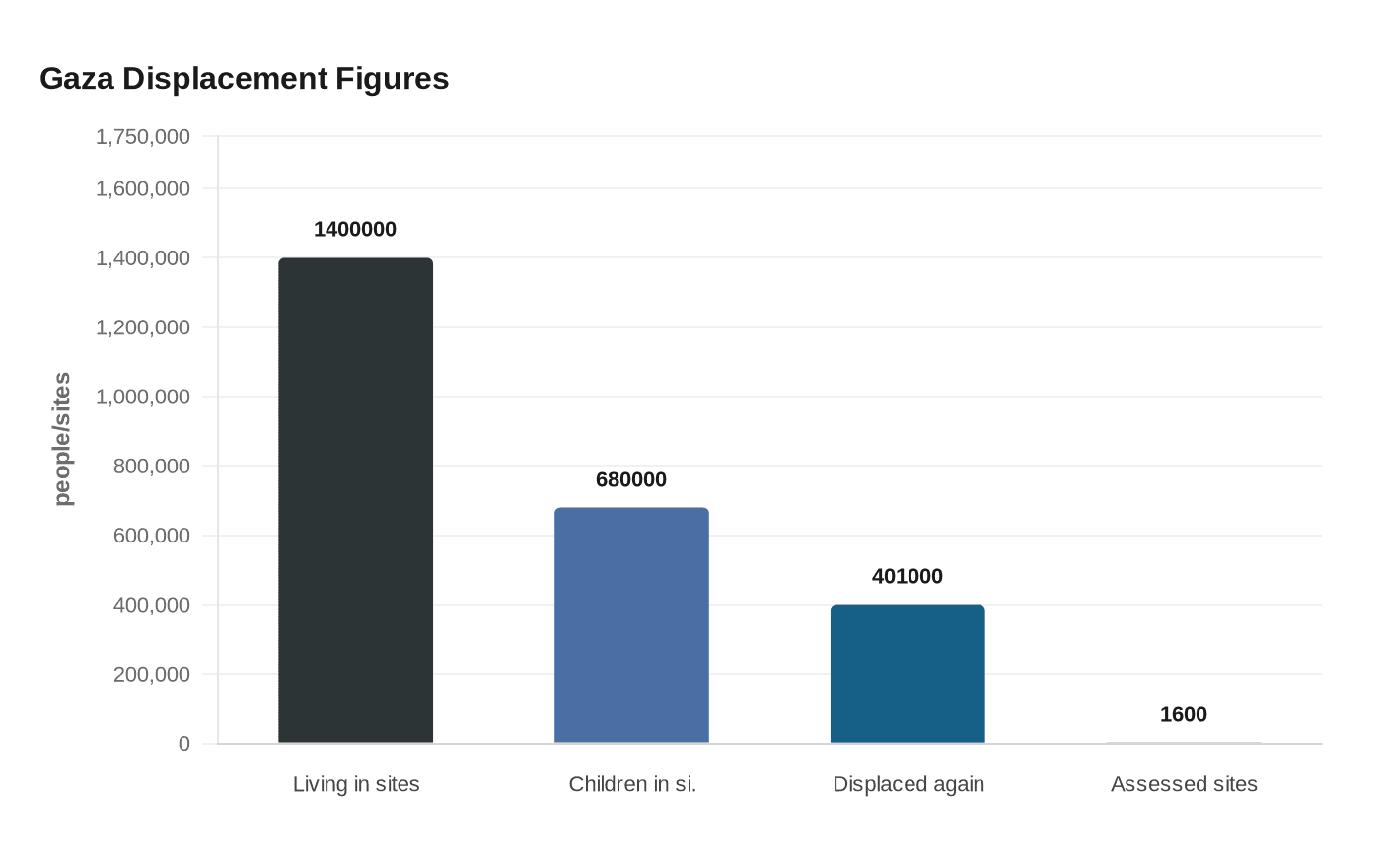
Most of Gaza’s more than 2 million people have been displaced, many of them into makeshift tents on open ground, roadsides, or the rubble of destroyed buildings. In mid-April, more than 80% of over 1,600 assessed displacement sites reported rodents or pests frequently visible, a measure of how widely the infestation has spread. Save the Children said about 1.4 million people are living in overcrowded displacement sites, including about 680,000 children, and warned that two in three children in Gaza may be at risk of infection because of the pest problem.
The health fears are growing alongside the infestation. Gaza’s largest hospital has warned of possible spread of rat-bite fever, leptospirosis, and plague, while aid workers say skin disease is becoming more common in the camps. UNRWA said documented ectoparasitic skin disease cases tripled between January and March, with hotspots in the Mawasi-Khan Younis area. The agency said nearly 90% of Gaza’s water and sanitation infrastructure has been destroyed or damaged, leaving around 80% of the population dependent on water trucking for drinking water.
The system is failing at almost every point. OCHA said over half of water and sanitation facilities are inaccessible, while repeated displacement has kept pushing families into new and increasingly crowded shelters. As of April 9, more than 401,000 people had been displaced again since March 18, after renewed bombardment and expanded ground operations left many with no safe place to go.
Families describe a routine built around fear. Some sleep in shifts to protect children because rodent traps are largely ineffective. One family said rats chewed through a bride-to-be’s wedding trousseau. Another said a 3-year-old boy was bitten first, then his father. A mother said a weasel attacked her young daughter during the night, underscoring that the problem is broader than rats alone.
The infestation is being driven by accumulated waste, sewage in the streets, rubble, fuel shortages, damaged infrastructure, and a lack of pesticides and sanitation supplies. With summer approaching, hospital officials and aid agencies expect the crisis to worsen unless waste removal, water, sanitation, and pest-control materials can reach Gaza at scale. The camps are now carrying a second emergency, one that spreads through bites, dirty water, and broken ground.
This article was produced by Prism’s automated news system from verified source data, official records, and press releases, then run through automated quality and moderation checks before publishing. The system is built and supervised by the people who set the standards it runs under. Read our full AI policy.
Did this article answer your question?