Philippine Coast Guard Accuses China of Illegal Research Near Reed Bank
A Chinese research ship was seen deploying a service boat near Iroquois Reef, deepening fears that seabed surveys are feeding future drilling plans near Reed Bank.

A Chinese research vessel was spotted near Reed Bank deploying a service boat toward Iroquois Reef, a move the Philippine Coast Guard said confirmed illegal marine scientific research inside Manila’s exclusive economic zone and added fresh weight to the fight over future energy security in the West Philippine Sea.
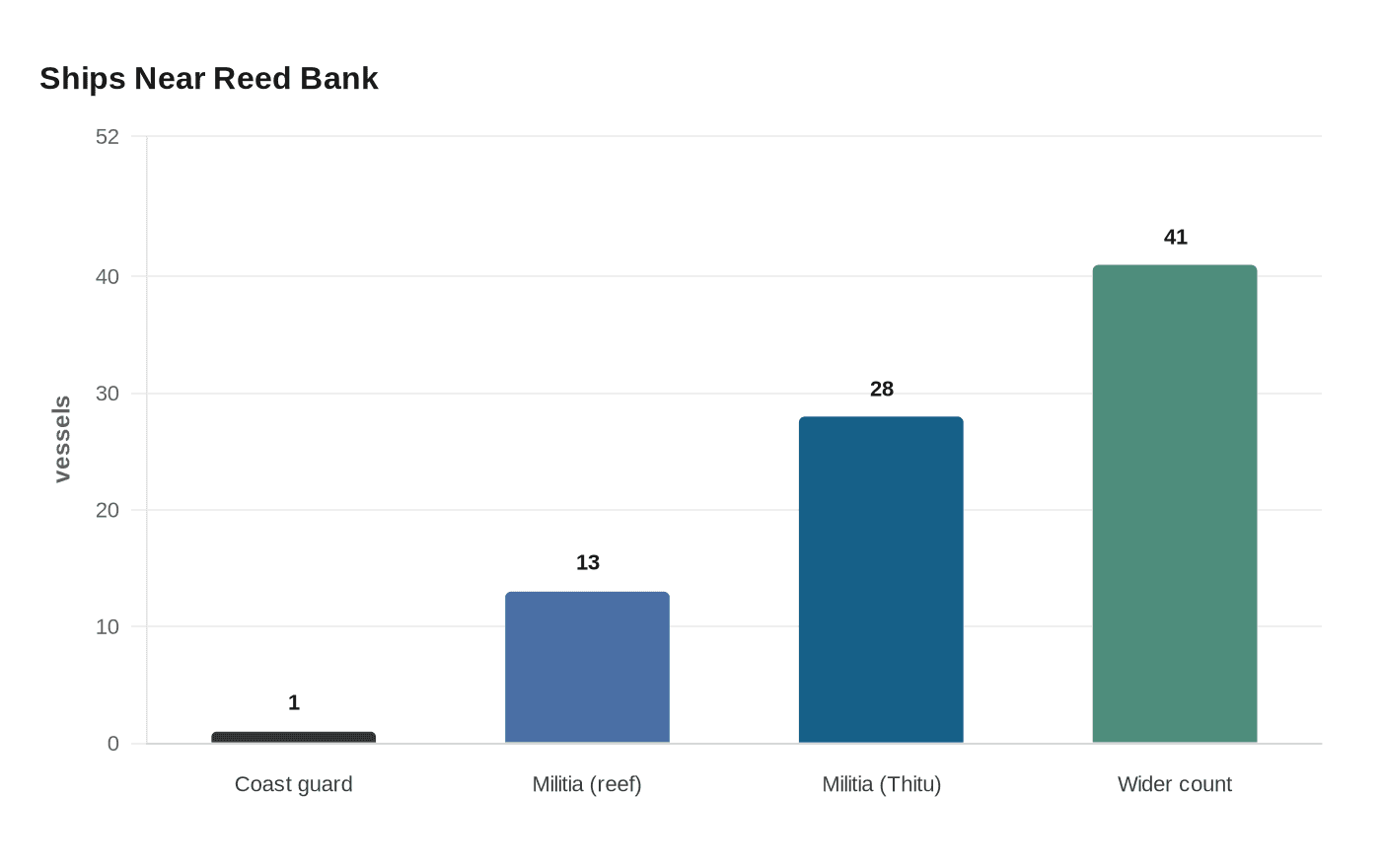
The vessel, identified as Xiang Yang Hong 33, was monitored by a PCG aircraft during a May 6 maritime patrol. Coast Guard officials said one Chinese coast guard vessel and 13 Chinese maritime militia ships were also present around the reef, while 28 more militia vessels were seen near Thitu Island. Philippine reports later put the wider count at as many as 41 maritime militia vessels in the patrol area. The Chinese ship had reportedly left China on April 15 and had already operated near Second Thomas Shoal, Sabina Shoal, Mischief Reef and Jackson Atoll in recent weeks.
Reed Bank, also known as Recto Bank or Reed Tablemount, lies about 80 nautical miles from mainland Palawan and sits inside the Philippines’ 200-nautical-mile exclusive economic zone. It has long been viewed as one of the country’s most strategic energy frontiers, with older estimates citing up to 5.4 billion barrels of oil and 55.1 trillion cubic feet of natural gas. That is why seabed surveys matter: marine scientific research can help map drilling prospects, strengthen future claims to resources, and support a longer, more permanent presence at sea.
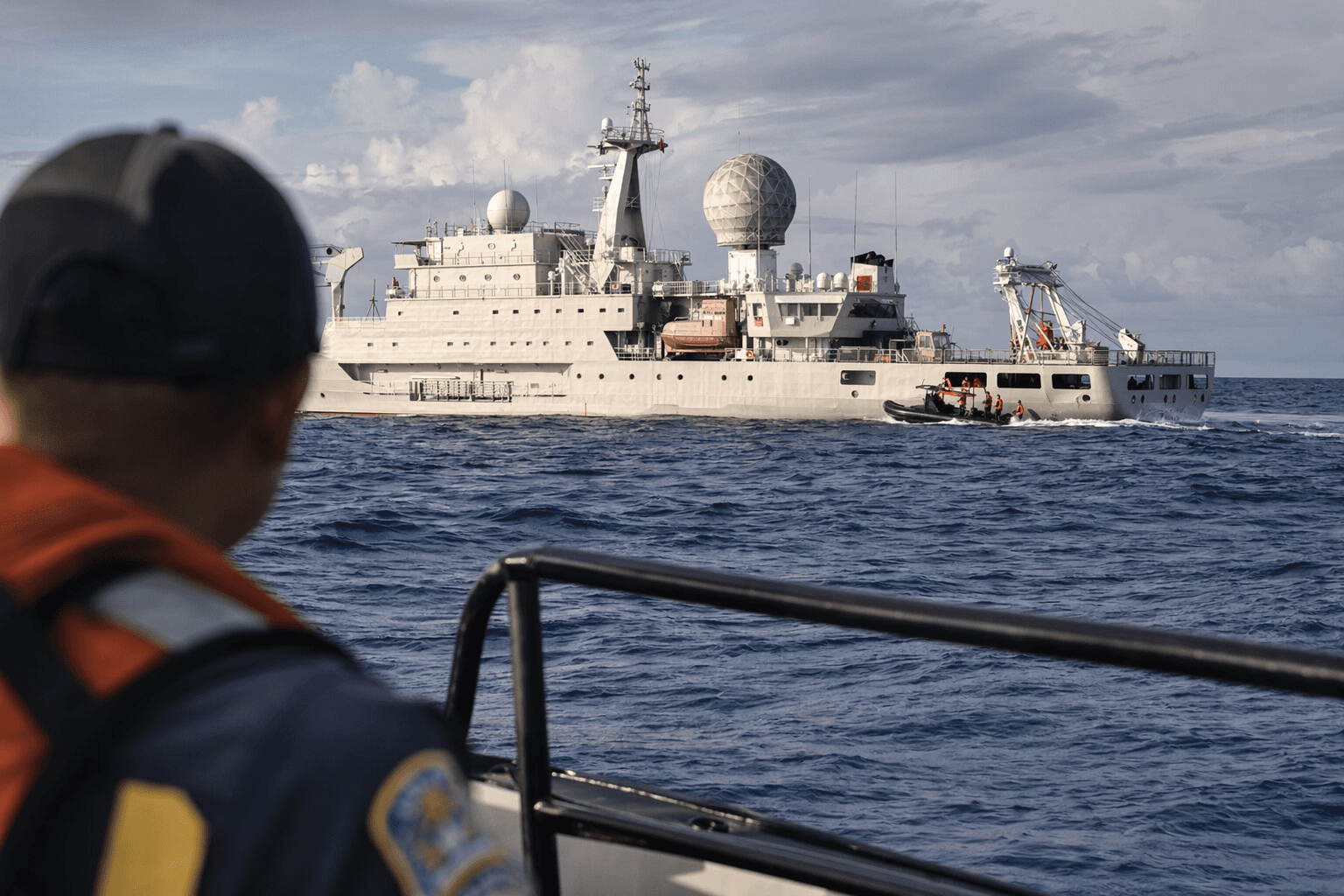
The ship itself underscored why Philippine officials treated the encounter as more than routine transit. Vessel-tracking sources describe Xiang Yang Hong 33 as a Chinese oceanographic or naval vessel built in 2005, about 98 meters long and capable of supporting submersible craft. Officials in Manila said the activity had no authorization and violated the United Nations Convention on the Law of the Sea. The Chinese embassy did not immediately respond to a request for comment.
The dispute also lands at a delicate moment for Philippine energy planning. In January 2026, the government announced the Malampaya East-1 discovery about five kilometers east of the existing Malampaya field, saying it contained around 98 billion cubic feet of gas in place. With the existing Malampaya field expected to keep declining, pressure is rising to secure replacement supplies. That makes Reed Bank more than a sovereignty flashpoint: it is a contested reserve that could shape who controls the country’s next source of domestic gas.
The confrontation echoed the long shadow of the 2011 Reed Bank incident, when Philippine officials said Chinese vessels interfered with a Philippine exploration effort. Coast Guard commandant Ronnie Gil Gavan said the Philippines would continue challenging illegal activity that undermines sovereignty and sovereign rights, while spokesperson Jay Tarriela has repeatedly described Chinese vessel activity as coercive. For roughly 400 Filipinos living on Thitu Island, where Manila has established a new coast guard station, the contest over surveys and ship movements is no abstraction. It is a daily test of whether Philippine control at sea can hold as pressure around Reed Bank keeps building.
This article was produced by Prism’s automated news system from verified source data, official records, and press releases, then run through automated quality and moderation checks before publishing. The system is built and supervised by the people who set the standards it runs under. Read our full AI policy.
Did this article answer your question?