Plans to Restore Strait Shipping After Iran War Face Uncertain Odds
Britain's 40-nation coalition to restore Hormuz shipping won't act until the war ends, and analysts warn months of supply chain chaos will follow regardless.
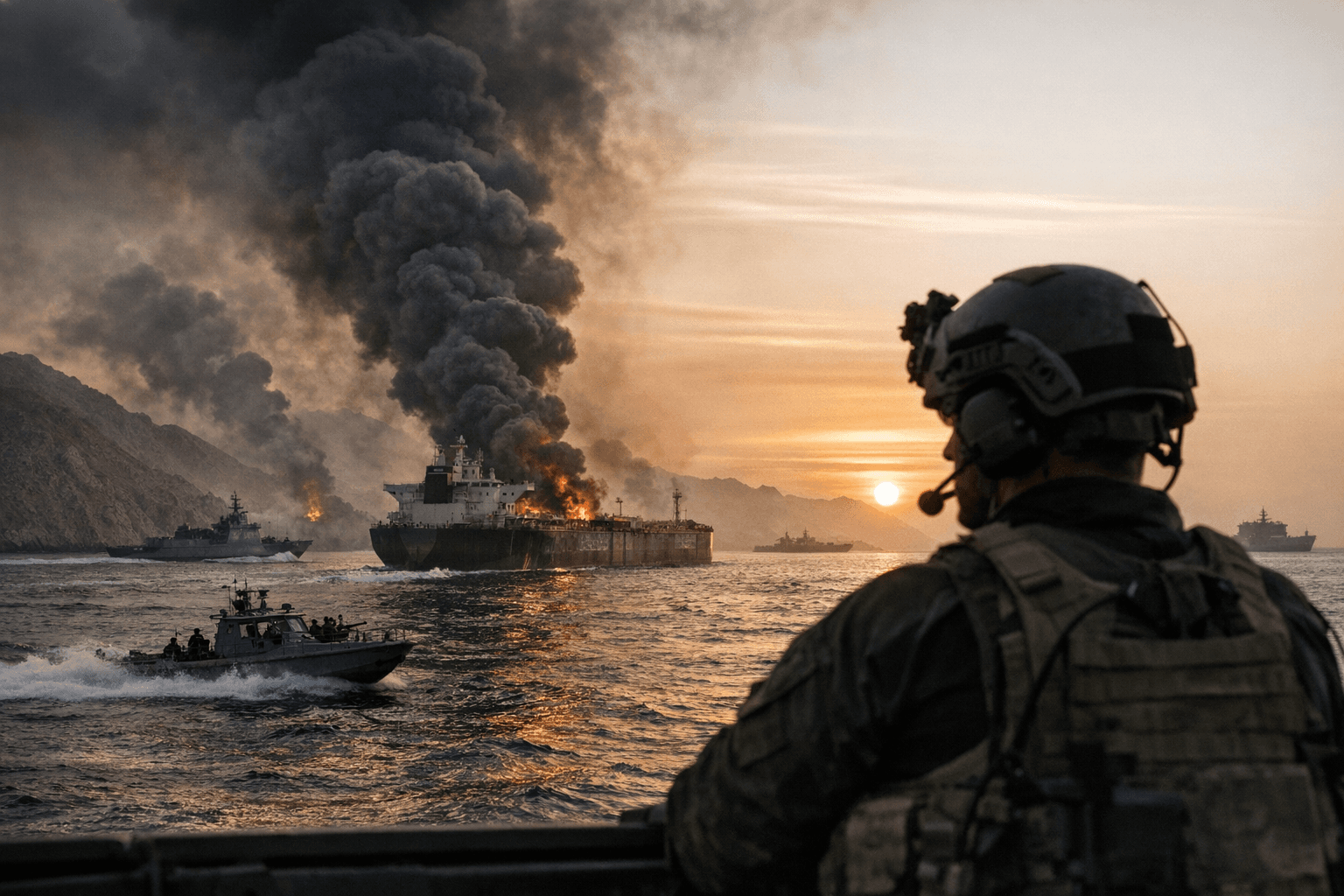
Britain convened a virtual summit of 41 countries on April 2 to chart a path toward restoring free navigation through the Strait of Hormuz, but the plans came wrapped in a fundamental caveat: none of it takes effect until after a ceasefire ends the U.S.-Israeli war against Iran.
UK Foreign Secretary Yvette Cooper chaired the meeting and framed Iran's conduct in stark terms. "We have seen Iran hijack an international shipping route to hold the global economy hostage," Cooper said. The coalition includes France, Germany, Italy, Canada, Australia, and the UAE, but notably excludes the United States. President Donald Trump, who has repeatedly demanded European allies take responsibility for the waterway, did not attend.
The strait has been effectively closed since February 28, 2026, when American and Israeli strikes on Iran, including the assassination of Supreme Leader Ali Khamenei, prompted the Islamic Revolutionary Guard Corps to block foreign vessel passage. Before hostilities, roughly 138 ships transited daily, carrying about 20 percent of the world's crude oil and liquefied natural gas. By March 28, that number had collapsed to 11. Since the war's start, Lloyd's List Intelligence has recorded at least 23 direct Iranian attacks on commercial vessels in the Persian Gulf.
The coalition is now exploring military options for after the fighting stops, including naval escorts, minesweeping operations, and broader convoy protection. France, the Netherlands, and Gulf states have engaged in private discussions about naval assets they would contribute. But those plans would not constitute a NATO mission and are explicitly designed for the post-conflict phase. British military planners from the Ministry of Defence were set to meet the following week with many of the same countries to continue those discussions.
Prime Minister Keir Starmer was frank about the difficulty ahead. Resuming shipping "will not be easy," he said, requiring "a united front of military strength and diplomatic activity" alongside partnership with the maritime industry. Head of the Royal Navy Gen Sir Gwyn Jenkins added a sobering note on readiness, telling reporters: "Are we as ready as we should be? I don't think we are. We have work to do."
Iran is not making a reopening straightforward. Tehran has demanded international recognition of its authority over the strait as one of five conditions for a ceasefire. Iranian parliament is also reportedly pursuing legislation to collect transit tolls, and the IRGC has already begun operating a de facto toll booth system, allowing only vessels from countries it deems friendly, including India, Pakistan, Malaysia, and China, to pass.
Even setting aside the political and military obstacles, the economic damage may take far longer to undo than any coalition action can address. Approximately 2,000 vessels remain stranded in the Persian Gulf, with roughly 400 anchored in the Gulf of Oman alone. Shipping analyst Dag Ringbakken told Al Jazeera that "it would take months to get shipping supply chains back to normal because of the backlog," citing halted production lines, overwhelmed storage capacity, and damaged port infrastructure. War-risk insurance premiums, which surged once the blockade began, are expected to stay elevated well after transit resumes, adding a persistent financial brake on recovery.
The coalition's diplomatic ambitions are real, but the window between a ceasefire and the resumption of normal commerce remains wide, and for now, the war shows no sign of ending on terms that would open that window soon.
This article was produced by Prism’s automated news system from verified source data, official records, and press releases, then run through automated quality and moderation checks before publishing. The system is built and supervised by the people who set the standards it runs under. Read our full AI policy.
Did this article answer your question?


