Prince Harry Sued for Defamation by Charity He Co-founded in 2006
The charity Prince Harry co-founded as a tribute to Princess Diana has sued him for defamation, 13 months after a governance crisis forced him out.
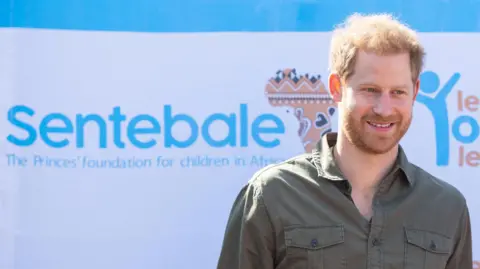
Sentebale, the southern African charity Prince Harry co-founded nearly two decades ago as a tribute to Princess Diana, lodged a defamation claim against him at London's High Court on 24 March 2026. Court records made public on Friday confirm Harry is named alongside Mark Dyer, a close friend and former trustee, as a co-defendant. The specific statements alleged to be defamatory have not been disclosed in publicly available court filings.
The lawsuit arrives 13 months after Harry and Prince Seeiso of Lesotho publicly resigned as the charity's patrons, following an acrimonious dispute with board chairwoman Dr Sophie Chandauka that drew a Charity Commission investigation and, according to the charity's new board, subjected its approximately 540 employees to an "onslaught of cyber-bullying."
The roots of the legal action lie in a governance crisis that began after Chandauka, who joined Sentebale as board chairwoman in July 2023, was reportedly asked by the board to step down. Rather than resign, she obtained a High Court emergency injunction preventing her removal and went public with counter-allegations against Harry, accusing him of "harassment and bullying at scale," misogyny, and misogynoir. She further claimed that Harry's team had pressured her to publicly defend his wife Meghan from negative press coverage, a request she refused, and that Harry had briefed the press about his planned departure before informing her or the charity's executive director.
Harry's camp dismissed her claims as "baseless" and a "publicity stunt," but the damage to Sentebale's public standing was considerable. The dispute was referred to the UK Charity Commission for England and Wales, which opened a regulatory compliance case in early April 2025. Its findings, published on 5 August 2025, found no evidence of "widespread or systemic bullying or harassment, including misogyny or misogynoir," but acknowledged "the strong perception of ill treatment" felt by some involved. The Commission criticised all parties for making the fallout public and damaging the charity's reputation.

Harry's spokesperson rejected the report's framing, saying it "falls troublingly short in many regards, primarily the fact that the consequences of the current Chair's actions will not be borne by her but by the children who rely on Sentebale's support." A source described Harry as "emotionally devastated," calling the charity his "life's work" after 19 years of involvement.
Those 19 years began with a gap year Harry spent in Lesotho in 2004, where he was moved by children affected by HIV/AIDS and poverty. Two years later, he and Prince Seeiso founded Sentebale, choosing a name meaning "forget-me-not" in Sesotho as a tribute to both founders' late mothers: Princess Diana and Queen Mamohato Bereng Seeiso. Diana's favourite flower was the forget-me-not, and she had been one of the early pioneers in destigmatising HIV/AIDS. The charity works with young people aged 0 to 24 across Lesotho and Botswana, focusing on health, wealth creation, and climate resilience; its annual Polo Cup alone has raised over £11 million since 2010.
That institutional weight is now at stake. In their statement issued Friday, Sentebale's new Board of Trustees and Executive Director explicitly accused Harry and Dyer of triggering the cyber-harassment campaign that engulfed the charity's staff. With the specifics of the defamation claim still sealed, the lawsuit sets up a direct collision between the legacy that gave Sentebale its meaning and the governance breakdown that now threatens to define it.
This article was produced by Prism’s automated news system from verified source data, official records, and press releases, then run through automated quality and moderation checks before publishing. The system is built and supervised by the people who set the standards it runs under. Read our full AI policy.
Did this article answer your question?