Progressive Bulgaria Wins Majority in Bulgarian Parliament After Turmoil
Progressive Bulgaria crossed the majority line with 87% of votes counted after months of upheaval. Rumen Radev now has a rare chance to govern without coalition paralysis.
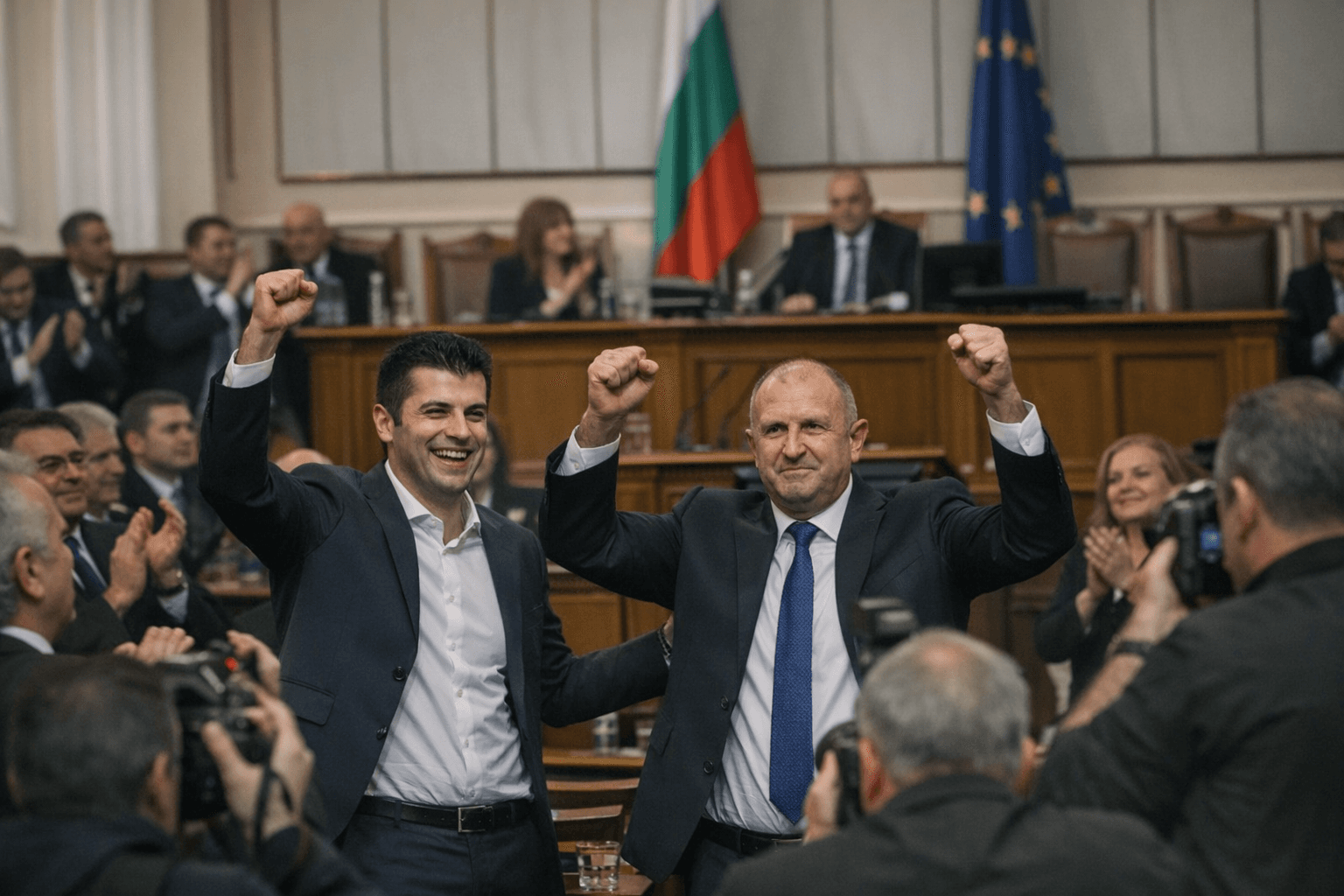
Progressive Bulgaria secured a majority in Bulgaria’s parliament as vote counting passed 87 percent, turning a snap election into a test of whether the country can finally escape months of political paralysis. The result gave former president Rumen Radev a commanding lead after a campaign centered on corruption, political impunity and the cost of living, and it opened the door to the first single-party majority in Bulgaria since 1997.
The vote followed one of the sharpest crises in recent Bulgarian politics. Prime Minister Rosen Zhelyazkov’s government resigned on 11 December 2025 after mass anti-corruption protests, a contested 2026 budget and weeks of public anger over instability. The pressure on the political class had already boiled over on 10 December, when more than 100,000 people filled Sofia demanding the government’s resignation. This was Bulgaria’s eighth snap parliamentary election since 2021, a record that underscored how fragile coalition politics had become.
The numbers on election night suggested a decisive shift. With 70 percent of ballots processed, Market Links put Progressive Bulgaria on 45.1 percent and projected about 132 seats in the 240-seat National Assembly, well above the 121 needed for an absolute majority. Official results after 91.68 percent of the vote counted showed the coalition still leading on 44.7 percent. Early counts also showed GERB-UDF far behind on roughly 12.6 percent to 15 percent, while PP-DB hovered around 11 percent to 15 percent. DPS, Revival and the Bulgarian Socialist Party were competing for the remaining seats.
For Radev, who entered party politics after leaving the presidency in January 2026, the outcome was a vindication of a force built on promises to end a cycle of unstable coalition rule. He cast the result as a “victory of hope,” and the scale of the win gave him something Bulgarian leaders have lacked for years: a clear mandate that could simplify government formation and reduce the bargaining that has repeatedly brought down cabinets.
The larger question is whether electoral clarity can be converted into durable governance. A majority in the National Assembly could give Bulgaria a steadier hand on reforms, from anti-corruption enforcement to restoring confidence in institutions, while also making its position inside the EU and NATO more predictable. The street protests that forced out Zhelyazkov showed how much public patience had eroded; the election now tests whether Parliament can answer that anger with stability rather than another round of crisis.
This article was produced by Prism’s automated news system from verified source data, official records, and press releases, then run through automated quality and moderation checks before publishing. The system is built and supervised by the people who set the standards it runs under. Read our full AI policy.
Did this article answer your question?

