Psilocybin Use Surges as Science and Regulation Struggle to Keep Pace
An estimated 11 million U.S. adults used psilocybin last year, yet no federal dosing standards or quality controls govern what they're consuming.
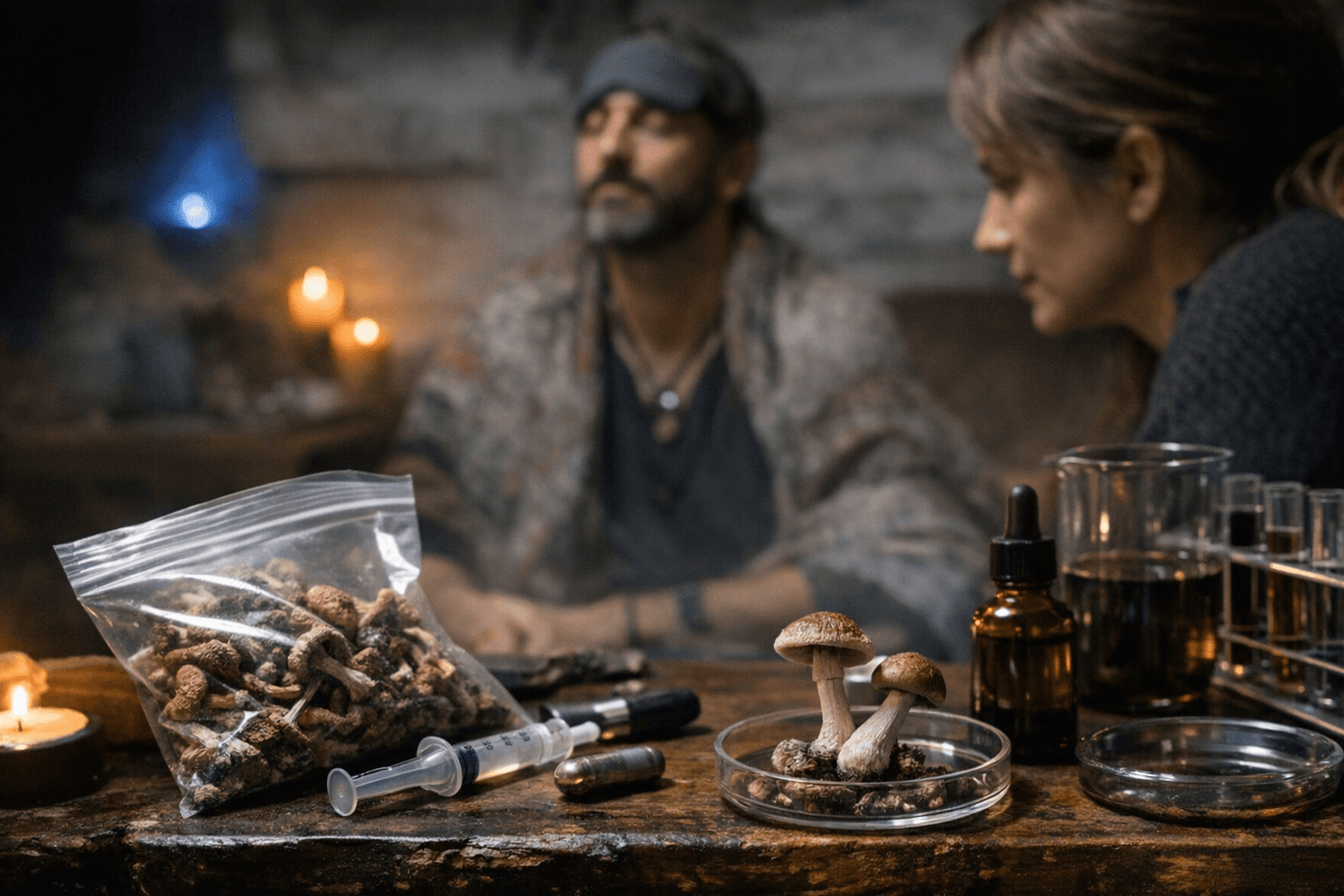
Roughly 11 million American adults used psilocybin in the past year, according to a 2026 population estimate, and among 18-to-29-year-olds, reported use climbed 44 percent between 2019 and 2023. The market supplying that demand ranges from Oregon's licensed healing centers to Colorado's state-regulated service program, decriminalized gray zones in cities like Washington's King County, which voted in March to deprioritize enforcement, and online channels that health researchers warn may carry untested, contaminated products. What has not kept pace is the science and regulatory infrastructure needed to make any of it safe.
Oregon became the first state to stand up a licensed psilocybin services program, with service centers opening to clients in summer 2023 under rules administered by the Oregon Health Authority. Colorado followed a parallel path through Proposition 122, allowing psilocybin services in licensed healing centers for adults 21 and older. But beyond those two regulated frameworks, access has largely proliferated through channels with little or no oversight, including retreat operators in jurisdictions that have decriminalized personal possession and an online gray market where product quality is unverified.
The pharmacological picture is more complicated than most marketing suggests. Psilocybin is a prodrug: the body converts it to psilocin, which binds serotonin receptors and triggers the perceptual and cognitive changes associated with a psychedelic experience. It also alters synaptic plasticity in ways researchers believe may account for durable psychological effects after just one or a few doses. But whole mushrooms contain a range of additional tryptamine compounds, including baeocystin, norbaeocystin, and aeruginascin, whose effects on humans remain poorly characterized. Consumers relying on packaged or informally sourced products have no way of knowing what concentrations of those additional compounds they are receiving, or how those compounds interact with psilocybin itself.
That uncertainty sits at the center of what substance-use and public-health researchers writing in The Conversation describe as a dangerous mismatch. Their goal, as they frame it, is "to bridge the gap between public enthusiasm for psilocybin and the limited scientific evidence available about its potential benefits and risks." The concern is structural: commercial actors, from retreat operators to product developers, are scaling ahead of the controlled trials needed to establish optimal dosing, formulation, and long-term safety, and ahead of the labeling and quality-control standards that would let consumers and clinicians interpret what a given product actually contains.
The comparison the researchers reach for is early cannabis commercialization, when retail expansion and product innovation across newly legal state markets outran careful study, with measurable public-health consequences. Potency variability, inconsistent labeling, and limited adverse-event monitoring all became problems after the fact. Psilocybin's therapeutic promise, including early clinical evidence suggesting benefits for treatment-resistant depression and PTSD, makes a repeat of that pattern particularly costly. A consensus statement from the U.S. National Network of Depression Centers warned that commercial interests risk outpacing the guidelines and infrastructure required for responsible clinical integration.
The path forward that researchers have outlined requires parallel investment: expanded controlled trials examining dosing, formulation, and long-term outcomes across diverse populations; real-world safety monitoring systems attached to the service centers already operating; and federal or state-level standards governing product quality, potency labeling, and screening protocols for contraindications. Synthetic psilocybin has moved closer to formal FDA review, a development that could eventually anchor pharmaceutical-grade dosing standards, but that pathway leaves the much larger informal and retreat-based market effectively ungoverned for now.
The clinical potential of psilocybin is real enough that dismissing the substance is not a serious policy option. But without enforceable quality controls and a substantially larger evidence base, the 11 million people currently using it are, in material terms, running an unmonitored experiment on themselves.
This article was produced by Prism’s automated news system from verified source data, official records, and press releases, then run through automated quality and moderation checks before publishing. The system is built and supervised by the people who set the standards it runs under. Read our full AI policy.
Did this article answer your question?