Rebuilt Azov Regiment strikes Russian logistics around Mariupol
Azov’s rebuilt corps is striking Russian supply lines up to 160 km behind the front, turning Mariupol from a siege symbol into a target of persistent pressure.
Four years after the last Ukrainian defenders left Mariupol’s shattered Azovstal Iron and Steel Works, the rebuilt Azov formation is back over the city, this time with drones. The unit has shifted from a force defined by a catastrophic siege to one that is now hitting Russian logistics around Mariupol, where supply lines feed the occupation and help sustain Moscow’s grip on the Sea of Azov port.
Azov’s own command says the First Corps Azov of the National Guard of Ukraine was established on March 7, 2025, as part of a move to centralize command over National Guard combat units and improve joint combat operations. That reorganization marked a major change from the fragmented, battered force that emerged from the 2022 siege. The corps now presents itself as a professional military formation with a wider remit, combining reconnaissance and strike capabilities in a war that has become increasingly dependent on precision attacks, drones and long-range disruption.
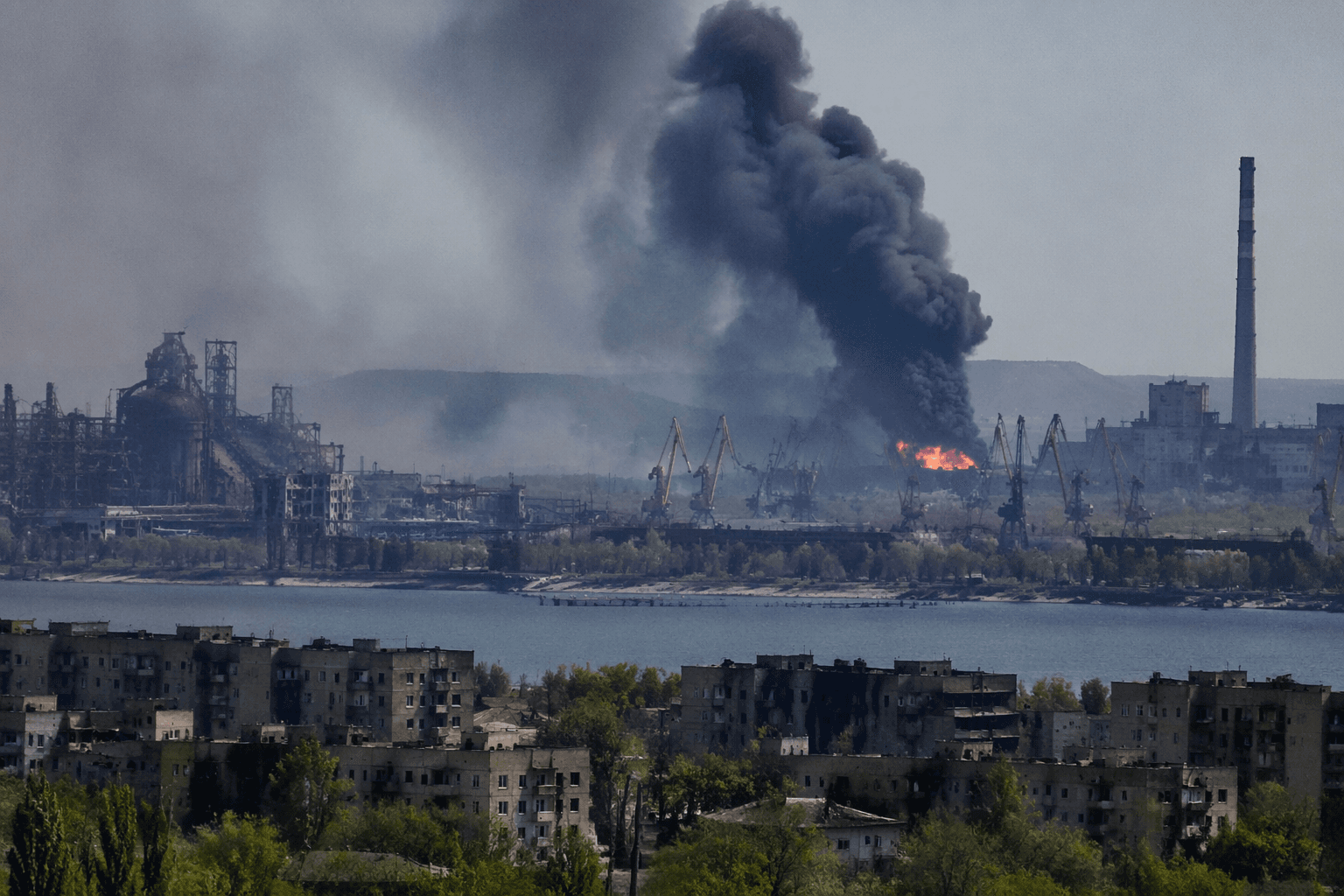
Footage released on May 8, 2026 showed drone views over occupied Mariupol and the ruined Azovstal plant, the site of the Ukrainian garrison’s last stand. The unit said its reconnaissance-strike drones were patrolling the city “for now, from the air,” and that the aircraft were operating up to 160 km behind the line of contact. In practical terms, that means Russian logistics hubs, roads and rear-area staging points are within reach, raising the cost of holding territory even when front lines do not move.
The fight over Mariupol still carries the weight of the city’s siege in 2022, when the battle ran from February 24 to May 20 or 21 and ended with hundreds of Azov fighters killed or captured. Mariupol has remained under Russian occupation since then, but it has not become quiet. Moscow has pursued reconstruction and demographic change there, including new housing projects and incentives for Russian settlers, in an effort to normalize control over a city that remains strategically important as a port and as part of the land corridor linking occupied territories to Crimea.
That is what gives Azov’s return its wider political meaning. The same unit that became a symbol of Ukrainian endurance after the fall of Azovstal is now being used as a tool of attrition, aiming to make occupation more expensive and less secure. In Mariupol, the war has moved from a desperate defense to a campaign of persistent pressure, and the rebuilt Azov corps is trying to write the next chapter.
This article was produced by Prism’s automated news system from verified source data, official records, and press releases, then run through automated quality and moderation checks before publishing. The system is built and supervised by the people who set the standards it runs under. Read our full AI policy.
Know something we missed? Have a correction or additional information?
Submit a Tip