Record late-May heat wave scorches Europe, breaks spring temperature records
Late-May heat pushed 35°C readings as far north as London, while France reported deaths and Britain shattered its May record.
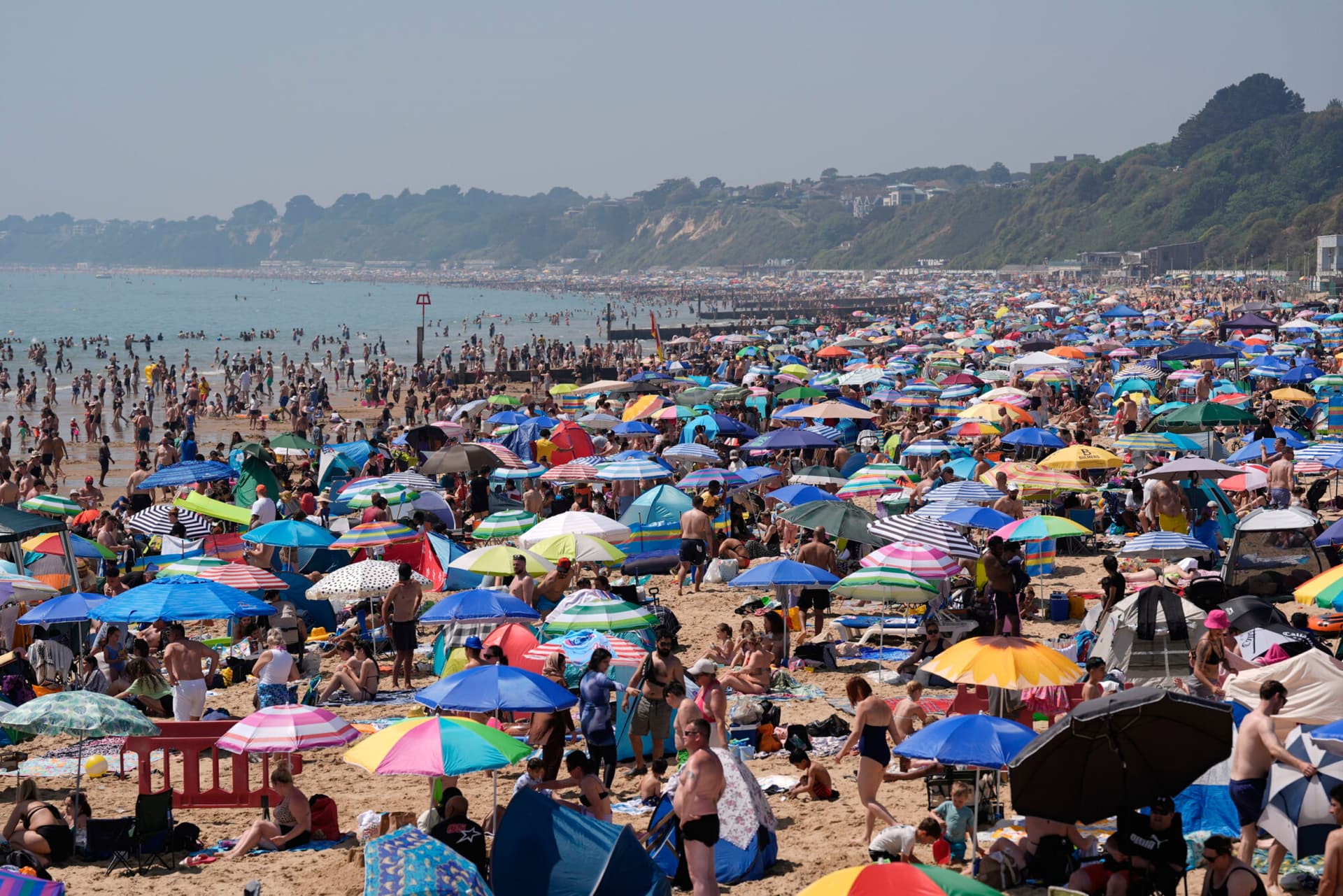
Western Europe baked under a late-May heat wave that pushed temperatures above 95°F, or 35°C, as far north as London, while large parts of France, the United Kingdom and Spain ran up to 11°C above normal. Forecasters and climate scientists said the scale was extraordinary, and the episode arrived as a warning that extreme heat is no longer confined to midsummer.
Météo-France forecaster Adrien Warnan called the event “completely unprecedented and historic,” while French climate scientist Christophe Cassou said it would have been virtually impossible in the preindustrial era. Yale Climate Connections described the spell as a historic late-spring heat wave in and around Western Europe, and Euronews said the region was facing a heatwave that was “completely unprecendented and historic.” The pattern has also been linked to a buckled jet stream, the same kind of atmospheric setup that can intensify unusual weather far beyond Europe.

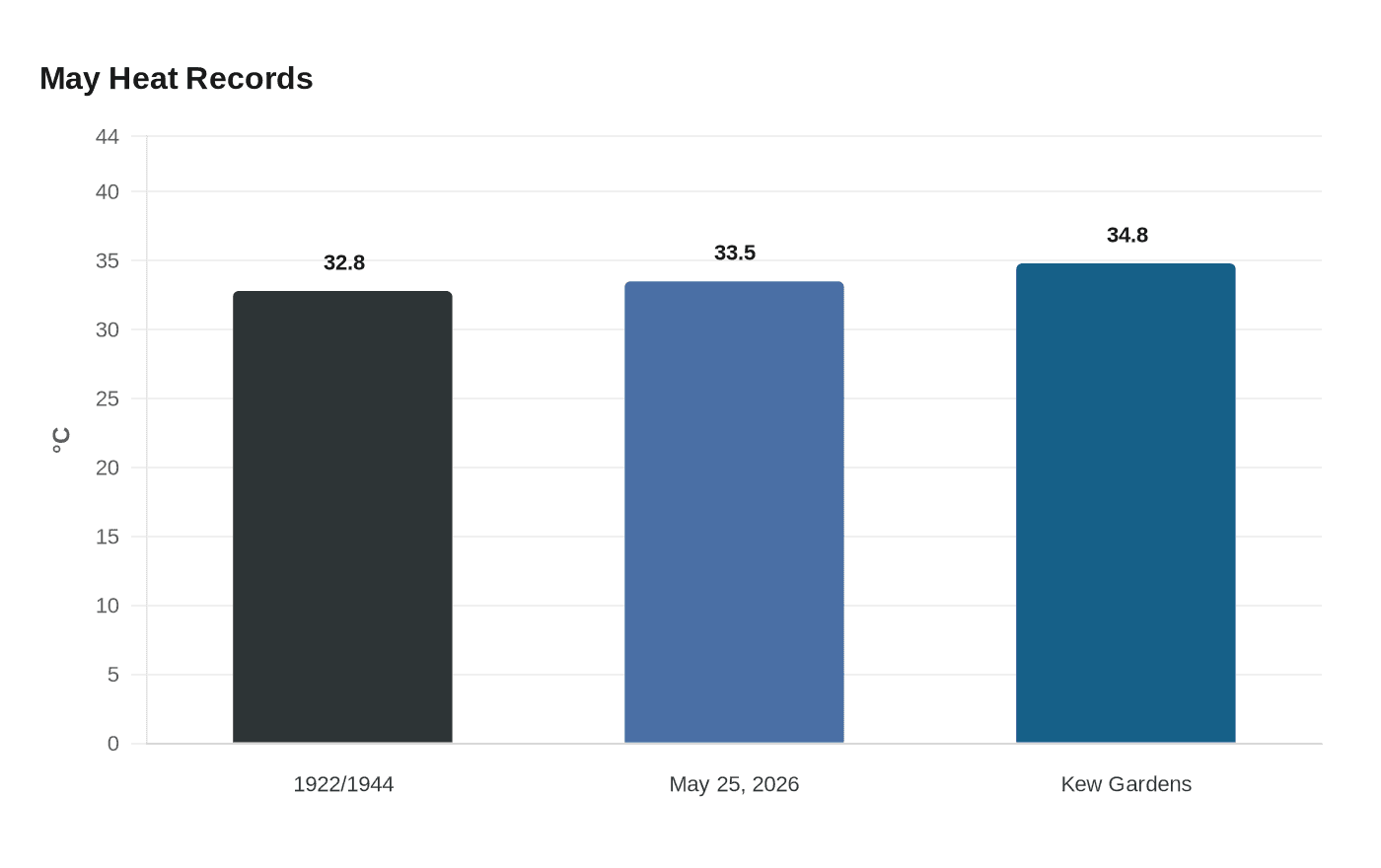
Britain’s benchmark for May was shattered as temperatures climbed above the country’s long-standing spring norms. The Met Office said reaching 30°C in May is rare and noted that the highest May temperature on record had been 32.8°C, set in 1922 and 1944. One report placed a provisional British May record at 33.5°C near London on Monday, May 25, 2026, while another said 34.8°C at Kew Gardens in southwest London later broke the national May temperature record.
Spain had already entered the heat episode after a punishing spring. AEMET said April 2026 was the warmest April in Spain’s historical record, extremely warm and very dry. Other reporting put Spain’s mainland average temperature that month at 15.1°C, about 3.2°C above the 1991 to 2020 average. The early-season heat underscored how quickly heat stress can become structural, not episodic, in places that once expected relief until deep summer.
The human toll was already visible in France, where RFI reported seven deaths during the heatwave, including five drownings, as authorities confronted temperatures far above seasonal norms. That damage is a preview of the pressure points cities must now plan for: emergency rooms, transit systems, power demand, water safety and outdoor labor all come under strain when heat arrives early and lingers.
The broader lesson for U.S. cities is stark. The European Environment Agency says Europe’s urban population is projected to rise above 83%, increasing the need for adaptation, and the same logic applies across American metros built for a cooler climate. Shaded streets, cooling centers, heat-safe housing, resilient grids and redesigns that lower urban heat are shifting from optional upgrades to basic governance.
This article was produced by Prism’s automated news system from verified source data, official records, and press releases, then run through automated quality and moderation checks before publishing. The system is built and supervised by the people who set the standards it runs under. Read our full AI policy.
Know something we missed? Have a correction or additional information?
Submit a Tip