Reform U.K. surges in local elections, Labour suffers heavy losses
Reform UK captured 1,400 English council seats and 13 councils as Labour lost more than 1,200, with Hartlepool and the north-east marking the sharpest swing.
Reform UK turned England’s local elections into a direct warning for Keir Starmer, winning 1,400 council seats and 13 councils as Labour lost more than 1,200 seats and more than 30 councils. More than 5,000 council seats were contested across England, alongside mayoral and devolved elections in Scotland and Wales, but the scale of Reform’s advance and Labour’s collapse quickly made the results look less like a routine local contest and more like an early referendum on the prime minister.
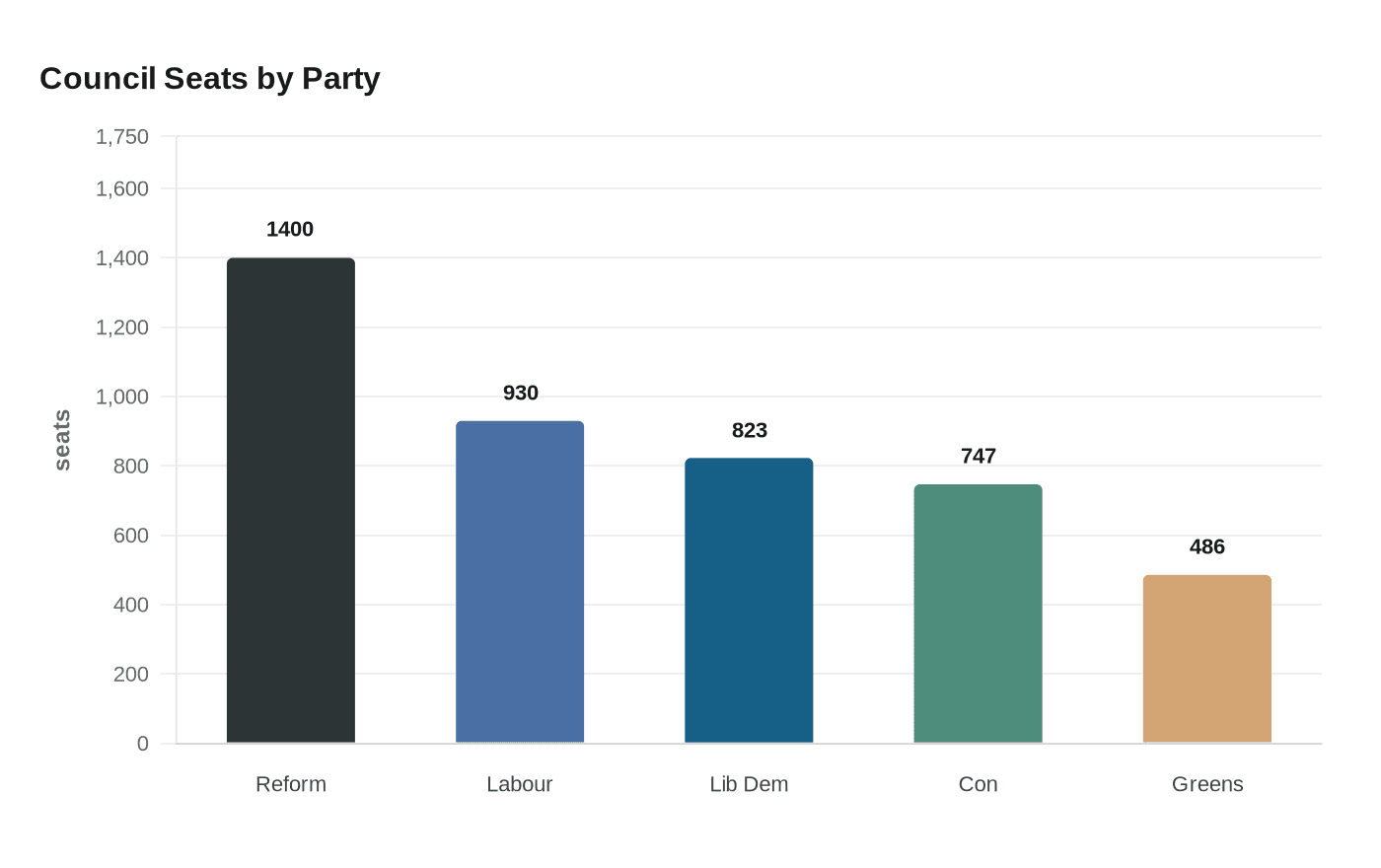
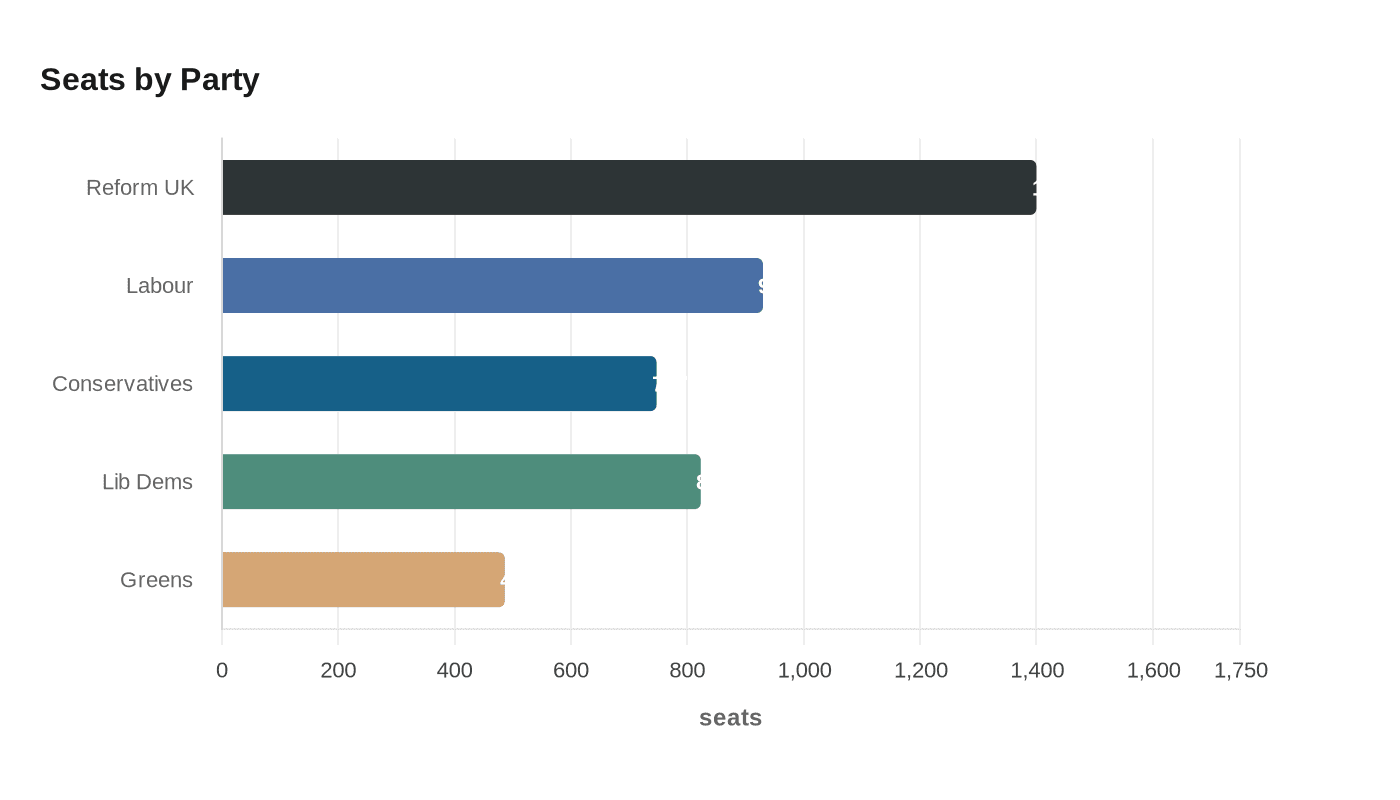
The swing was strongest in the north-east and other areas that have long been central to Labour’s power base. Hartlepool was among the places where Reform’s gains were expected to push Labour into opposition, underlining how far the protest has moved beyond isolated pockets of discontent. A live results board later put Reform on 1,400 seats, Labour on 930, the Conservatives on 747, the Liberal Democrats on 823 and the Greens on 486, a snapshot that showed how sharply the political map had been rearranged in a single night.
Starmer said he would not resign after taking responsibility for what he called a very tough night, but the losses sharpened questions about Labour’s mandate less than two years after its landslide general election victory in 2024. The comparison is brutal for Labour. In the 2024 English local elections, the party won 1,158 seats across 107 council contests and took control of 51 councils. In 2023, Labour became the largest party in local government in Great Britain. Against that backdrop, the 2026 result looked less like a stumble and more like a warning that Labour’s coalition is fraying before the next national test.
Low turnout in at least some places added another layer of concern, because the challenge is not only losing voters but also persuading them to show up at all in local contests. That is what makes Reform’s rise politically significant: it appears to be converting frustration into votes in places where Labour once relied on habit, identity and organizational strength. At the same time, the elections also produced a striking counterexample in Hackney, where Zoë Garbett won the mayoralty for the Green Party with 35,270 votes out of 76,187 and a 40.98 percent turnout, becoming the borough’s first Green mayor. The result suggested that while Reform’s momentum looks durable in many Labour areas, parts of the electorate are still searching for other ways to register anger, impatience and change.
Know something we missed? Have a correction or additional information?
Submit a Tip