Republican-appointed Georgia justices fend off abortion-rights challengers
Sarah Hawkins Warren and Charlie Bethel held their seats as abortion rights turned a nonpartisan Supreme Court race into a proxy fight over Georgia’s highest court.
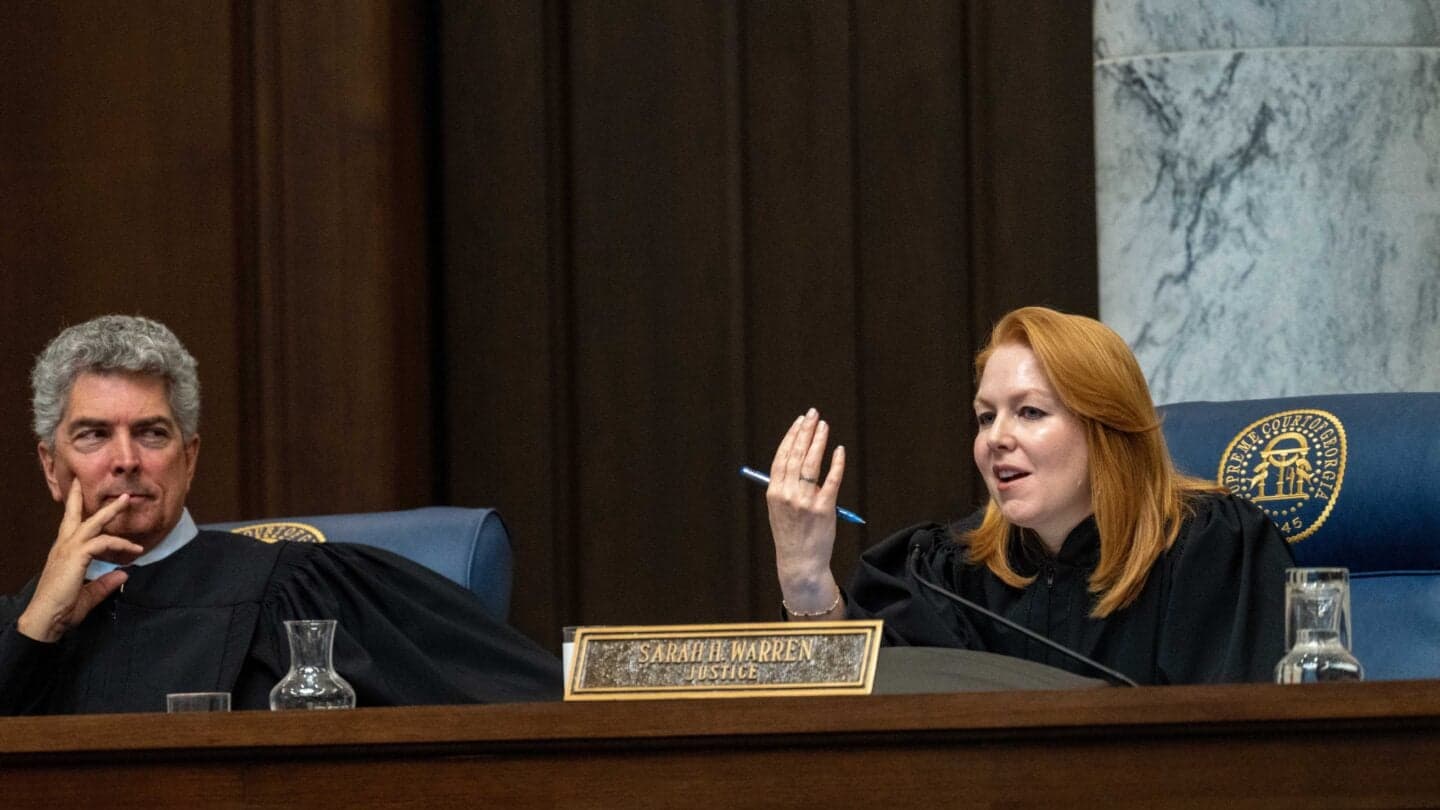
Republican-appointed justices Sarah Hawkins Warren and Charlie Bethel defeated well-financed challenges that turned Georgia’s formally nonpartisan Supreme Court elections into a test of abortion rights, judicial power and partisan reach. Warren beat former state Sen. Jen Jordan, and Bethel defeated Miracle Rankin, while Ben Land ran unopposed and kept his seat on a court that has long seen little turnover.
The results underscored how unusual the race had become. Georgia held 12 consecutive uncontested Supreme Court elections between 2012 and 2018, and only one of the four seats on the 2024 ballot was contested. This year, two seats drew serious opposition, and national political groups treated the contests as an opening to influence the state’s highest court. Progressive organizations and Democratic figures backed Jordan and Rankin, while Republican-aligned figures rallied behind Warren and Bethel.

Abortion policy sat at the center of the fight. On October 7, 2024, the Georgia Supreme Court reinstated the state’s six-week abortion ban while it reviewed the state’s appeal of a lower-court ruling that had struck the law down. The ban took effect again at 5 p.m. that day, making the court’s lineup an immediate campaign issue for activists on both sides. The ruling helped transform a nominally nonpartisan judicial election into a high-stakes referendum on who will decide the next round of abortion and election-law cases.
Warren, who was originally appointed to the Supreme Court of Georgia by Republican Gov. Nathan Deal in 2018, and Bethel both benefited from the advantages that usually protect incumbents on a court where no sitting justice has lost reelection in more than a century. Their victories preserved the court’s current balance and kept Republican-appointed justices in place as Georgia prepares for more disputes that could shape voting rules, reproductive rights and the reach of state institutions.
The campaign also exposed a clash between judicial ethics rules and modern campaign tactics. The Georgia Judicial Qualifications Commission said it reasonably believed Jordan and Rankin violated the Georgia Code of Judicial Conduct by publicly endorsing one another and promising to restore abortion rights. A federal judge later temporarily blocked the watchdog from publicly airing those accusations, adding another layer to a race that already showed how easily a nonpartisan label can be overtaken by partisan machinery.
Know something we missed? Have a correction or additional information?
Submit a Tip