Rescuers Detect Life Amid Garbage Avalanche at Cebu Landfill
Rescuers probing a sudden collapse at a waste segregation facility in Barangay Binaliw, Cebu City, detected signs of life on Jan. 10, prompting cautious, intensified excavation and the dispatch of heavier equipment. The disaster has killed at least four workers, injured a dozen, and left more than 30 unaccounted for, raising urgent questions about worker safety and municipal waste management in a city of nearly a million.
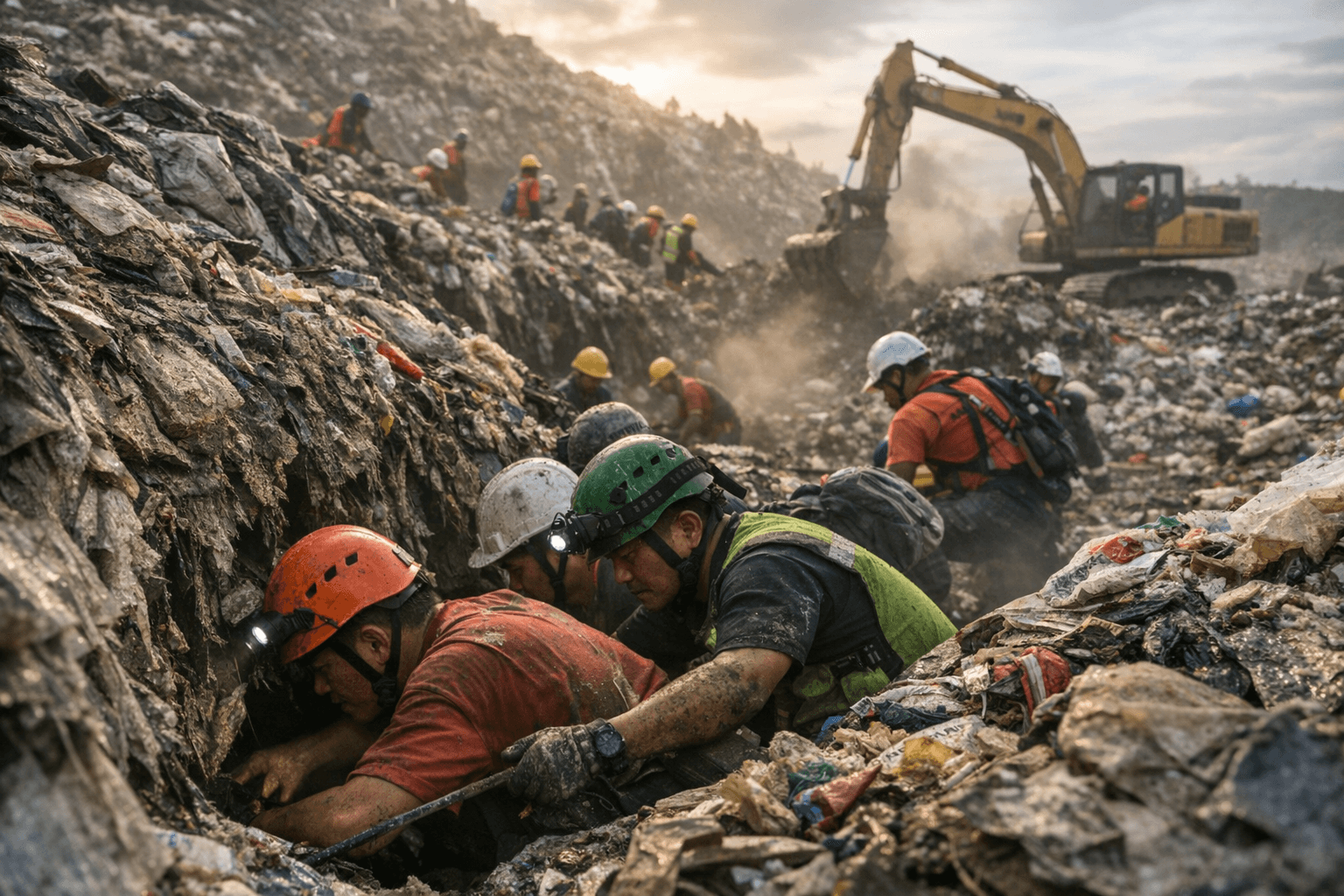
Rescuers intensified search efforts after detecting signs of life within the rubble of a massive garbage avalanche that swept through a waste segregation and management facility in Barangay Binaliw, Cebu City, on Jan. 10. Officials said dozens of police, firefighters and disaster-response personnel were working in hazardous conditions, balancing a rush to reach survivors with strict safety controls around unstable debris.
The collapse, described by survivors and witnesses as sudden and instantaneous, sent a wall of refuse cascading through low-slung buildings at the facility. At least four employees died, officials confirmed, including an engineer and a female office worker. Twelve others were pulled from the debris with injuries and are receiving medical care. Authorities have said more than 30 people remain missing; an initial list compiled by the mayor cited two dead and 36 missing before the death toll was revised to four without an updated missing total.
Survivors painted a scene of instant devastation. Jaylord Antigua, a 31-year-old office worker, said a wall of garbage destroyed the administrative office where he worked and that he crawled out through darkness with bruises after seeing a light, describing the experience as "my second life." Another survivor said the avalanche happened suddenly despite "fairly good weather at the time." Accounts have underscored the unpredictability of the collapse and the peril faced by staff at the centre, which has roughly 110 employees.
Municipal authorities said the detection of signs of life on Jan. 10 prompted a shift in tactics: teams began more careful manual excavation in specific zones while a 50-ton crane was sent under police escort to lift larger sections of debris where mechanical assistance could be used safely. Officials warned of multiple hazards at the site, including twisted tin roofs and exposed iron bars, combustible heaps of garbage and risks associated with acetylene. In response, Cebu City Mayor Nestor Archival adjusted the security perimeter and restricted access to prioritize responder safety.
Family members and relatives gathered close to the cordoned site, anxiously awaiting news as operations continued. Photographs and eyewitness descriptions show a chaotic scene of rescue teams threading through slick, unstable refuse, while emergency medical teams treated the injured nearby.
The cause of the collapse remains unclear. Investigators and municipal officials have not yet identified a definitive trigger or issued a timeline for when normal operations at the facility might resume. Authorities acknowledged that the incident could complicate garbage collection across Cebu City, a major port hub with a population approaching a million, and that contingency plans were being discussed without further detail.
The disaster highlights broader questions about waste management practices, regulatory oversight and worker safety at facilities handling large volumes of municipal refuse. As excavation continued, officials said their immediate priority remained finding survivors and accounting for those still missing while mitigating the acute public-health and service-delivery consequences if the facility remains offline.
This article was produced by Prism’s automated news system from verified source data, official records, and press releases, then run through automated quality and moderation checks before publishing. The system is built and supervised by the people who set the standards it runs under. Read our full AI policy.
Did this article answer your question?


