Reuters poll sees Bank of England holding rates steady through 2026
Britain’s central bank is expected to stay on hold through 2026 as inflation forecasts jump to 3.2%, with stagflation fears rising.

The Bank of England is heading into its April 30 decision with economists expecting no move in Bank Rate, and a growing belief that borrowing costs may stay frozen for much of the rest of 2026. That shift comes as energy costs spike after the Middle East conflict, darkening the inflation outlook and reinforcing the view that price pressures may prove stickier than many had hoped.
In a poll of 62 economists, all 62 expected the Bank to keep Bank Rate at 3.75% next week. About 53%, or 33 of 62, also saw no change through the end of 2026. The median forecast put inflation this year at 3.2%, a sharp reminder that the post-pandemic battle against rising prices is not yet over.
The Bank of England held rates at 3.75% on March 19 and said then that its next decision would come on April 30. It also warned that the Middle East conflict had disrupted energy supply, lifting fuel, utility and company costs and making inflation likely to be higher than expected in the short term. The Bank said it had already cut rates six times since August 2024, a pace that now looks far less likely to continue as the inflation picture worsens.
That caution has been reinforced by Governor Andrew Bailey, who has repeatedly pushed back against assumptions that higher rates are inevitable. In one recent Reuters interview, Bailey said he was “not going to rush to judgements” on rate rises, and warned that markets were “ahead of themselves” in pricing hikes. Economists in the poll broadly agreed with that stance even after financial markets briefly shifted to expect a series of increases last month.
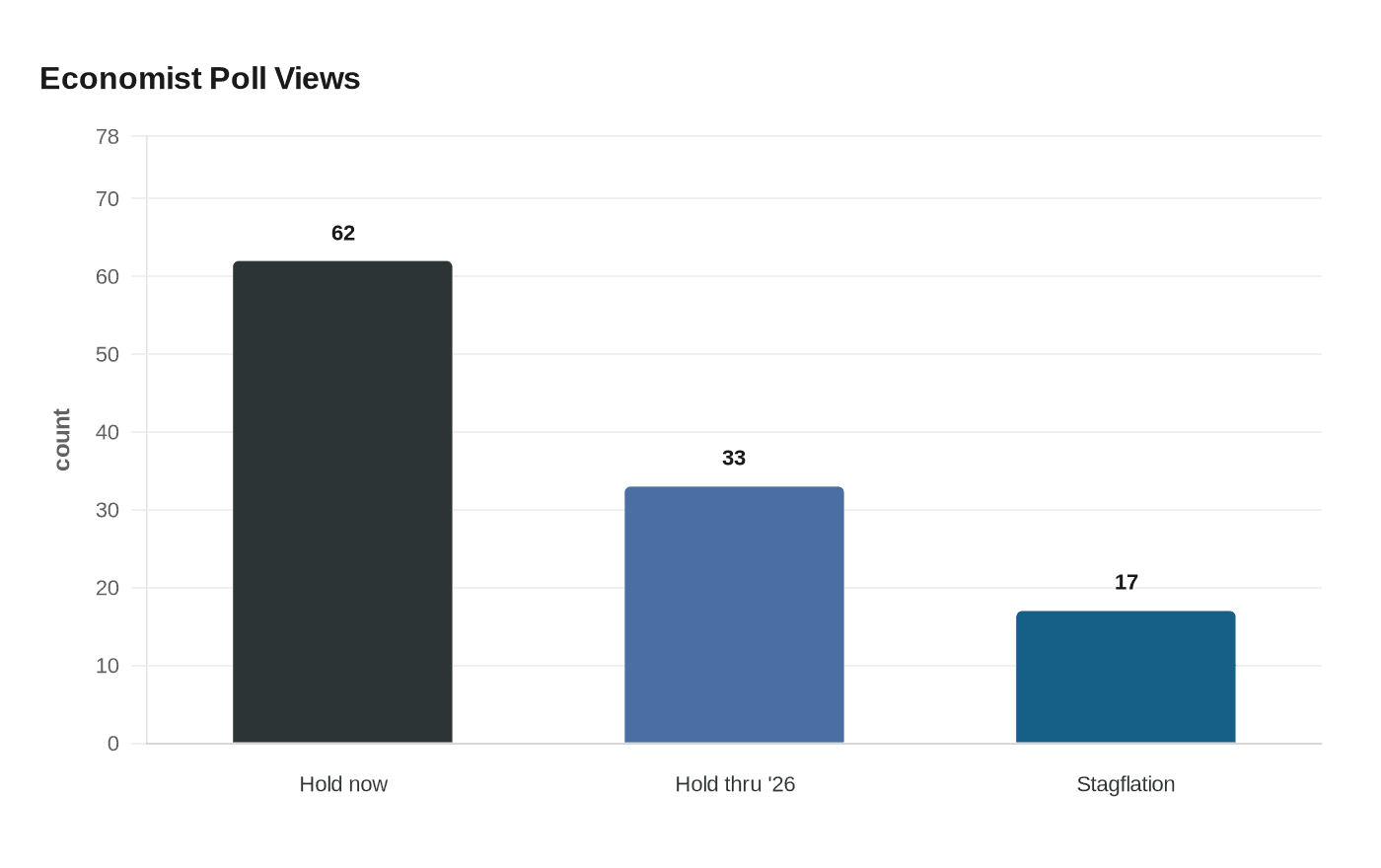
The risk is not just higher inflation, but stagflation. In the survey, 17 of 22 economists said that risk was high or very high, reflecting the possibility of weak growth, rising unemployment and persistent inflation all at once. The Bank itself has said consumer price inflation could run between 3% and 3.5% in the second and third quarters of 2026 because of higher energy prices, far above the earlier expectation that CPI would fall to around 2% from April and stay near that level for much of the year.
For Britain, that points to higher-for-longer rates, expensive mortgages and tighter business credit. For the United States and other advanced economies, it is a warning that the inflation fight may still be vulnerable to energy shocks, even after the worst of the pandemic surge has faded.
This article was produced by Prism’s automated news system from verified source data, official records, and press releases, then run through automated quality and moderation checks before publishing. The system is built and supervised by the people who set the standards it runs under. Read our full AI policy.
Did this article answer your question?

