Russian oil flows to India near record highs after U.S. waiver renewal
Washington renewed a sanctions waiver as Russian crude stayed near record highs in India, exposing how pressure on Moscow now runs through a web of exceptions.
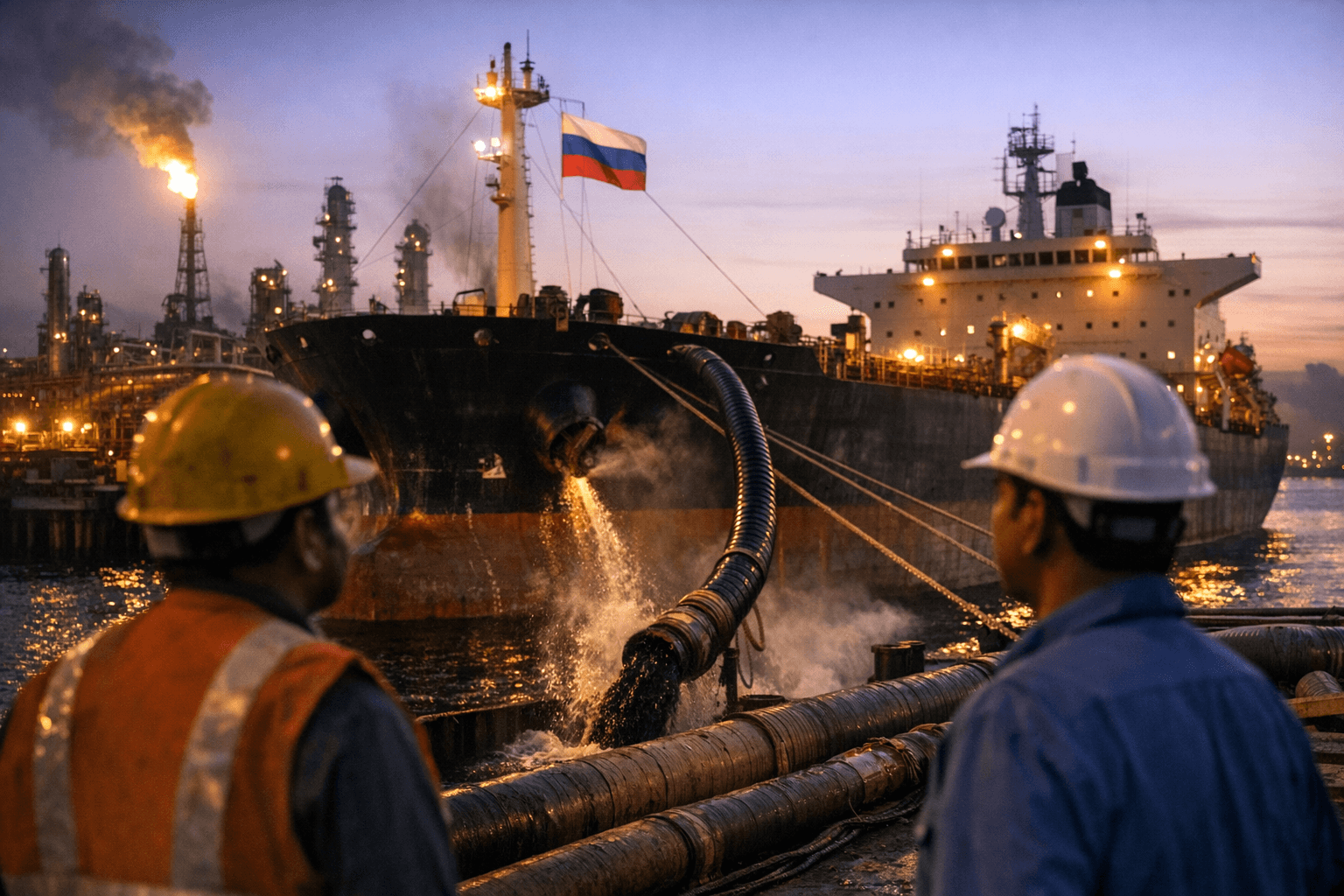
Washington has kept up the language of pressure on Moscow while renewing a Treasury waiver that lets Russian oil keep flowing, and India has been the clearest beneficiary. The exemption, renewed on April 17 and running through May 16, covered Russian oil and petroleum products loaded onto vessels as of that date, even as lawmakers said the move went easy on Moscow and Scott Bessent cast it as a short-term step to steady global energy markets.
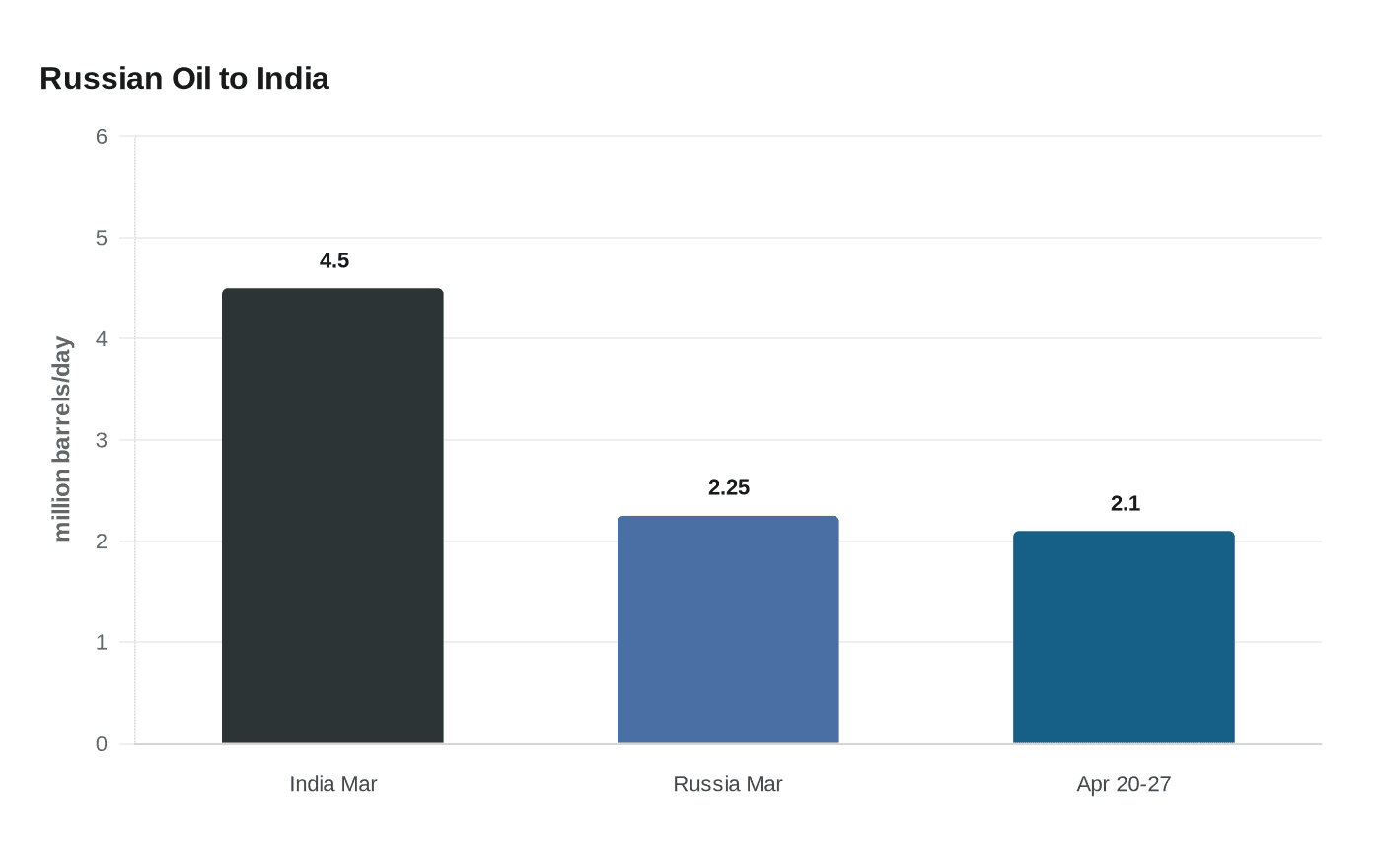
The result is visible in India’s import numbers. India brought in 4.5 million barrels a day of crude in March, with Russia supplying 2.25 million barrels a day, nearly half the total and almost double February’s volume. Shipments to Indian ports were projected at about 2.1 million barrels a day for the April 20 to 27 week, keeping Russian sales close to record levels in April and May despite the war in Ukraine and the sanctions regime meant to squeeze Kremlin revenue.
India’s role has made it the second-largest buyer of Russian crude after China and the biggest importer of Russia’s Urals grade. For Indian refiners, the calculus remains straightforward: secure discounted barrels when possible, preserve supply, and keep domestic fuel costs in check. That has helped sustain trade through non-sanctioned entities and vessels, even as the system around it grows more complicated.
The price picture has shifted, though. Urals crude for May cargoes was being offered to Indian buyers at a premium of about $5 to $7 a barrel over Brent, a sharp departure from the deep discounts that helped drive India’s buying surge after Russia’s 2022 invasion of Ukraine. That suggests Russian barrels are still competitive, but less of a bargain than they were, especially as Russia’s own export system shows strain.
Those strains matter because Russia cut oil output in April after Ukrainian drone attacks on ports and refineries and disruptions to pipeline flows, while the International Energy Agency trimmed its projection for Russian supply by 120,000 barrels a day for the rest of 2026. Even so, Russia still needs every large Asian customer it can keep.
The broader backdrop is a global oil market being reshaped by workarounds rather than clean rules. The Strait of Hormuz, which typically carries about one-fifth of world oil trade, has already shown how quickly disruptions in the Middle East can alter buying patterns across Asia. For Washington, that leaves a policy contradiction in plain view: sanctions are meant to choke off Moscow’s energy income, but waivers, shipping changes and market fears keep the barrels moving anyway.
This article was produced by Prism’s automated news system from verified source data, official records, and press releases, then run through automated quality and moderation checks before publishing. The system is built and supervised by the people who set the standards it runs under. Read our full AI policy.
Did this article answer your question?
%3Amax_bytes(150000)%3Astrip_icc()%2FCertificate-of-deposit-2301f2164ceb4e91b100cb92aa6f868a.jpg&w=1920&q=75)