Trump urges federal help or buyer for struggling Spirit Airlines
Trump floated federal help for Spirit Airlines and a buyer, even as he knocked down a possible United-American merger. The split highlights how political power is shaping airline dealmaking and rescue politics.
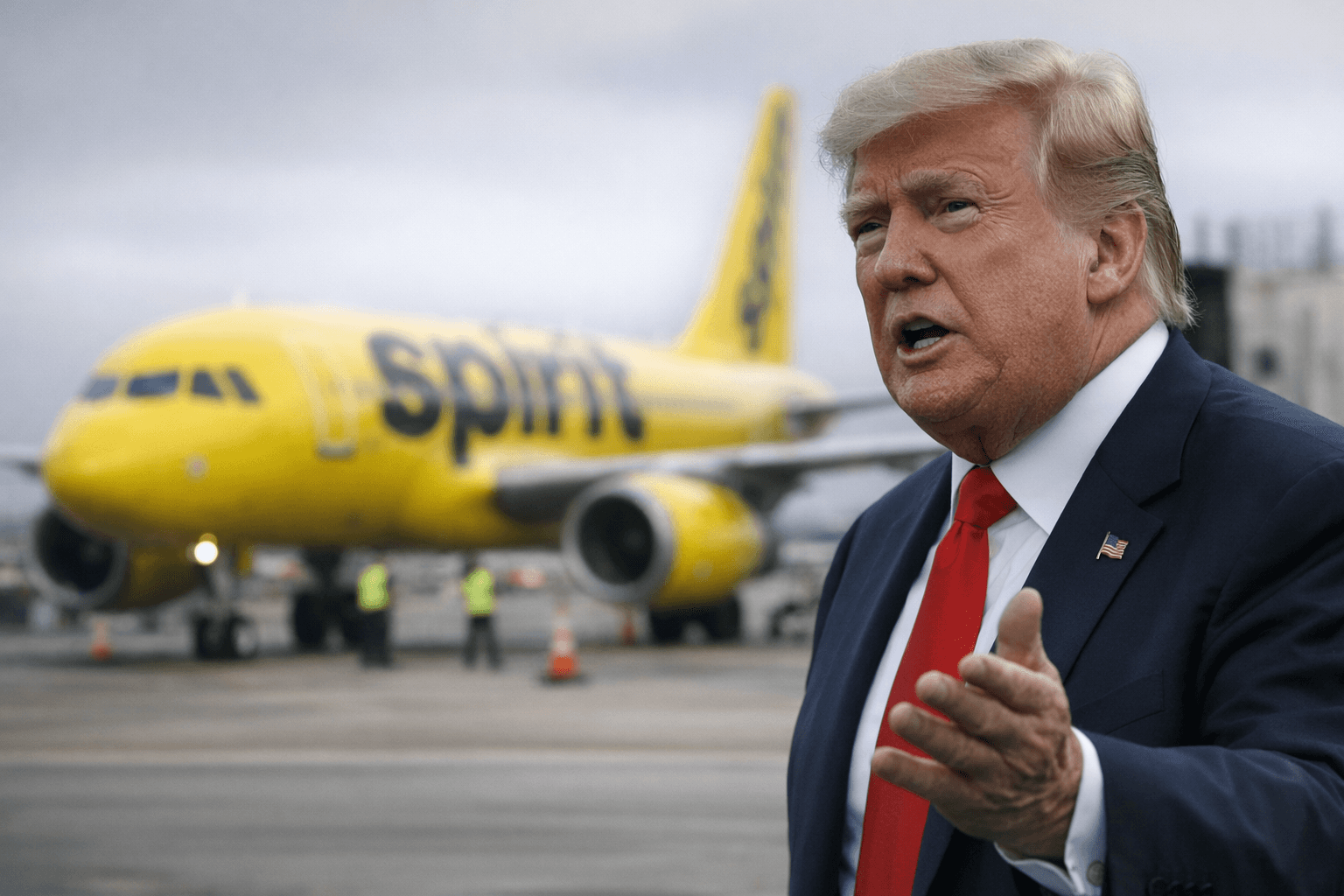
Donald Trump opened the door to federal help for Spirit Airlines while closing off enthusiasm for a much larger airline combination, underscoring how aggressively the White House is now weighing winners and losers in the industry.
In a CNBC interview on Tuesday, Trump said he would “love somebody to buy Spirit Airlines” and added that “maybe the federal government should help that one out,” pointing to Spirit’s roughly 14,000 jobs. The comments came as Spirit faced severe financial stress in its second bankruptcy in less than a year, a collapse that has turned the carrier into a test case for how far Washington should go to preserve an airline that has already failed once.
Spirit emerged from Chapter 11 in March 2025 and had planned to exit bankruptcy by early summer 2026. That plan relied on fuel averaging about $2.24 per gallon in 2026 and $2.14 in 2027. By mid-April, jet fuel was around $4.24 a gallon, blowing a hole in those assumptions and threatening the restructuring’s core math. Spirit had already asked the Trump administration for hundreds of millions of dollars in emergency funding to offset the spike and avoid liquidation, which Reuters reported could come as early as that week.
Trump’s remarks came against a broader backdrop of airline lobbying over rising fuel costs. The chief executives of major low-cost carriers are set to meet with U.S. Transportation Secretary Sean Duffy as they press Congress for temporary tax relief to partly cushion the jump in jet fuel prices tied to the war with Iran. For Spirit, the pressure is immediate. For rivals, the issue is whether Washington will step in to stabilize a distressed carrier or leave the market to force a restructuring on its own.
At the same time, American Airlines said on Friday, April 17, that it was not interested in merging with United Airlines and had held no talks, cutting against speculation about a deal that would reshape the industry. United CEO Scott Kirby had pitched the idea of a merger to Trump in a late-February meeting, according to sources familiar with the matter. A United-American tie-up would be one of the biggest airline consolidations in more than a decade and would likely face intense antitrust scrutiny.
The contrast is striking: Trump is discouraging one merger while entertaining a rescue or sale for another airline. That signals a willingness to intervene selectively in corporate dealmaking, using political discretion as a market force in an industry where balance sheets, fuel prices and competition policy are all now colliding.
Sources:
Know something we missed? Have a correction or additional information?
Submit a Tip